
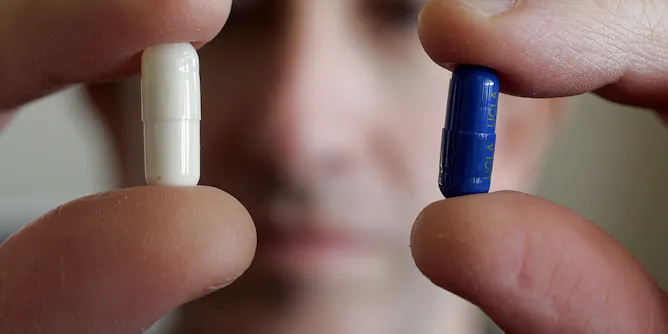
Understanding what a ‘control’ is can help you decide for yourself how insightful new studies are.
Articles on Randomised controlled trials
Displaying all articles
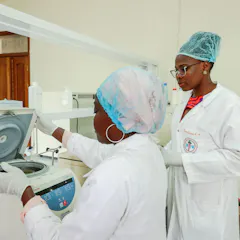
While Africa accounts for roughly 25% of the global disease burden, its people are largely invisible in randomised controlled trials.

Listen to conservation scientist Hollie Booth explain what happened when fishermen in Indonesia were paid to release sharks caught up in their nets.

Recent research found eating within an eight-hour window increased risk of death from heart disease. But it’s complicated.

Privileging the randomised controlled trial in education suggests a preoccupation with scientific measurement over research that privileges participants’ voices, especially in a feminised profession.

Randomised controlled trials are used for drug trials. They should be used to find out of incentives to get the jab work too.

We are repeatedly missing opportunities to gain quality evidence to help us manage the pandemic – that’s why we need designed evaluations.

In a crisis, there’s no time to get perfect evidence. The evidence that lockdowns contain contagion and boost subsequent economic growth is persuasive.

The 2019 Nobel Prize in economics recognises the contribution of practical experimental work to development, but the value of putting diagnosis before treatment shouldn’t be lost.

Research shows small financial incentives for doing maths homework can increase maths achievement. But this raises some tricky ethical questions.
Brain-zapping, the curious case of the n-rays and other stories of evidence
The Conversation, CC BY70.4 MB (download)
You've had an x-ray before but have you had an n-ray? Of course not, because they're not real. But people used to think they were. Today, on Trust Me, I'm an Expert, we're bringing you stories on the theme of evidence.
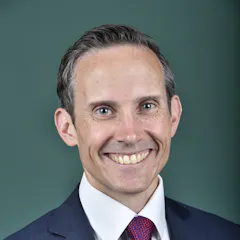
Economist, author and MP Andrew Leigh spoke to Fiona Fidler about how we should be using randomised trials more to drive decisions and policy in public life.

Why didn’t you hear about a recent big study on a new heart medication? Because the drug didn’t work. But that doesn’t mean the study wasn’t a success – it was.
Top contributors
-

Scientia Professor of Economics, UNSW
-
Professor, School of Biosciences & School of Historical and Philosophical Studies, The University of Melbourne
-
Senior Research Fellow, World Institute for Development Economics Research (UNU-WIDER), United Nations University
-
Lecturer, Adelaide University
-
Professor of Psychiatry, UNSW & Black Dog Institute, UNSW
-
Director of the Nuffield Centre for Experimental Social Sciences, University of Oxford
-
Senior Lecturer, Monash University
-
President of the Royal Statistical Society & Director of the MRC Biostatistics Unit, University of Cambridge
-
Professor of Health Economics, University of Oxford
-
Lecturer in Human Nutrition, RMIT University
-
Senior Researcher, Health Economics, University of Oxford
-
Lecturer Human Biosciences (Nutrition and Dietetics), RMIT University
-
Professor, UNSW
-
Associate professor, Deakin University
-
Senior Lecturer, Australian National Centre for the Public Awareness of Science, Australian National University