

Why the NHS keeps offering you the same therapy. And why the science behind that decision is shakier than you think.
Articles on Randomised controlled trial
Displaying all articles

Many anti-bullying programs in schools rely on witnesses to stand up to bullies. This is good in theory but an evaluation of such programs has found in some cases, interference can worsen the problem.

Robust new study finds weight gain may be due to more than just the calories.

Once associated with mind-control experiments and counter-cultural defiance, psychedelics now show great promise for mental health treatments and may prompt a re-evaluation of the scientific method.
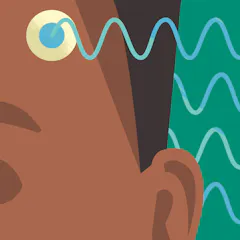
Brain-zapping, the curious case of the n-rays and other stories of evidence
The Conversation, CC BY70.4 MB (download)
You've had an x-ray before but have you had an n-ray? Of course not, because they're not real. But people used to think they were. Today, on Trust Me, I'm an Expert, we're bringing you stories on the theme of evidence.
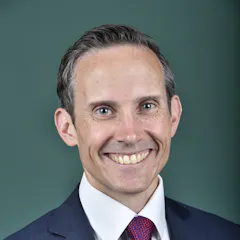
Economist, author and MP Andrew Leigh spoke to Fiona Fidler about how we should be using randomised trials more to drive decisions and policy in public life.

Here’s how it could find it again.

Rare cancers are hard to research given the few patients that have each type of cancer, so how can we improve treatment for these patients?
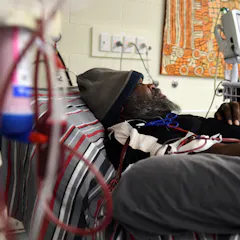
Like all good health care, improving health in remote settings requires an evidence base. But forcing all research questions into the randomised controlled trial model is not the answer.

Scientists have found that there are many physical and mental benefits to volunteering.

The British blockade of France wouldn’t have worked if it wasn’t for an ingenious experiment conducted half a century earlier.

The randomised controlled trial is touted as the gold standard in medical research. But its controlled laboratory conditions are far removed from the messy realities of life.

A new study has found that psychodynamic therapy is useful for treating depression, and the positive effects are longer lasting.
Top contributors
-

Professor, School of Biosciences & School of Historical and Philosophical Studies, The University of Melbourne
-
Director Centre > Health Equity in Regional and Remote Communities, CQUniversity Australia
-
Health Services Researcher, The University of Melbourne
-
Head, Cancer Research Program, Monash University
-
Associate Professor, Physiotherapy & Rehabilitation Science, University of Nottingham
-
Post-doctoral Research Fellow, The George Institute; Conjoint Senior Lecturer, UNSW; Owner and Director, Health Technology Analysts, University of Sydney
-
Professor and Director of the Stoneygate Centre for Excellence in Empathic Healthcare, University of Leicester
-
Professor in Psychology and Sociology, Deputy Director Institute for Public Health and Wellbeing, University of Essex
-
Emeritus Professor, Brunel University of London
-
Professor of Psychiatry, UNSW & Black Dog Institute, UNSW
-
Karyn Healy is a Friend of The Conversation.
Honorary Principal Research Fellow in Psychology, The University of Queensland
-
Senior Lecturer, Australian National Centre for the Public Awareness of Science, Australian National University
-
Lecturer, Adelaide University
-
Associate lecturer, Nutritional Biochemistry, University of Hertfordshire
-
Professor, UNSW