

Thought-provoking reads for the critical thinker on your gift list. Each book connects with a past Don’t Call Me Resilient episode. Listen alongside reading to bring the scholar & their ideas to life.
Articles on Rana Plaza
Displaying 1 - 20 of 22 articles

A new study suggests disclosure laws to prevent forced labour in the clothing industry are a form of window dressing designed to ease the conscience of consumers rather than protecting workers.
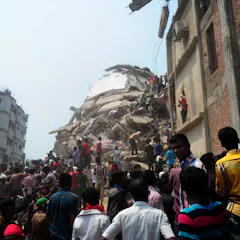
Ten years after a garment factory collapsed in Bangladesh, scholars find slow fashion practices hold the keys to a more sustainable, joyful relationship with clothes.
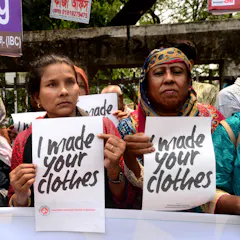
Ten years after the collapse at Rana Plaza in Bangladesh, the garment industry’s deadliest disaster, reforms are incomplete. The opaqueness of today’s complex supply chain is part of the problem.
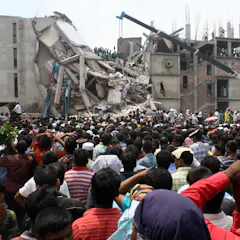
At least 1,132 workers died when the Rana building collapsed in Bangladesh, while several thousand more were injured.
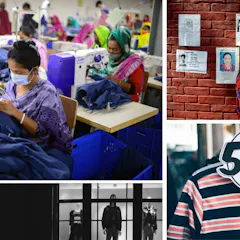
We look back to the 2013 Rana Plaza garment factory collapse in Bangladesh that killed 1,124 people and discuss how much — or how little — has changed for garment-worker conditions today.
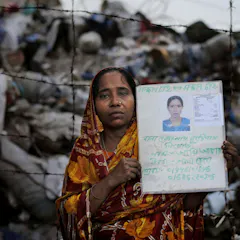
The 2013 Dhaka garment factory collapse is the clothing industry’s worst ever industrial incident. Not enough has changed for garment workers.

Fashion Revolution week puts a spotlight on the modern slavery conditions of the fashion industry and encourages fashion consumers to ask, “who made my clothes.”
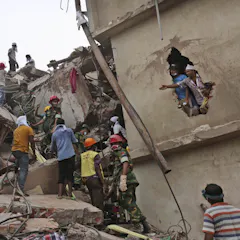
In a recent survey, Alberta business students believed that sustainability should be embedded in business education. That could signal a shift in views on the integration of profit, planet and people.
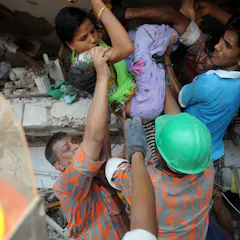
Five years on from the Rana Plaza garment factory collapse in Bangladesh, improvements have been made. But workers compensation is still to happen.

Many products are made in factories where the conditions are far from humane or ethical.

While the fashion industry may want to address worker exploitation in their supply chains, it would open them up to tremendous legal liability. This needs to change.
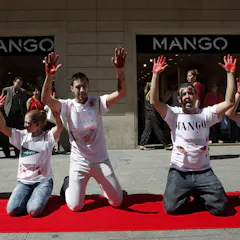
“Shaming campaigns” have been successful in attracting attention to transnational issues like inhumane working conditions and environmental degradation. But shaming guilty corporations is only the first step.
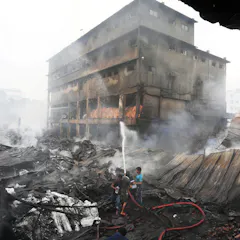
The people responsible for the country’s successes are the victims of its political failures.
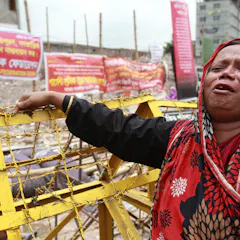
The Rana Plaza anniversary is a reminder of the transparency lacking in the garment supply chain for the clothes we wear.

How campaign groups and trade unions play a crucial role in bringing about change after companies are rocked by scandals.
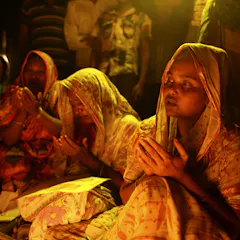
When Indra Nooyi, chairman and CEO of PepsiCo, was speaking at the World Economic Forum in Davos in January this year, she called on business leaders and industry captains to change the dialogue from “what…
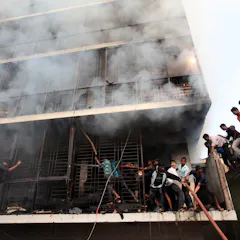
In late 2012, at least 117 workers died in a garment factory fire in Dhaka, Bangladesh. Kalpona Akter, a union activist from Dhaka, and Sumi Abedin, a survivor of the fire, retold their stories at an Oxfam-sponsored…

A year has now passed since an 8-storey building in Dhaka known as Rana Plaza collapsed killing 1,134 workers in just an hour. Much of the commentary since has focused on the need for Western brands to…

One year ago on the 24th of April 2013, the horrific Rana Plaza disaster in Bangladesh claimed at least 1,129 lives and galvanised industry and government into action. Worldwide condemnation for lax safety…
Top contributors
-

Associate Professor of International Business, RMIT University
-
Chair in Accountancy and Professor in Sustainability Accounting and Transparency, University of Aberdeen
-
Associate professor, The University of Melbourne
-
Professor of International Management & Sustainability, King's College London; Independent Social Research Foundation
-
Senior Lecturer in Law and Anthropologist, University of Newcastle
-
Senior Lecturer in Democracy Studies, University of Canberra
-
Professor of Social Policy, University of South Wales
-
Professor of Industrial Relations & Personnel Management, Warwick Business School, University of Warwick
-
Professor, ESCP Business School
-
Research Assistant, University of Newcastle
-
Senior Lecturer in Anthropology, University of Sussex
-
Lecturer and Research Assistant, The University of Melbourne
-
Professor of Sociology, University of Wisconsin-Madison
-
Associate Professor of Public Policy, Australian National University
-
Professor, Harvard University