

Researchers encourage citizen scientists to contribute to datasets on animal deaths caused by infrastructure. This will inform efforts to reduce the human impact on biodiversity.
Articles on Railways
Displaying 21 - 40 of 94 articles
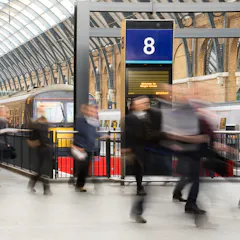
After engaging with the rail unions, the government should be more hands off when it comes to UK rail.

Hydrogen cars were heralded as an avenue towards universal green motoring, but progress has stalled in recent years.
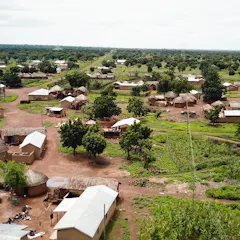
Ghana’s northern region would be more developed now had it received a fairer share of colonial investments.
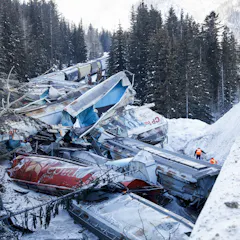
The federal government must implement a railway policing law that helps restore public confidence in law enforcement and provides justice to the families of those who die on the job.
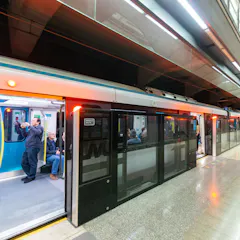
The benefits of cannibalising Sydney’s rail network to introduce new driverless services is far from clear.
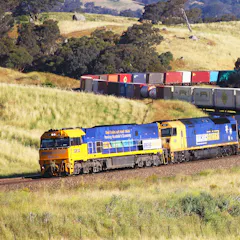
Improving the rail link between Australia’s two biggest cities will have many benefits, not least in meeting our carbon-reduction goals
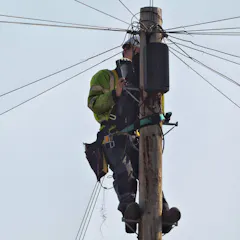
An expert assesses the weak links in a warming UK.

The fear that borrowers’ strategic assets are at risk from Chinese banks continues to fail the test of evidence.
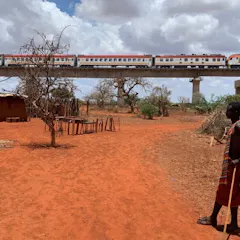
Contrary to the government’s promises of prosperity, Kenya’s mega-railway is heading down the wrong track of development.

Government investment in roads, railroads and other public services has always involved social programming, both for good and for ill.

Oil spills, cracked buildings and pollution. Just some of the environmental effects of Kenya’s massive railway project.

Regional NSW, home to a third of the state’s population, is still waiting for the promise of faster train travel to be delivered. Other states improved their regional services years ago.
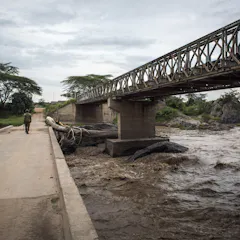
Governments must ensure that transport infrastructure is developed with the ability to cope with current and future climatic shifts.
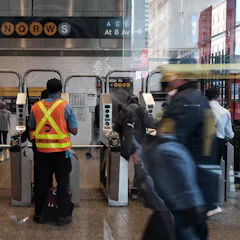
Transit agencies could use the money to buy new subway cars, buses and maintain rails. The funding is designed to build on last year’s emergency aid, which kept transit operating through the pandemic.

Geographers are documenting slave-built infrastructure, from railroads to ports, in use today. Such work could influence the reparations debate by showing how slavery still props up the US economy.
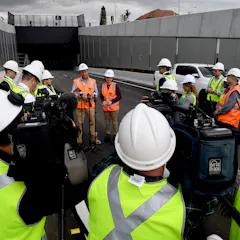
A review of all public road and rail projects worth $20 million or more and completed since 2001 reveals a 21% cost overrun. Worryingly, costs of bigger projects blew out more often and by more.
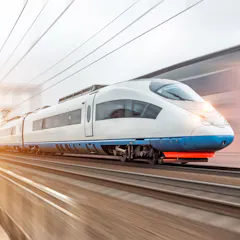
Hyperloop might still be a dream but new technologies promise to make trains faster and safer.

A devastating historical exposé of South Africa’s mining industry and the railway system that maximised the exploitation of cheap Mozambican labour.

Road and rail construction is booming in sub-Saharan Africa, but the pandemic has brought a welcome pause for reflection.
Top contributors
-

Honorary Principal Fellow, University of Wollongong
-
Visiting Research Fellow, Intelligent Mobility, Manchester Metropolitan University
-
Professor of Operations Management, Manchester Metropolitan University
-
Senior Fellow, Centre for Free Expression, Toronto Metropolitan University; York University, Canada
-
Researcher in Transport Policy and Governance, UCL
-
Professor of Sustainability, Curtin University
-
Lecturer, Department of Environmental Engineering and Management, University of Dodoma
-
Senior Lecturer in History, University of Portsmouth
-
Senior Lecturer in Accounting, University of Essex
-
Instructor in Rail Transportation Engineering, Penn State
-
Lecturer in Transport Economics, Edinburgh Napier University
-
Associate Professor, Department of Environmental Engineering and Management, University of Dodoma
-
Professor of Transport Governance, University of Leeds
-
Visiting Professor in Geography and Planning, and Visiting Fellow, Heseltine institute for Public Policy and Practice, University of Liverpool
-
Professor of Economic Development, University of Hertfordshire