

The UK cannot wait 30 years for a modern rail network.
Articles on Railways
Displaying 41 - 60 of 94 articles

High-profile rail and aerospace disasters of recent years have been the deadly consequence of the systematic erosion of safety precautions due to deregulation.
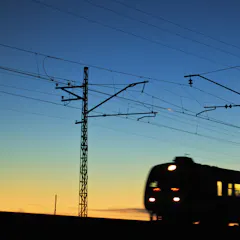
Since 2019, night train networks have seen a remarkable revival across Europe.

Electric trains use seven times less carbon dioxide than cars. With careful planning, railways could drastically cut emissions from a sector that now accounts for a quarter of the carbon in our air.

Born the same year as Queen Victoria, Eliot faced similar life choices to many young women today
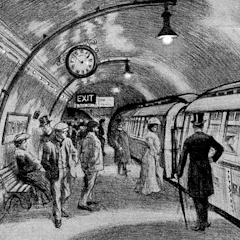
It’s hotter and more crowded on the Underground but some things have got better for commuters.

An ambitious new train would link resorts like Cancun to inland ancient ruins and colonial towns. That means laying rail across 932 miles of dense jungle, pristine beach and indigenous villages.

Though formed by the state, Eskom and Iscor enjoyed very little state support in their infancy. To survive, they had to cooperate with the private sector companies they were meant to compete with.

Driverless cars will form a fast, efficient transport network, which will make car ownership redundant. But they could also spell the end of public transport.

Just as America’s highways, sewage systems and water pipes need fixing, so does the growing gap between rich and poor. Trump and the Democrats could use that money to address both.
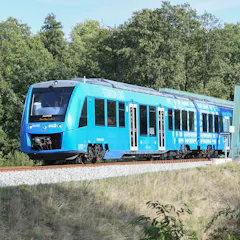
Fuel cells are being touted as an alternative to costly electrification – but no one knows if they’ll really be cheaper.
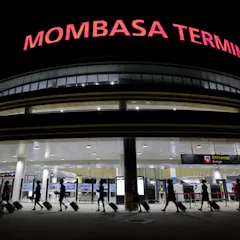
The Belt and Road Initiative will not be starting entirely from scratch. China has already invested heavily in several African railways.
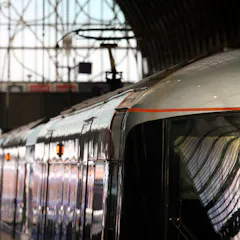
With train fares looking set to rise, there are some simple rules you can follow to get the best value tickets.

Planners have long tried to determine the ideal city size, and ideas have evolved with changing circumstances. But a good city depends more on the way it’s managed than on how many people it holds.
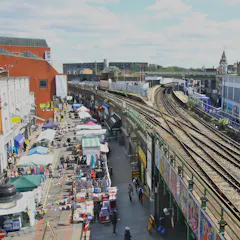
From car mechanics to coffee shops, the railway arches have long provided refuge from inner city rent hikes for small businesses.
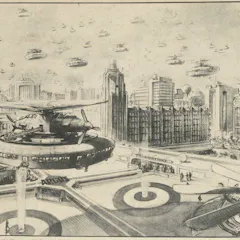
We have forgotten how to be imaginative when planning our cities. Looking back into Melbourne’s planning history, we might be able to find some inspiration to tackle rapid growth in a creative way.
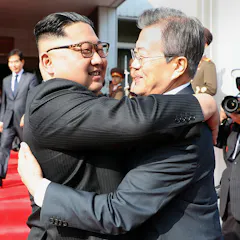
North Korea’s infrastructure is in dire need of expansion and modernisation. This is where the South can help.

Regional areas are expanding, and yet not enough attention is being paid to improving rail access to capital cities. This affects the liveability of the areas.

Under current EU rules, Britain cannot recreate a railway monopoly. It can, however, follow the lead of other EU countries in bringing more of the rail sector into public ownership.
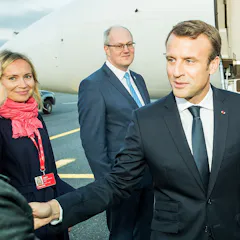
Since his election, Emmanuel Macron has emerged as a man of the “liquid” society, where finance, labour, politics and people shift and flow. What matters is change, not the direction one is taking.
Top contributors
-

Honorary Principal Fellow, University of Wollongong
-
Visiting Research Fellow, Intelligent Mobility, Manchester Metropolitan University
-
Professor of Operations Management, Manchester Metropolitan University
-
Senior Fellow, Centre for Free Expression, Toronto Metropolitan University; York University, Canada
-
Researcher in Transport Policy and Governance, UCL
-
Professor of Sustainability, Curtin University
-
Lecturer, Department of Environmental Engineering and Management, University of Dodoma
-
Senior Lecturer in History, University of Portsmouth
-
Senior Lecturer in Accounting, University of Essex
-
Instructor in Rail Transportation Engineering, Penn State
-
Lecturer in Transport Economics, Edinburgh Napier University
-
Associate Professor, Department of Environmental Engineering and Management, University of Dodoma
-
Professor of Transport Governance, University of Leeds
-
Visiting Professor in Geography and Planning, and Visiting Fellow, Heseltine institute for Public Policy and Practice, University of Liverpool
-
Professor of Economic Development, University of Hertfordshire