
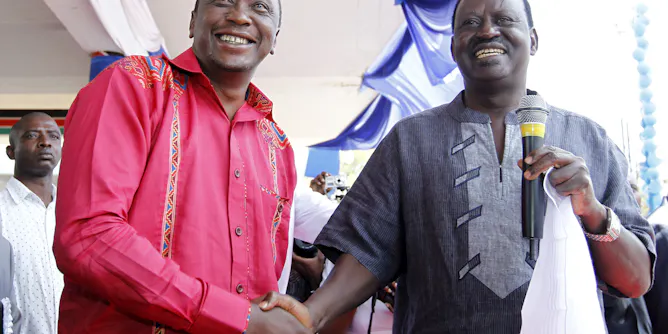
Democracy doesn’t seem to work within societies governed by politics of ethnicity. Instead, elections continue to offer up the hard choice between electoral credibility and political stability.
Articles on Raila Odinga
Displaying 61 - 78 of 78 articles
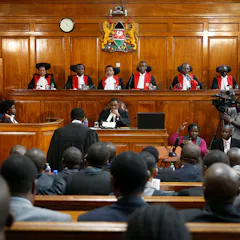
Kenya’s electoral commission faced many legal challenges before the general election, and yet another after the poll. But how will the Supreme Court’s historic ruling impact the country’s democracy?
Kenya’s Supreme Court landmark ruling has opened the door to robust conversation around the country’s nascent democracy, paving the way for rule of law and stronger institutions.
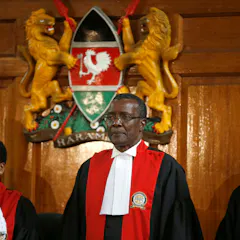
For decades, power in Kenya has lain with the government and administrative organisations that serve it. The Supreme Court’s decision calling for a new election suggests that this may have changed.
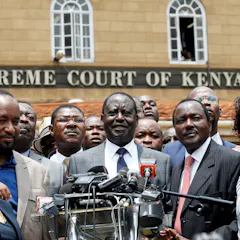
By failing to provide details on what invalidated Kenya’s election, the country’s Supreme Court has created an impossible timeline for organising re-elections within 60 days.
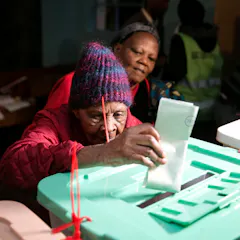
Kenya’s recently concluded general election has been described as a mixed bag of highs and the lows being the deadly clashes.
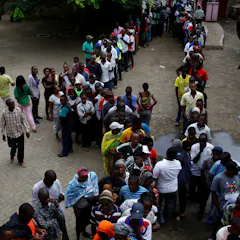
Despite concerns about corruption, the high cost of living and a stagnating economy, Kenyans may have handed Uhuru Kenyatta a second term.
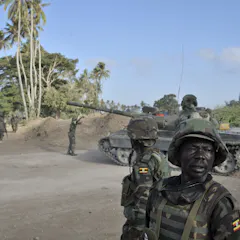
It’s unclear exactly when Kenya’s next president will begin the process of withdrawing troops from Somalia. If it’s too rushed, the move might destabilise the region.
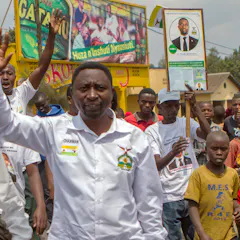
With frequent irregularities, it’s easy to become cynical about elections in Africa. But polls are an essential component of the continent’s growing democracy.
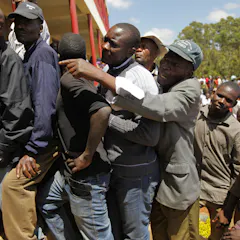
Kenya’s history of electoral problems is interwoven with a political drama which pits one dynasty against another in a rivalry that goes back more than 50 years.
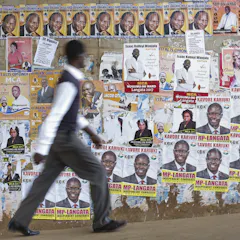
The two main candidates in Kenya’s election are incumbent Uhuru Kenyatta and the opposition’s Raila Odinga. Polls have them neck-and-neck. Here’s what you need to know about the key issues.

Integration within the East African Community has been sticky. The fact that Kenya’s main political parties haven’t spelled out their policies on the community in their manifestos is a worry.

Although some complain that the differences between Kenyatta and Odinga are more rhetorical than real, one thing is clear: Kenyans have a real choice to make at the ballot box.
Kenyans should be demanding to know if the country is ready or able to offer free secondary education given past failures.

Appeal to faith is a popular election campaign strategy in Kenya where the line between religion and politics is often thin.
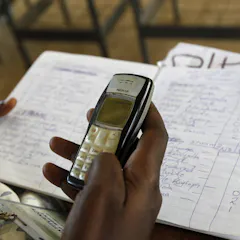
The closer the race between the incumbent Uhuru Kenyatta and Raila Odinga, the more Kenyans will start to worry about election rigging.

Kenya’s next general election is slated for August 8 this year. As the country prepares for the polls, there are fears that political tensions will result in violence. Will history repeat itself?
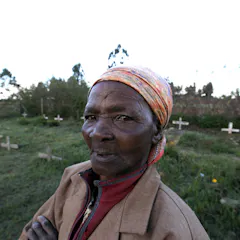
The violence that often accompanies political disputes or elections is testimony to the efficacy of hate propaganda as a tool in the political arsenal of Kenyan politicians.
Top contributors
-

Professor of Comparative Politics, University of Warwick
-
International Relations Scholar, University of the Witwatersrand
-
Professor, Weber State University
-
Professor of Democracy, University of Birmingham
-
Professor of History, Durham University
-
Research Professor, Institute for Development Studies (IDS), University of Nairobi
-
Associate Professor of International Studies, University of Nottingham
-
Professor, Faculty of Business and Management Sciences, University of Nairobi
-
Senior Lecturer, HOD-Mass Communication, Kabarak University
-
Associate professor, Uppsala University
-
PhD Candidate, Department of Political Science and Public Administration, University of Nairobi
-
Professor of Media Industries, University of Nottingham
-
Postdoctoral Researcher, Faculty of Law, University of Oxford
-
Postdoctoral Research Associate, University of Cambridge
-
PhD Candidate in Political Economy, SMC University