
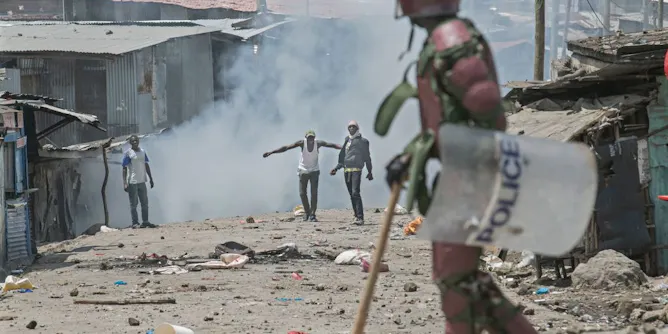
Political protests in Kenya have become insular, sectarian, tribal and unashamedly personality driven.
Articles on Independent Electoral and Boundaries Commission (IEBC)
Displaying all articles

Kenya’s electoral agency is tasked with enhancing and supporting constitutional democracy – any dysfunctions would have dire consequences.
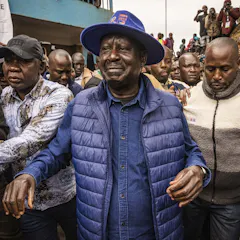
Odinga’s legal petitions have entrenched the rule of law and and deepened democracy in Kenya.

The 2022 election proved that the country’s situation and its people have changed since the violence that marred past elections.
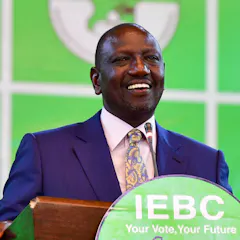
The division within the Independent Electoral and Boundaries Commission, the fact that the race was very close, and turnout was relatively low may increase incentives to challenge the results.

When people fail to exercise their right to vote, it increases the likelihood of political extremism and the pursuit of narrow interests.

Kenya is not unlike any other country where democratic deepening requires a ‘two-steps forward, one-step back’ outlook.
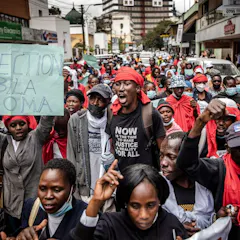
Patronage politics, a history of violent conflict and high-stakes elections increase the risks of poll violence in Kenya.

The presence of fringe presidential contenders is a marker of maturing democracies.

The country’s courts have already exhibited a significant level of maturity in rulings touching on the executive.
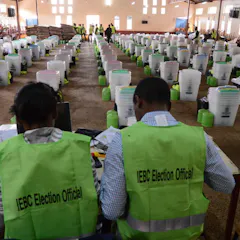
Electoral malpractice can be justified by some as preventing a greater injustice to the individual, community or nation.
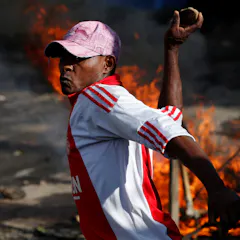
Key institutions steering Kenya’s election have evidently broken down, leaving the country open to an iron fist to reestablish political stability by any means necessary.
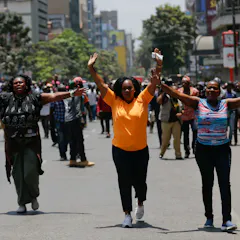
Despite avenues for legal redress, the solution to Kenya’s constitutional crisis is political. The leadership on both sides of the political divide must reach an agreement for the sake of the nation.
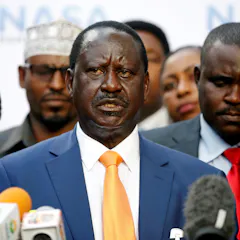
Kenya’s upcoming poll will continue despite opposition leader Raila Odinga’s decision to exit lawful processes prematurely. This will mean Kenyatta will likely win his second term in a row.
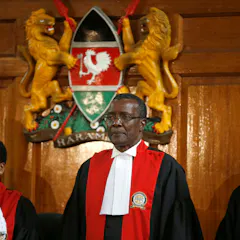
For decades, power in Kenya has lain with the government and administrative organisations that serve it. The Supreme Court’s decision calling for a new election suggests that this may have changed.
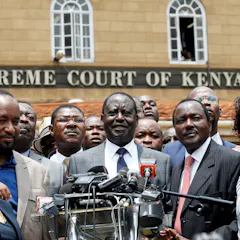
By failing to provide details on what invalidated Kenya’s election, the country’s Supreme Court has created an impossible timeline for organising re-elections within 60 days.
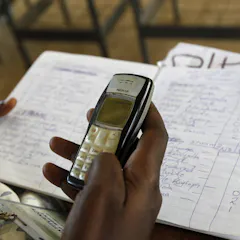
The closer the race between the incumbent Uhuru Kenyatta and Raila Odinga, the more Kenyans will start to worry about election rigging.
Top contributors
-

Professor, Weber State University
-
Professor of History, Durham University
-
Professor of Comparative Politics, University of Warwick
-
Professor of Democracy, University of Birmingham
-
Postdoctoral Researcher, Faculty of Law, University of Oxford
-
Associate professor, Uppsala University
-
International Relations Scholar, University of the Witwatersrand
-
Professor, Faculty of Business and Management Sciences, University of Nairobi
-
PhD Candidate, Department of Political Science and Public Administration, University of Nairobi
-
Professor of Political Science and Co-founder of the Political Economy Forum, University of Washington
-
Senior Lecturer, HOD-Mass Communication, Kabarak University
-
Researcher, African and African Diaspora Studies, National School of Anthropology and History