
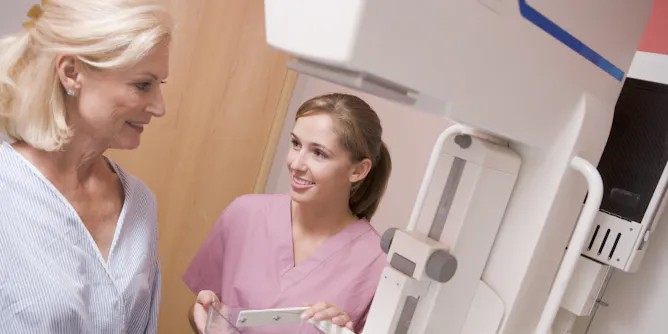
3D mammography is becoming more widely available, but is it superior to the traditional 2D technology for breast cancer detection? The answer isn’t clear-cut.
Articles on Radiation
Displaying 61 - 80 of 126 articles
Russia appears to have developed a revolutionary mini-reactor able to power a missile.
Space missions are dangerous. But when it comes to long missions, radiation may be the greatest threat to astronauts’ health.

Should we be concerned about the health effects of 5G? The short answer is no – there’s no substantiated evidence that the electromagnetic energy used by mobile telecommunications causes harm.
In its Cold War race to the moon, the US played Russian roulette with solar storms.
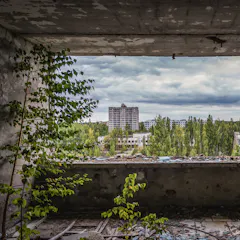
Most plant life survived the nuclear disaster at Chernobyl - and they have a lack of legs to thank for it.
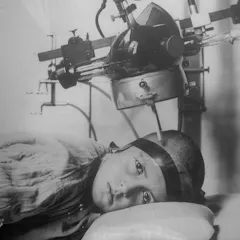
Many Canadians underwent radiation treatment for benign illnesses in the 1940s and 1950s. There has been no systematic investigation or education campaign to alert those patients to their increased risks of thyroid cancer today.

The HBO series ‘Chernobyl’ has reignited interest among tourists to visit Pripyat, but growing up in the disaster’s shadow has made us wary.

Male and female tumors are different. Researchers are now hoping to exploit these sex-specific differences to treat brain cancer. This might improve survival for everyone.
No-deal preparations have been both criticised as being part of ‘Project Fear’ and used to show that Brexit will be disaster. Here’s the history behind this kind of planning.
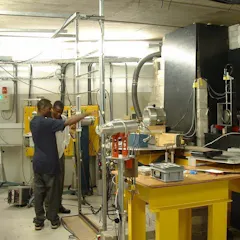
Neutrons can penetrate through matter, which means they can be harnessed for all sorts of important work.
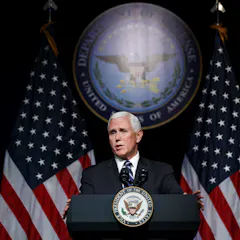
Could Canadian technology play a part in the newly announced U.S. Space Force? A team at McMaster University has developed an instrument that could keep Space Force troops safe from radiation.

New research reveals the risks of lung cancer after breast cancer radiotherapy and identifies the best treatment to reduce these risks.
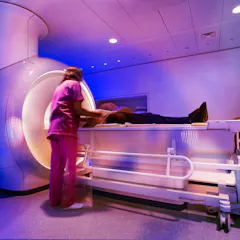
There are many different types of medical imaging and they all pick up different things.
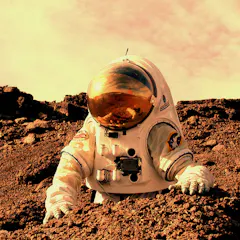
Cosmic radiation is much higher today than it was during the Apollo era.
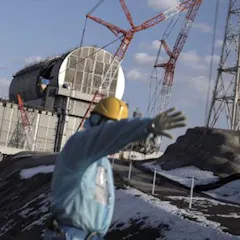
On March 11, 2011, a nuclear disaster struck Japan. Translated testimony by the power plant’s manager reveals how close the world came to a greater catastrophe – and how much there is to be learned.
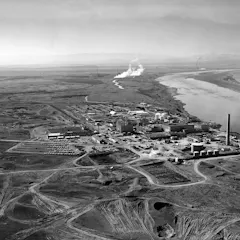
During the Cold War, the US built nuclear weapons at a network of secretive sites across the nation. Some are still heavily polluted and threaten public health today.
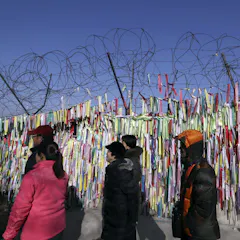
The Trump administration shelved its plans for a ‘bloody nose’ attack while the Olympics in South Korea were under way. With the games over, it’s time to consider the consequences of a strike.

The Trump administration’s push for ‘energy dominance’ could spur a new wave of domestic uranium production. A scholar describes the damage done in past uranium booms and the visible scars that remain.

During World War I, Marie Curie left her lab behind, inventing a mobile X-ray unit that could travel to the battlefront and training 150 women to operate these ‘Little Curies.’
Top contributors
-
 Timothy J. Jorgensen is a Friend of The Conversation.
Director of the Health Physics and Radiation Protection Graduate Program and Professor of Radiation Medicine, Georgetown University
-
Director Radiation Research and Advice, Australian Radiation Protection and Nuclear Safety Agency (ARPANSA), and Adjunct Associate Professor, University of Wollongong
-
Professor of Engineering and International Relations, University of Southern California
-
Professor of Health Psychology, University of Wollongong
-
Honorary Principal Fellow, School of Population and Global Health, The University of Melbourne
-
Senior Fellow, James Martin Center for Nonproliferation Studies, Middlebury College
-
Professor of Environmental Science, University of Portsmouth
-
Professor of Sociology, Ball State University
-
Professor Emeritus of Communication, North Carolina State University
-
Doctoral student, Adelaide University
-
Postdoctoral research fellow, Applied Ethics, University of British Columbia
-
Associate Professor of Physics, The University of Melbourne
-
Research Fellow in nuclear waste disposal, University of Sheffield
-
CBRN defence scientist, Charles Darwin University
-
Reader in Psychology, University of Stirling