
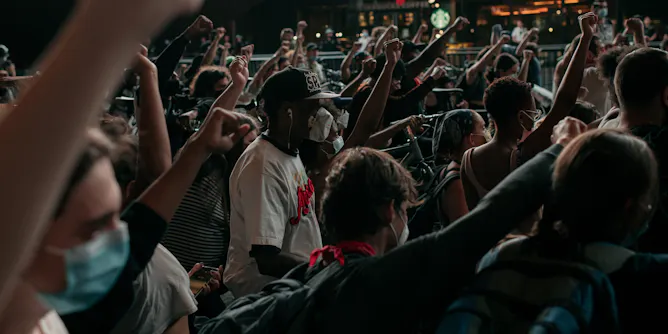
A new study suggests exposure to police violence may affect the outcome of a pregnancy.
Articles on Racial inequality
Displaying 21 - 40 of 56 articles

Findings show that income transfer programmes must operate in deliberate coordination with ancillary social service institutions to deliver the maximum benefits for women’s empowerment.
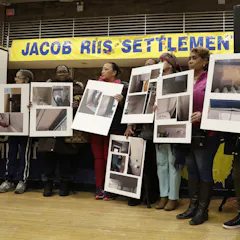
Building retrofits are no joke: They make dwellings healthier and more energy-efficient. And when they’re done in low-income housing, they also reduce inequality.

A food policy researcher helps make sense of the lexicon of US food policy terms, and explains how they relate to racial justice.
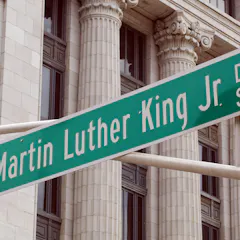
US cities began naming streets in Black neighborhoods for Martin Luther King Jr. after his 1968 assassination. Researchers studying these areas 50 years later found entrenched deprivation.
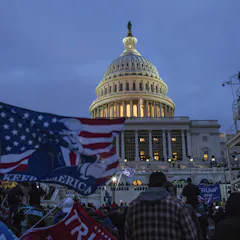
Extremist groups like the Proud Boys get white supremacy into headlines. But all white people benefit from white supremacy, whether they know it or not.
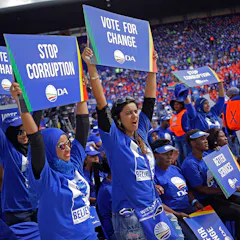
The problem for the Democratic Alliance is not one of policy. There is real substance in its commitment to substituting racial criteria for overcoming historical disadvantage.

New research shows homes in white areas have appreciated $200,000 more since 1980 than similar homes in nonwhite areas – a result of both old racist housing policies and modern real estate practices.
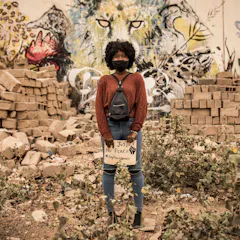
A leading sociologist explains how different dimensions of humanity produce different kinds of inequality - and what that does to the least equal in society.
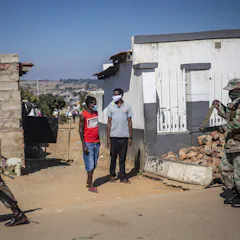
Ramaphosa’s call for a new social compact will fall on deaf ears unless there are some fundamental changes to the way in which the pandemic is being managed.

Decriminalizing medical and recreational marijuana may exacerbate racial inequality within the criminal justice system, among other things.

Jokes and satire can build resilience but also spread misinformation as people don’t always know what is trustworthy and what is just funny.
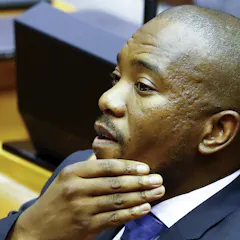
There is no moral equivalence between apartheid’s use of race categories and their continued use by the democratic government.

Unity for the wrong reasons reduces social cooperation to whatever happens to benefit a particular person or group, making it a zero-sum game.

As more people of color move to the suburbs, they might not find the full range of opportunities that white European ethnic groups did for most of the previous century.
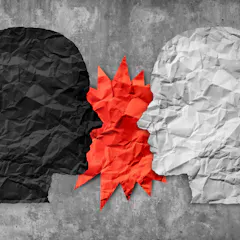
The white liberal establishment, both inside and outside the Democratic Alliance, holds on to its race-blindness by distorting the South African idea of “non-racialism”.

The Democratic Alliance’s problems can be traced back to the politicisation of race, which has persisted even after the dawn of democracy in 1994.

A study looked at fines in 93 California cities. Cities with more black residents and more disproportionately white police forces tended to rely the most on fines.
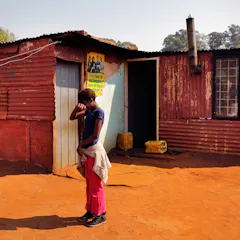
The child support grant, as a policy instrument, cannot work alone in ensuring that young people thrive and succeed.

Thanks to demographic and political changes, Democratic contenders are addressing this issue for the first time.
Top contributors
-

Professor of Political Studies, University of Johannesburg
-
Professor of Sociology, University of the Witwatersrand
-
DSTI/NRF Research Chair in Welfare and Social Development, University of Johannesburg
-
Assistant Professor of Sociology, University at Albany, State University of New York
-
Assistant Professor at CIDE (Center for Research and Teaching in Economics) and Research Assistant Professor, Vanderbilt University
-
Professor of Law, The University of Texas at Austin
-
Researcher at the Centre for African Studies, University of Basel
-
Sachs Lecturer, Johns Hopkins University
-
Faculty Director for Professional Education, BU School of Education, Boston University
-
Associate Professor of Communication and Social Behavior, Cornell University
-
Professor of Psychology and Education, USC Dornsife College of Letters, Arts and Sciences
-
Professor of Urban Form and Society, UCL
-
Economics PhD Candidate, Stellenbosch University
-
Associate Professor, Criminal Justice, Penn State
-
Professor of Law, University of South Carolina