

The diseases that spread like wildfire. And those that don’t.
Articles on R0
Displaying all articles

Just because a variant spreads faster, it doesn’t necessarily mean it has a higher R0.

We published an article earlier this month that contained incorrect estimates for the basic reproduction number (R0) for COVID subvariants BA.4/BA.5 and BA.2. We have now corrected the error, but I wanted…

Delta is more contagious and appears to be more deadly. And it’s more likely to land those infected in hospital and intensive care. Here’s what the latest evidence says about the dominant variant.

By merging genomics with classical epidemiology, researchers are able to predict new disease outbreaks based on which viral variants are on the rise.

Epidemiological data suggests that 80% of COVID-19 cases can be traced to just 20% of those infected with SARS-CoV-2.

Getting the control measures right is critical.

R is still useful for public health, but it should not be the only metric we use to understand virus transmission.

The latest Doherty Institute modelling also indicates the spectre of ‘unidentified community transmission’ is very unlikely indeed.

I’m here to say: make sure you read beyond the headlines.

An audio version of an in depth article on why mathematical modelling is crucial to understanding pandemics like the new coronavirus.

Epidemiologists want to quickly identify any emerging disease’s potential to spread far and wide. Dependent on a number of factors, this R0 number helps them figure that out and plan accordingly.
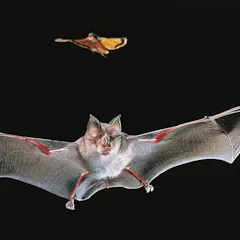
Some of the world’s worst diseases have come from animals. Bats, cows, camels and horses have all contributed. Now, scientists are working to know which animal introduced the new coronavirus.
Top contributors
-

Associate Professor, Epidemiology, Deakin University
-
Doctoral candidate, Biology, Wesleyan University
-
Research Fellow, Epidemic Decision Support, The University of Melbourne
-
Professor of Entomology and Director of the Center for Infectious Disease Dynamics, Penn State
-
Ph.D. Student in Integrative Pathobiology, University of California, Davis
-
Huffington Foundation Professor of Biology in the College of the Environment, Wesleyan University
-
Research assistant, Wesleyan University
-
Chair in Epidemiology, Deakin University
-
Associate Professor and Research Leader in Virology and Infectious Disease, Griffith University
-
Professor of Mathematical Biology and Public Engagement, University of Bath
-
Honorary Senior Lecturer in Virology and President of Research-Aid Networks, University of Kent
-
Professor and Chair of Epidemiology, University of Michigan
-
Professor in Mathematical Biology, The University of Melbourne
-
Professor of Population Health & Reproduction, University of California, Davis
-
Honorary Research Fellow, Telethon Kids Institute, and Professor, Curtin School of Population Health, Curtin University