

Children of these parents are more likely to have mental health issues − and ultimately suffer from substance use disorder themselves.
Articles on Quick reads
Displaying 101 - 120 of 1266 articles

The poet obsessively collected images of himself, foreshadowing both the good and the bad of today’s selfie culture.

A deep dive into the test’s framework suggests it was designed to fail about the same share of students every year, even if they’d made actual progress from previous years.

Patients with chest pain who have a sedentary lifestyle are at higher risk for more heart problems and death within the year following hospitalization.

Focusing on student learning preferences could boost the number of students from underrepresented groups earning science and engineering degrees.

Tailoring diversity training to participants’ psychological profiles boosts its effectiveness, a new study found – especially among skeptics.

Many parents think that drinking at home is a safe way to teach teenagers about alcohol, but research suggests this is not true.

Society as a whole can benefit from programs that protect kids because the harms experienced in childhood can last a lifetime.

Racial achievement gaps virtually vanished when students answered quizzes during remote learning.

Knowing how many calories a food contains has become a familiar part of eating. But it may muddy rather than clarify a person’s understanding of how healthy that food is.

They say honesty is the best policy − but when it comes to using AI on the job, research suggests that can backfire.

A study of US state legislators found that posting misinformation online was a winning strategy for boosting a politician’s visibility – but not for Democrats.

Aligning AIs with people’s goals and values is tricky. A new technique quantifies how far off human and machine are from each other.

This hospitality course bridges the gap between theoretical knowledge and real-world skills.
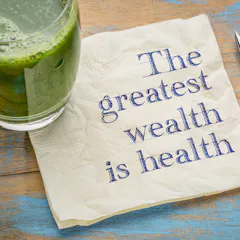
New research shows that Americans’ personal wealth is not enough to compensate for factors that affect how long people live, such as health behaviors, education or social support.

Increasingly, these types of tranquilizers are turning up in fentanyl, oxycodone and other illegal opioids.

A health insurance alliance proved to lower costs for individuals and employers.

People who suffer from everyday discrimination are more likely to have anxiety and depression.

Communities with unstable housing, food deserts and less access to health care contribute to the problem.

Bots that reply to online posts can help people connect with each other, but at the same time they also interfere with people communicating with each other.
Top contributors
-

Associate Professor of Business, Boston University
-
Director, Institute for Social and Health Equity, University at Albany, State University of New York
-
Distinguished Professor of Humanities Emerita, College of the Holy Cross
-
Interim Director of Data & Research Partnerships at the Lilly Family School of Philanthropy, Indiana University
-
Associate Professor of Communication, Michigan State University
-
Distinguished Professor of Pharmacy Practice, University of Connecticut
-
Professor of International Economic Affairs at The Fletcher School, Tufts University
-
Associate Professor of Nonprofit Studies, George Mason University
-
Associate Professor of Quantitative Marketing and Analytics, Binghamton University, State University of New York; Indiana University
-
Assistant Professor of Philanthropic Studies, Indiana University
-
Professor of Sociology, Texas A&M University
-
Assistant Professor of Psychology, Arizona State University
-
Ben L. Fryrear Chair in Marketing and Associate Professor of Business Administration, University of Pittsburgh
-
Professor of Economics, University of Nebraska Omaha
-
Distinguished Professor of Sociology and Public Policy, UMass Amherst