
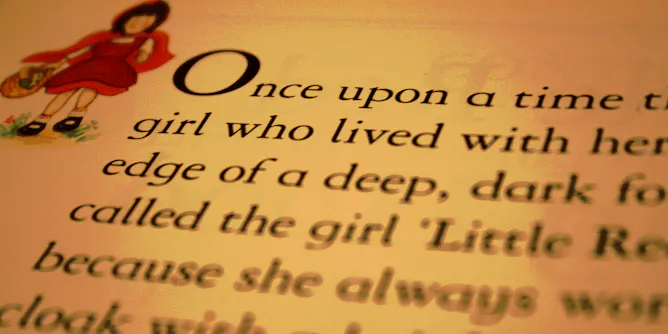
Bedtime stories can be comforting, chilling and mysterious, but new research highlights how emotions change depending on how children are doing it.
Articles on Publishing
Displaying 141 - 160 of 187 articles

If the government decides to remove regional trade protections on the book industry, it should compensate Australian authors. But given how unlikely new funding would be, the best option – for everyone – is to leave well enough alone.

The #bookstagram hashtag on Instagram is changing the way the world looks at reading.

Richard Neville was a man of his times: a smart-alec student in the 60s; a drug-smoking hippie on trial in the 70s; to a family man, writer and public speaker in the 80s and 90s.

There is mounting evidence to show scientists and researchers why public engagement is worth their while.
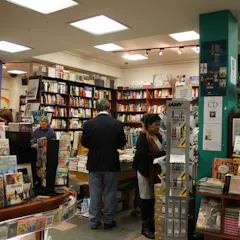
Five years ago, the death knell was sounded for the bookshop. But the paper book, which offers hours of deliciously deep, screen-free reading, has not gone the way of Kodachrome. In fact, bookstores are staging a minor comeback.

Experts once thought that young adult literature was doomed. Now it’s got some of the fastest-growing sales in publishing. What changed? Social media might be the key.
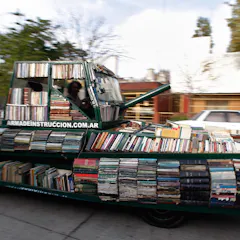
Books contain ideas. They enable minds to shine. Our publishing industry is under pressure on many fronts – yet cultural matters seem of little significance to the federal government.
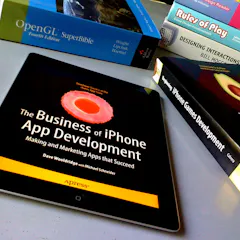
An open access textbook model is gaining traction in the US and Australia and shaking up the publishing industry.

The perception of publishing as a business, even a creative one, means that the question of book sales dominates our conversations about it. But publishing offers far more to our culture than that.

Wikipedia is celebrating its 15th birthday, but it’s eight years since contributor numbers peaked. What does this tell us about its future?
The uniquely Australian literary voice is worth protecting, but parallel importation restrictions are not the way to do it. Rather, we should lift those restrictions – and subsidise Australian booksellers directly.

Our contemporary age may be the first in which parallel importation is undertaken not by booksellers in competition with each other, but by individual consumers in competition with local booksellers.
The Australian government yesterday announced it intends to repeal parallel importation restrictions on books, which has again caused concern in the publishing industry. But, really, what’s the problem?
A study into the responses of Australian authors, publishers and readers to global changes in the contemporary publishing environment suggests authors are being innovative, but financial rewards can be elusive.
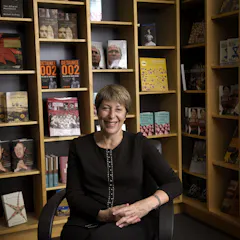
The Book Council of Australia began to take shape last week when MUP director Louise Adler was announced as its chair. But what is its purpose, and how will it embrace the industry’s new voices?

J R R Tolkien died over 40 years ago and since then there have been over 30 titles bearing his name. Is this warranted?
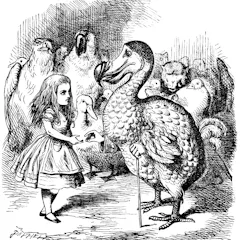
The release of the long list has opened the gates to the annual torrents of literary hobnobbing.
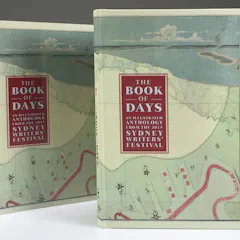
As well as a souvenir of the 2015 Sydney Writers’ Festival this anthology is a compelling argument for the future of books in print. Book objects are talismans as much as vessels for the content they carry.
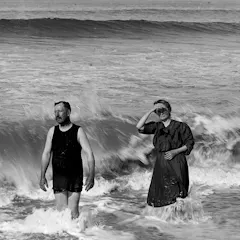
It’s hard to work out how funding for literature – if at all – fits into the draft guidelines of the new National Program for Excellence in the Arts. So what are the politics, and problems, at play?
Top contributors
-

Senior Lecturer, Writing, Department of Media and Communication, Swinburne University of Technology
-
Professor in Publishing Studies, University of Stirling
-
Senior Lecturer, Department of Media and Communications, University of Sydney
-
Visiting Fellow, School of Literature, Language and Linguistics, Australian National University
-
Faculty Research Manager, Macquarie University
-
Distinguished Professor of Economics, Macquarie University
-
Senior Lecturer, Department of Economics, Macquarie University
-
Senior Lecturer, Literary Studies and Creative Writing, Monash University
-
Director, Monash University Publishing, Monash University
-
Lecturer, Publishing, The University of Melbourne
-
Assistant Professor of Journalism, University of Colorado Boulder
-
Professor, Queensland University of Technology
-
Adjunct Associate Professor, University of New England
-
ARC Future Fellow; Professor; Director, Intellectual Property Research Institute of Australia, The University of Melbourne
-
Senior Lecturer, Creative Writing and English, Edith Cowan University