
Our experts look at recovery efforts, how different the post-pandemic world will be, the hunt for a cure for COVID-19, and why we need to mind our mental health.
Articles on Public transit
Displaying 41 - 56 of 56 articles
Many of Canada’s residents, including essential workers, have no choice but to ride transit. Service cuts may cripple their access to essential destinations if governments do not intervene.
Many operators have lost almost all their fare revenue. Even those who operate on contract terms that reduce the impact of falling patronage must bear the costs of disinfection and other precautions.
Australia can learn from what has been done overseas, especially in China, to keep public transport running while containing the spread of coronavirus.
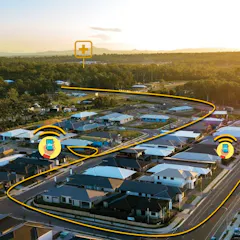
On-demand public transport has now provided over 1 million rides in 36 trials in various Australian cities. Is the problem of poor suburban public transport on the way to being solved?

Households generate a large share of national greenhouse gas emissions and can take steps to reduce them.
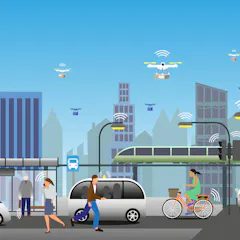
A whole range of social and technological changes could revolutionise how we travel in the coming decades.
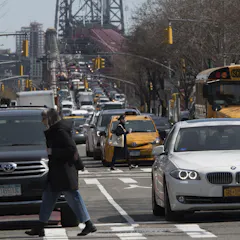
Starting in 2021, drivers will pay a fee to enter midtown and lower Manhattan during busy times of day. Will this clear New York’s air and streets?
City planners and politicians have pitched carbon emission reduction as an individual choice but this leads to green gentrification and fails to make broad changes. We need a new guiding philosophy.

For 40 years the author has argued that trains and trams are better than buses. New ‘trackless trams’, which take innovations from high speed rail and put them in a bus, have changed his mind.
In many US cities, ride-hailing apps are luring riders away from public transit and increasing traffic congestion. But with the right rules, they could enhance public transit instead.

Cities are expanding upwards and downwards, as well as outwards. With urban density also increasing, moving people efficiently around the city, often using ageing infrastructure, is quite a challenge.
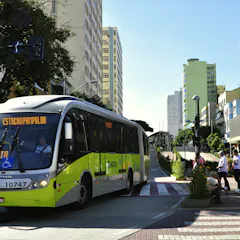
Trains and trams get most attention, but ‘tweaking’ bus transit can transform cities. Buses can be more cost-effective and deliver better service, especially for small to mid-sized cities.

Even in cities with good public transportation, some areas can be ‘transit deserts,’ where demand exceeds supply. Living in these zones makes it hard to access good jobs, health care and other services.
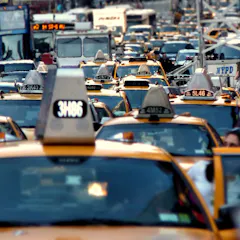
New York soon may charge a fee to drive into central Manhattan as a way of reducing traffic and raising funds for public transit. An urban scholar says this step is overdue in the United States.
As ‘Heart Month’ kicks off across North America, a cardiovascular researcher explains how the neighbourhood you live in can affect your risks of heart disease.
Top contributors
-
 John Rennie Short is a Friend of The Conversation.
Professor Emeritus of Public Policy, University of Maryland, Baltimore County
-
Professor of Urban Policy and Planning, Hunter College
-
Honorary Associate, Institute of Transport and Logistics Studies, University of Sydney
-
Adjunct Professor, School of Environmental Design and Rural Development, University of Guelph
-
Professor of Civil Engineering, University of Texas at Arlington
-
Professor of Health Sciences, Simon Fraser University
-
Executive Director, Policy Institute for Energy, Environment, and the Economy, University of California, Davis
-
Associate Professor of Civil and Environmental Engineering, University of California, Davis
-
Distinguished Blue Planet Prize Professor of Civil and Environmental Engineering and Founding Director, Institute of Transportation Studies, University of California, Davis
-
Policy Director, 3 Revolutions Future Mobility Program, Institute of Transportation Studies, University of California, Davis
-
Professor of Human Geography and Planning, University of Tasmania
-
Professor, School of Planning, University of Waterloo
-
Acting Manager Policy and Research Whitlam Institute, Western Sydney University
-
Senior Lecturer, Geography and Environmental Studies, University of Tasmania
-
Professor of Urban and Cultural Geography, Western Sydney University