

We researched what public service leaders said in the immediate aftermath of the Robodebt Royal Commission. What we found doesn’t bode well for learning from failure.
Articles on Public servants
Displaying all articles

Overlooking the impacts of remote work on motivation may have unexpected consequences for Canadian public services and policies.

The inability of some federal public servants to use their official language of choice at work is pushing them to ponder leaving their jobs for something else within the public service or quitting entirely.

New research suggests Canada’s public servant of the future must build relationships, communicate complex and controversial ideas and manage conflict more than ever before.

Closing The Gap reports have successively highlighted the need for the public service to listen to First Nations people. How do we change the status quo?

History suggests the new NZ government’s pledge to cut budgets and jobs in the public sector will cost more in the long run – and damage morale in the process.

An inquiry found the Home Affairs secretary used his position for personal advantage, gossiped disrespectfully about ministers, broke confidentiality and didn’t disclose a conflict of interest.

Having interviewed advisers to past and present prime ministers in Australia, Britain, Canada and New Zealand, my new research shows how crucial it is to recruit and train staff – before an election.

COVID-19 transformed the workforce, including in the public sector. A complete reversal to pre-pandemic work models is unlikely, but there’s lots at stake as employers contemplate the future of work.
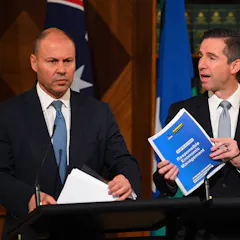
Many reviews over the years have revealed the efficiency dividend often does impact the level and quality of services, particularly for smaller agencies and particularly over time.

Our new research shows that public servants are eager to become innovative public problem solvers, but their leaders are standing in their way.

The decision confirms the steady march of employer control over workers’ private views and activities, supported by courts and tribunals over many years.

Corrupt politicians and public servants will be under the spotlight of the new federal corruption watchdog. But if its proposed powers are any clue, it will have neither bark nor bite. Here’s why.

The appointment of ministerial advisers is based on a party-political network of patronage, where the primary consideration is loyalty to the political party – not merit.

Australia’s labour market does a relatively good job of accommodating the preferences of the majority of workers. But that’s not to say there’s no-one who wouldn’t prefer to work more – or less.
Top contributors
-

Associate Professor, Faculty of Law, Monash University
-
Professorial Fellow, The University of Melbourne
-
Honorary Professor of Public Policy, Australian National University
-
Professor of Public Administration, Te Herenga Waka — Victoria University of Wellington
-
Professor of Policy and Impact, Monash Sustainable Development Institute, Monash University
-
Distinguished Professor of Workplace Law, RMIT University
-
Professor, New York University
-
Professor of Public Administration, Te Herenga Waka — Victoria University of Wellington
-
Assistant Professor, Department of Anthropology, Economics and Political Science, MacEwan University
-
Associate Professor of Politics and International Relations, University of Auckland, Waipapa Taumata Rau
-
Democracy Deputy Program Director, Grattan Institute
-
Professor, Faculty of Management, Dalhousie University
-
Associate Professor in Public Management and Policy, Te Herenga Waka — Victoria University of Wellington
-
Research Assistant, Centre on Governance, L’Université d’Ottawa/University of Ottawa
-
Professeur agrégé, École d'études politique, Directeur, Centre d'études en gouvernance / Associate professor, School of Political Studies, Director, Centre on Governance, L’Université d’Ottawa/University of Ottawa