

The actions of failing water companies often follow a familiar pattern.
Articles on Public private partnerships
Displaying 1 - 20 of 33 articles

A new form of public-private partnership is reshaping urban landscapes: Community-centered, public-private partnerships, or CP3s.

A longtime critic of Atlanta’s BeltLine explains how the popular network of parks has increased inequality in the city and driven out lower-income residents.

The cooperation should strengthen institutions and rally private entities to fund public projects.

States across Australia are increasingly using market-led proposals to build infrastructure. The emerging problems reflect the inherent risks of projects that bypass proper public planning processes.

The interests of pharmaceutical companies and public health are not the same. Industry dollars can distort research agendas, while framing health challenges and solutions in ways that benefit corporations.

Collaboration is key to successful partnerships.

Location counts when it comes to sustainable development.

The problem with most public housing ‘renewal’ programs is that the residents have the least say in what happens to the places they call home. The evidence of housing research is also being ignored.
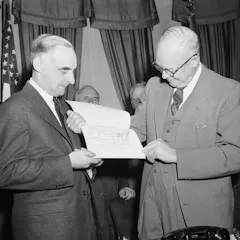
Despite all their anti-tax sentiments, Republicans from Hoover to Trump have embraced this levy on sales at the pump.

The long-awaited $1.5 trillion plan fails to address some major obstacles to private investment.

The $1.5 trillion plan he’s proposing would do the most for ventures that don’t really need the government’s help and ignores some major obstacles to private investment.

There are huge challenges in South Africa’s public schools. The question is whether using public-private partnerships is the correct way to address them.

Scientists need funding to do their work. But a new study finds turning to industry partners taints perceptions of university research, and including other kinds of partners doesn’t really help.

South Africa’s social grant scandal seems to back up highly regarded views on public governance that Public Private Partnerships aren’t naturally efficient.

The need for new housing solutions for these low-income groups is clearly a pressing requirement.

There are many good things about the budget, including the promised cut to the payroll, but many of the key commitments relating to how policies will support growth are, at best, pointers.
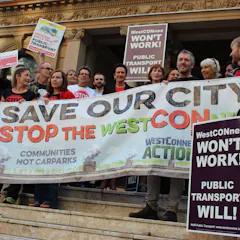
Tensions are mounting between the professional practices of government planners, processes of public participation and the private sector’s increasing role in shaping Australian cities.

Building more rail shouldn’t be reliant on the public purse.
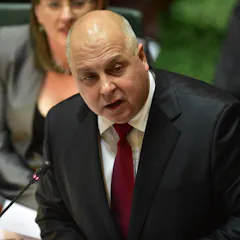
Victoria’s Labor government has eschewed an austerity approach in its first budget, in contrast to some of its state counterparts.
Top contributors
-

Head of Urbanism and Associate Professor of Urban Studies, School of Architecture, Design and Planning, University of Sydney
-
PhD Candidate, Global Projects Center, Stanford University
-
Graduate Research Fellow of Sustainable Design and Construction, Stanford University
-
Adjunct professor, Faculty of Law, Monash University
-
Director, Crawford School of Public Policy, Australian National University
-
Associate Professor and Honorary Associate, Department of Government and International Relations, University of Sydney
-
Professor of Public Relations, Michigan State University
-
Associate professor, UNSW
-
Associate Professor in Infrastructure Management, University of Sydney
-
Professor of Industrial Strategy & Regional Development, Co-Director Centre for Governance, Regions and Industrial Strategy (CGRIS), University of Bath
-
Professor, Public Service Research, UNSW
-
John Curtin Distinguished Professor, Curtin University
-
Emeritus Professor of Housing and Housing Studies, RMIT University
-
Director, Institute for Ethics, Governance and Law, Griffith University
-
Professor of Political Studies, University of Johannesburg