

Many leaders of these groups are reluctant to take policy positions that may appear political to members of their local communities or donors.
Articles on Public policy
Displaying 21 - 40 of 173 articles

The U.S., Canada and Mexico will continue to sign trade and economic agreements, but these pacts won’t deliver the certainty and protection enjoyed for three decades prior under the former NAFTA.

Citizens’ assemblies bring members of the public into the fold of the difficult trade-offs that need to be made on every decision of public importance.

Ghana’s history with implementing laws threatens the success of the affirmative action law.

The government has decided against including questions about sexuality and gender identity in the 2026 Census. How can it make policy for LGBTQI+ people without such basic data?

Requiring businesses to lobby through the people, not government, as Pierre Poilievre recently suggested, may sound like a better way to make policy. It’s not.
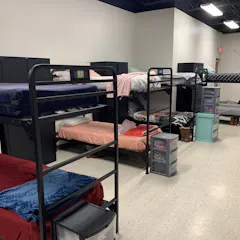
A Philadelphia neighborhood is pushing back against the city’s plan to expand an existing shelter to serve people in active addiction.

It turns out that handing over taxpayer dollars to billionaire owners tends to be far less popular among regular citizens than among well-connected government officials.

Free secondary educational policy in Ghana is worthwhile but struggles to keep up with quality.

Learning how to produce polished prose can greatly enhance your value on the job.
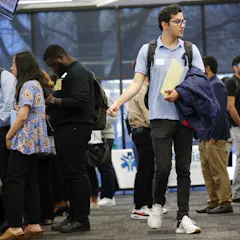
Students should know that a key part of the value of their undergraduate degree lies in taking advantage of all the opportunities for learning that universities offer.

Researchers want real-world impact. Lawmakers want programs that work. The public wants to benefit from taxpayer-funded research. Building a bridge from academia to legislatures is key to all three.
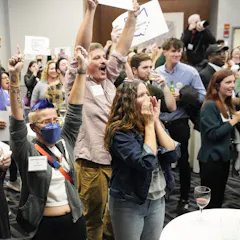
Election year 2024 will see citizen initiatives on the ballot across the country, some focused on abortion rights. But there’s a growing trend of lawmakers altering initiatives after they have passed.
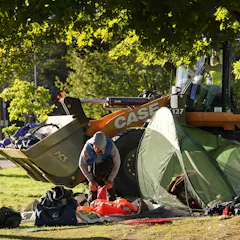
To be homeless is a condition in which a person’s freedom is profoundly compromised. And that’s un-American, says a philosopher.

The only way an Alberta COVID-19 committee can meaningfully determine how public policy should be made is if it tackles head-on the question of how to measure the psychological impacts of policy.

For remote Indigenous communities, reductions in alcohol use are linked with the strength of culture, empowerment and community.

Powerful new AI systems could amplify fraud and misinformation, leading to widespread calls for government regulation. But doing so is easier said than done and could have unintended consequences.
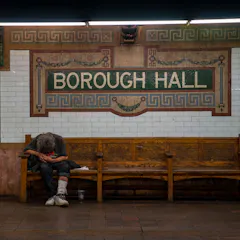
New York City’s plan has garnered the most attention – and criticism – but several cities are expanding their own intervention programs.

‘Unlegislating’ poverty demands a new course of action from governments that focuses on the expertise of people living with poverty who understand acutely how public policies fail.
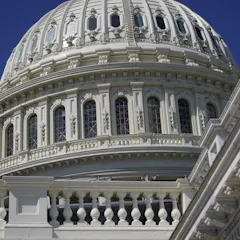
What makes an effective lawmaker? Two scholars have studied 50 years of congressional legislating, and they’ve got a scorecard and a plan.
Top contributors
-

Professor of Government (Emeritus) University of Manchester and Research Associate, University of Cambridge, University of Cambridge
-
Managing Director, Triple Helix Consulting; Honorary Professor, ANU Fenner School for the Environment and Society, Australian National University
-
Associate professor, University of Tasmania
-
Director of the Complex Adaptive Systems Research Group, University of Newcastle
-
Professor, Queen's University, Ontario
-
Professor of Economics and Public Policy, ANU College of Arts and Social Sciences, Australian National University
-
Honorary Fellow, The University of Queensland
-
Adjunct Professor, Stout Research Centre, Victoria University of Wellington and Auckland University of Technology, Professor of Political Science, Charles Sturt University
-
Senior Fellow in Energy and Climate Change, Grattan Institute
-
Associate Professor of Political Science, University of Johannesburg
-
Research Associate, Institute of the Americas, UCL
-
Professor of Political Economy and Public Policy, Chair at Danish Institute for Advanced Study, University of Southern Denmark
-
Principal Research Fellow, Institute for Marine and Antarctic Studies, University of Tasmania
-
Professor in Innovation and Impact, UNSW
-
Research Associate, Department of Civil, Environment and Geomagnetic Engineering, UCL, UCL