
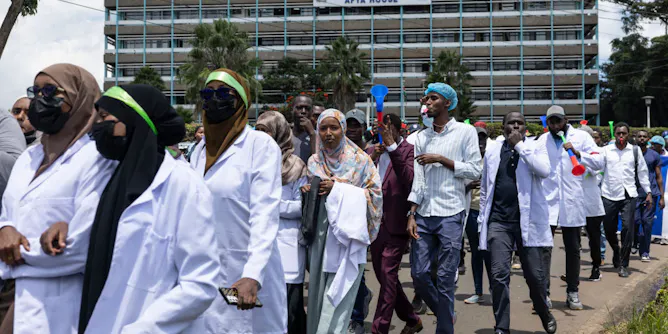
Doctors are demanding the implementation of a 2017 agreement to improve working conditions.
Articles on Public hospitals
Displaying 21 - 40 of 89 articles

Women favour seeing the same health provider throughout pregnancy, in labour and after they have their baby – whether that’s via midwifery group practice, a private midwife or a private obstetrician.

National Cabinet is meeting today to discuss hospital funding, and the interconnected issues of NDIS reform and GST allocation. But how are hospitals actually funded? And what’s GST got to do with it?
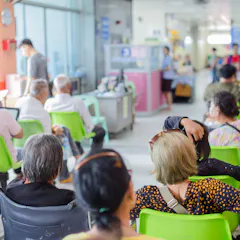
Governments spend billions of dollars every year to encourage us to take up private cover. But our research shows this does little to reduce pressure on the public system.

Sometimes you just can’t wait to see a doctor. With the addition of more virtual services during COVID, these days you have more options.

Hospitals are struggling, with ambulances ramping outside emergency departments and patients facing long waits for care. But doing more of the same won’t fix the problem.
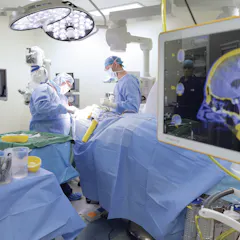
While states are responsible for running hospitals, the federal government shares responsibility for paying for them. But it’s an uneasy relationship.

A public health expert explains emergency measures recently brought in to manage the impact of Omicron on our stressed health system.
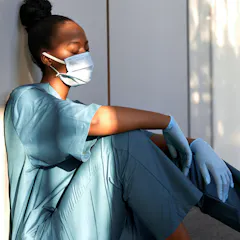
About a quarter of health workers surveyed reported symptoms of psychological distress, including depression, anxiety and stress.

Singapore will start charging people who choose not to be vaccinated for any COVID-related hospital care. While Australia’s hospitals are also under pressure, we shouldn’t follow suit.

Who gets scarce life-saving resources when hospitals are overwhelmed? And how are these decisions made? State and territory governments are yet to answer these difficult questions.

From the benefits of telehealth to the importance of integrating public and private systems, the COVID-19 pandemic offers several valuable lessons for Australia’s health system.

Elective surgeries have been halted as part of the health system’s response to coronavirus. But many are unnecessary and shouldn’t be rescheduled after the pandemic ends.
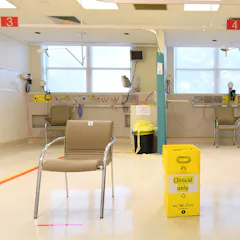
Over the past week, we’ve seen about 350 new cases per day. If this rate continues, Australia’s current ICU system will be able to cope.
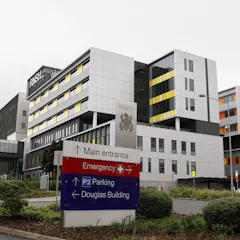
Private hospitals will be on the frontline in the coronavirus battle, under an arrangement with the federal government that makes available the sector’s more than 30,000 beds and 105,000 workforce.

Australians should now be practising social distancing to slow the spread of SARS-CoV-2, the virus that causes COVID-19. By creating more space between yourself and others you decrease the risk of person-to-person…

New private health insurance data show young people are continuing to drop their cover. But the industry’s argument a youth exodus will put pressure on public hospitals isn’t necessarily right.

As candidates propose ways to provide health insurance for more people, it’s important to know that some proposals could have unexpected consequences, including potential closure of public hospitals.

Labor and the Coalition’s health policies and campaign strategy couldn’t be more different this election.

Medicare is a vote-changer. The Coalition learnt this in the 2016 federal election campaign and has since guaranteed its commitment to the program. But that may not avert a Mediscare 2.0.
Top contributors
-

Honorary Enterprise Professor, School of Population and Global Health, and Department of General Practice and Primary Care, The University of Melbourne
-
Professor of Health Economics, The University of Melbourne
-
Associate Professor, Centre for Health Economics, Monash University
-
Professor, Public Service Research, UNSW
-
Professor of Health Economics, Flinders University
-
Reader in Health Economics, Centre for Health Economics, University of York
-
Professor, Public Health, Victoria University, Victoria University
-
Professor and Director, Macquarie University Centre for the Health Economy, Macquarie University
-
Senior Lecturer, University of Sydney
-
Professor of Midwifery, Associate Dean Research and HDR, Midwifery Discipline Leader, Western Sydney University
-
Senior Associate, Grattan Institute
-
Associate professor, University of Newcastle
-
Professor of Health Economics and Director, Centre for Health Economics Research and Evaluation, University of Technology Sydney
-
Health economist, University of Sydney
-
Adjunct Associate Professor, Menzies Centre for Health Policy and Economics, University of Sydney