

In an emergency, you can’t always use your private health insurance. And even if you do, you can face these out-of-pocket costs.
Articles on Private hospitals
Displaying 1 - 20 of 34 articles

The government has allowed private health insurers to raise premiums by an average of 4.41% from April. How are these set? And why is it higher than inflation?

Unlike other comparable nations, specialists in Australia can charge what they like. But higher fees don’t necessarily mean better care.
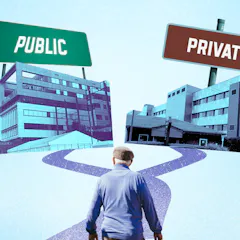
Private hospitals perform around 70% of elective surgery in Australia. But many are in financial trouble.
Too many people miss out on seeing specialist doctors, while others face long waits or high costs. A new Grattan Institute report outlines a blueprint for reform.

More private hospitals will face similar financial troubles and some will be forced to close. Here’s what this means for patients, the public system and the budget.

One in ten people experience harm associated with their hospital care, such as medication errors, infections, or a deterioration that isn’t managed properly.
A government review into private hospitals has yet to be made public. In the meantime, here’s whether there’s a case for a government bail-out.

If you’re thinking of a breast augmentation, liposuction, or a face lift, this latest move is designed to provide extra protection. Here’s what you need to know ahead of surgery.
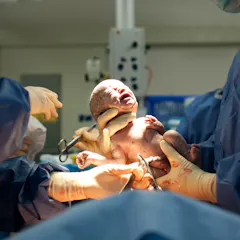
We looked at almost 300,000 births and found those mothers in the private system were more likely to have a caesarean – even if they didn’t really want or need one.
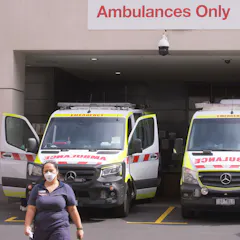
A public health expert explains emergency measures recently brought in to manage the impact of Omicron on our stressed health system.
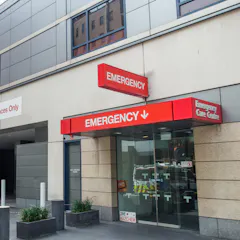
From the benefits of telehealth to the importance of integrating public and private systems, the COVID-19 pandemic offers several valuable lessons for Australia’s health system.
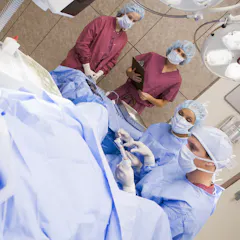
The COVID-19 pandemic gives us a chance to improve our elective surgery system when it restarts.

Elective surgeries have been halted as part of the health system’s response to coronavirus. But many are unnecessary and shouldn’t be rescheduled after the pandemic ends.
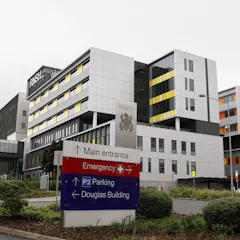
Private hospitals will be on the frontline in the coronavirus battle, under an arrangement with the federal government that makes available the sector’s more than 30,000 beds and 105,000 workforce.

In April, private health insurance premiums will increase by an average of 2.92%. It’s the lowest rise in 19 years but still much higher than wages growth. And insurers still make a healthy profit.

Patients often want the option to be treated at home rather than being admitted to hospital. But it’s much less likely to happen if you’re a private patient.

Subsidies for private health insurance premiums cost the government over A$6 billion a year. Is it time to scrap the rebate and redirect these funds elsewhere in the health system?

Findings from South Africa’s Health Market Inquiry makes recommendations to close the information gap between service providers and consumers.
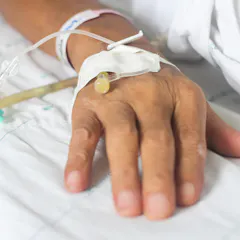
Each year, inspectors visit Australian hospitals. But they’re less like secret shoppers who identify flaws, and more like guests of a carefully orchestrated performance. This needs to change.
Top contributors
-

Honorary Enterprise Professor, School of Population and Global Health, and Department of General Practice and Primary Care, The University of Melbourne
-
Associate Professor, Centre for Health Economics, Monash University
-
Professor of Health Economics, The University of Melbourne
-
Emeritus Professor, Menzies Centre for Health Policy, University of Sydney
-
Senior Lecturer, University of Sydney
-
Professor of Health Economics and Director, Centre for Health Economics, Monash Business School, Monash University
-
Professor of Health Economics, University of Technology Sydney
-
Professor, Public Health, Victoria University, Victoria University
-
Reader in Health Economics, Centre for Health Economics, University of York
-
Professor of Midwifery, Associate Dean Research and HDR, Midwifery Discipline Leader, Western Sydney University
-
Professor of Economics: School of Economic and Business Sciences Frederik Booysen, University of the Witwatersrand
-
Professor of Health Economics and Director, Centre for Health Economics Research and Evaluation, University of Technology Sydney
-
Associate professor, University of Newcastle
-
ARC Future Fellow, Australian National University
-
Professor, Clinical Epidemiology & Process Redesign, Flinders University