

Government critics say changes to health insurance rebates will strain the public health system. But the evidence shows the impact might not be what you think.
Articles on Public health system
Displaying 1 - 20 of 23 articles

Many studies show public funding of private health care can be more expensive and less equitable. A truly evidence-based health system would acknowledge this.

Health lists support informed decision-making to enhance the delivery of services at various levels.

Much needs to be done to improve governance of South Africa’s health system. Eight recommendations provide a guide to what needs to be prioritised.

Nigeria’s medical community is mourning the death of public health physician and university administrator, Emeritus Professor Umaru Shehu.

Urban populations are diverse, and certain neighbourhoods or subgroups may be disproportionately affected by poor birth outcomes.

Adding more beds won’t fix emergency department pressures. Neither will one-size-fits-all processes. But improving patient flow and addressing staff shortages might.

The start of one new public health crisis didn’t mean the end of another.

By borrowing from the British NHS system of working closely with general practitioners, this radical shake-up of New Zealand’s health system can greatly improve primary healthcare.

The announcement of a new Māori health authority could radically transform health outcomes for Māori, but its success depends on how independent and accountable it will be.

New Zealand’s Accident Compensation Corporation has been urged to reconsider a policy change that restricts access to treatment for women who suffered common birth injuries.

Nigeria’s unreliable power supply comes with a triple challenge of social, economic and environmental costs.

Those who work in the background to keep everyone healthy — public health nurses, health inspectors, laboratory techs and epidemiologists — deserve recognition in the fight against COVID-19.

The pharmaceutical waste from Buffalo City dump sites reveals that the sale of over-the-counter drugs remains vastly unregulated and under-researched.

A new report estimates that by 2050, 40 per cent of all infections will be resistant to antimicrobial treatment. This will directly cause 13,700 previously preventable deaths.

Past upgrades to the state’s medical record system have cost tremendous amounts of money, and on at least one occasion, forced clinicians to revert to paper-based methods.

Female-centred health services are good, but they may detract from gender equality and men’s health.

South Africa’s Competition Commission has delayed the release of the final report of an inquiry into the private healthcare again.
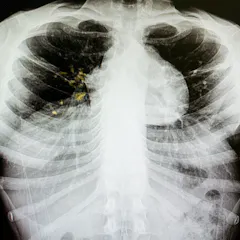
Using a large number of computers to screen TB drugs reduces the cost and time.
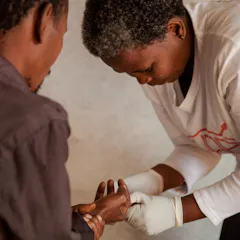
Women and children remain the focus of HIV while men are disadvantaged in accessing testing and treatment in Africa.
Top contributors
-

Senior Researcher, University of Cape Town
-
Senior postdoctoral research fellow, Institute of Tropical Medicine Antwerp
-
Associate Professor in the Department of Health and Behavioral Sciences, University of Colorado Denver
-
Associate Professor, Political Science, McMaster University
-
Lecturer in Bioinformatics, University of the Western Cape
-
Professor of Law, University of Waikato
-
Adjunct Professor, Stout Research Centre, Victoria University of Wellington and Auckland University of Technology, Professor of Political Science, Charles Sturt University
-
Research Fellow at Ukwanda Centre for Rural Health, Stellenbosch University
-
Emeritus Professor of General Practice, The University of Western Australia
-
Chief Specialist Scientist, South African Medical Research Council
-
Professor, School of Public Health, University of Gothenburg Sweden, University of the Witwatersrand
-
Senior Lecturer in Public Policy, Te Herenga Waka — Victoria University of Wellington
-
Professor of Obstetrics and Gynecology, Muhimbili University of Health and Allied Sciences
-
Professor Emeritus, Gombe State University
-
PhD Candidate in Health and Behavioral Sciences,, University of Colorado Denver