

There are a variety of reasons why people do or don’t want to be vaccinated. Depending on how they frame their messaging around vaccination, doctors can often be the deciding factor.
Articles on Public health campaigns
Displaying 21 - 40 of 52 articles

Subtly shifting the crafting and delivery of public health messaging on COVID-19 vaccines could go a long way toward persuading many of the unvaccinated to get the shot.

When politicians disregard public health directives, new research shows it causes the public to distrust governments’ handling of crises like the COVID-19 pandemic.

When a crisis like COVID-19 disrupts expectations for the future, it also disrupts how health messaging works. Advertising research shows three ways that health campaigns can succeed in a crisis.

COVID-19 messaging frames staying home as a personal responsibility, but for many it’s a luxury they can’t afford. Like the language used for drug addiction, it stigmatizes low-income people.

During the pandemic, clear and reliable health communication can literally be a life-and-death issue. Researchers who focus on the science of science communication highlight strategies that work.

A senior World Health Organisation envoy caused consternation by proclaiming lockdowns are not a good long-term strategy against COVID-19. But it’s true, and other subtler tactics are better in the long run.

New Canadian clinical practice guidelines for obesity aim to help reduce the prevalence and impact of weight bias and stigma in clinical care, and also encourage the public to advocate for change.

COVID-19 public health messages often classify ‘elderly neighbours’ as in need of aid, and overlook the substantial contributions, achievements and resources of older people.

Not all government coronavirus health advice is reaching people who speak a language other than English. That’s about one in five households.
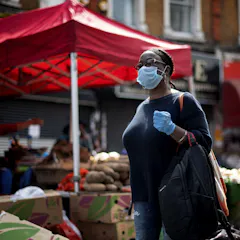
Improving health literacy and access to services could empower ethnic minorities to boost their immune systems.

Uganda’s COVID-19 task force would do well to embrace pop music in its public health communications.

Framing the fight against coronavirus as a spiritual war may stem from a shared sense of discomfort about an adversary without discernible conscience; an impersonal demon.
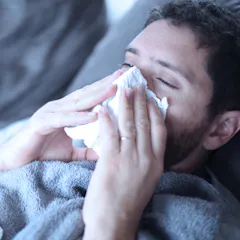
How can a tiny flu virus make you feel so bad, all over? Here’s what’s behind your high temperature, muscle aches and other flu symptoms.

Toronto’s fight against diptheria teaches us the powerful impact of public health campaigns – in persuading parents to vaccinate their children.

What if we treated climate change as a health problem rather than an environmental one? There are lessons to be learned from the successful public health campaigns against smoking.

A strike by Kenyan nurses points to the country’s failure to manage the devolution of responsibility for health care from national to county governments.

Many of us might be tempted to give up alcohol for a month as part of a highly publicised campaign, like Dry July. But how successful are these campaigns and how do you measure any long-term benefits?

Poverty, insecurity and social isolation have a major impact on public health.
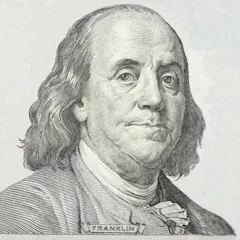
Benjamin Franklin was the most famous man of his era not only because of his role in founding our country. He had a keen interest in health, with many ideas that hold up today.
Top contributors
-

Associate Professor of Public Health, Centre for Public Health, Equity and Human Flourishing, Torrens University Australia
-
Professor of Public Health, Torrens University Australia
-
SHARP Professor, Vitalities Lab, Centre for Social Research in Health and Social Policy Centre, and the ARC Centre of Excellence for Automated Decision-Making and Society, UNSW
-
Professor of Women's Health, King's College London
-
Graduate Teaching Assistant/PhD student in History, Purdue University
-
Professor Emeritus of Geography and Environmental Studies, Wilfrid Laurier University
-
Honorary Fellow, Department of Health Sciences, University of York
-
ARC Future Fellow and Sydney Horizon Fellow, School of Public Health, University of Sydney, University of Sydney
-
Emeritus Professor in Public Health, University of Sydney
-
Family Medicine Resident, Queen's University, Ontario
-
Business Ethics Lecturer, Cardiff University
-
Reader in Social Sciences and Health, Cardiff University
-
Senior Lecturer Public Health, University of Sydney
-
Director, Master of Business Administration Program (MBA); Co-Director, Better Consumption Lab, Deakin University
-
Dean (Learning & Teaching), Griffith University