

In many countries, national exams continue to reward memorisation, shaping what teachers teach and how students learn.
Articles on Problem solving
Displaying 1 - 20 of 39 articles
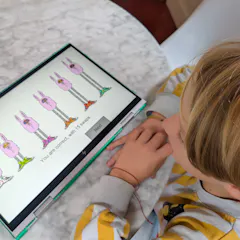
By cranking up the difficulty on the test task, researchers found that children are capable of finding systematic solutions to complex problems far earlier than psychologists had believed.

Talking to a human can come with certain limits.

Research on problem-solving offers some hints for resolving thorny workplace issues once and for all.

Research shows people remember the past to solve problems in the present. But memory might be most effective when defining a problem or implementing a solution.

Success in many workplaces is measured in part by creativity, but it can be hard to maintain it over time.

City Symposium in London, Ont., brought artists, activists, civil servants and academics together to broaden understanding about health inequity research in the community.
As more people turn to ChatGPT instead of Google, research shows AI can be a better tool for creative problem-solving – though it still has its limits.

The typical advice is to take a break and come back to the problem tomorrow with a fresh start.

As businesses continue to experiment with AI, it’s essential to strike a balance between leveraging AI’s efficiency while ensuring human judgment remains central to the innovation process.

When children engage with STEM concepts their visual literacy and conceptual understanding of scientific concepts are strengthened.

The electoral commission had only four months for work which normally takes two to three years. In the end, the election succeeded because the nation wanted it to succeed.

Magpies are expert problem-solvers – but just how good they are seems to depend on the size of the social group they grow up in.

Stimulants such as Ritalin and modafinil have a reputation as off-label ‘smart drugs’ that boost cognitive performance. New research suggests they have the opposite effect.
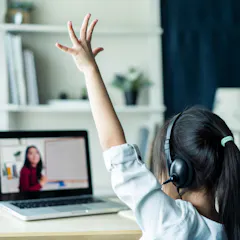
Despite the major challenges lockdown-induced remote learning has presented, teachers, pupils and parents alike have reaped certain benefits. Can school learn from these changes?
Solving mathematical equations is only part of the job. Students should be spending more time thinking about the human dimensions of the problems they are trying to solve.

A love of mathematics could help sports stars solve problems on court.
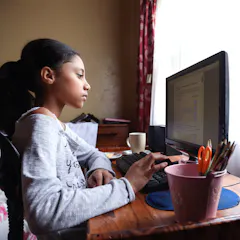
Whether they’re in a classroom or online, students should be encouraged to move around. An expert on learning with technology explains why.

Games can help players practice important skills related to civics and public life, like communication, empathy and compassion, critical thinking, and problem-solving.

Research shows multiple social and cognitive benefits of playing video games.
Top contributors
-

Research group leader, principal investigator, and ATTRACT-fellow, University of Luxembourg
-
Assistant Professor in Strategy and Organisations, School of Management, University of Bath
-
Senior Lecturer, The Open University
-
Professor of Marketing, Case Western Reserve University
-
Lecturer, School of Education, Communication and Language Sciences, Newcastle University
-
Professor of Psychology and Educational Science, University of Luxembourg
-
Royal Society Dorothy Hodgkin Research Fellow, University of Exeter
-
Researcher in TESOL & Literacy, University of Notre Dame Australia
-
Research associate and doctoral candidate, University of Luxembourg
-
Professor of Cognition, Lancaster University
-
Associate Professor, University of Sydney
-
Senior Lecturer in Computing and Communications, The Open University
-
Associate Professor in Education & Technology, University of KwaZulu-Natal
-
Professor of Environmental Engineering, University of Sydney
-
International adviser, Mitchell Institute, Victoria University