
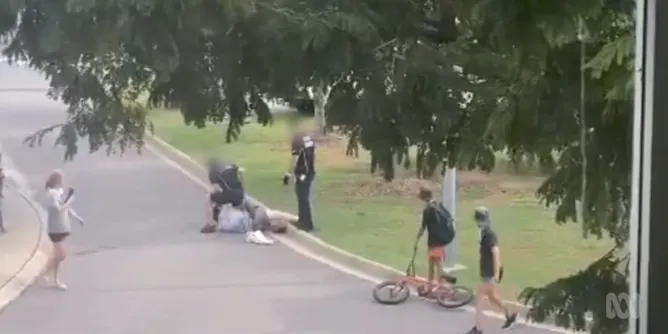
The ABC Four Corners episode ‘Guarded’ shows an increase of private policing and security in the Northern Territory. These privatised security measures need legislation to ensure community safety.
Articles on Private security
Displaying all articles
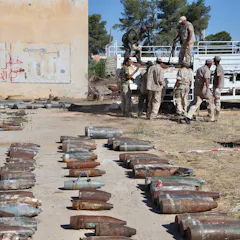
The Wagner rebellion in Russia has implications for African countries that depend on mercenaries and non-state armed groups for security.

The status quo in terms of Canada’s protection of public officials is untenable and poses a serious risk to the country’s national security.
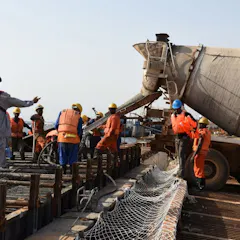
China’s need for private security services in Africa has grown significantly as Beijing increases its investment in the continent.
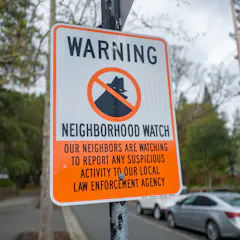
The study showed couch patrolling was more common than foot patrols - with social media influencing fears and suspicions.

If proposed amendments to the law are passed, it will no longer be possible to acquire a firearm licence for self-defence in the country. This has sparked heated debate.

From private security guards to health scanning, the private sector has been vital to China’s fight against the pandemic.

Cyber security firms have sparked a revolution similar to the spread of private police forces.
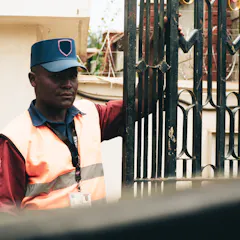
There’s been a rise in partnerships, over the past 20 years, between private security companies and police units in Kenya

Guns for hire are back in business – and they’re making war even more dangerous.
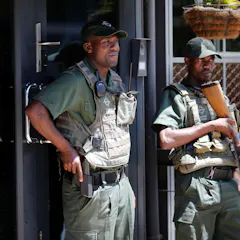
The future of private security is beset by many challenges and what forms of regulation would be required to align it with the public interest.
The man reportedly in talks with the Trump administration has a vision of setting up something akin to the East India Company in Afghanistan.
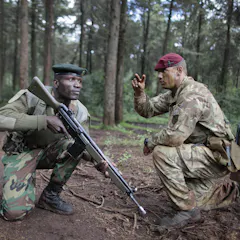
Protecting rhinos and fighting terrorism are both noble causes, but there isn’t much evidence of a link between the two.

Initial experience indicates that private security companies can provide a beneficial service to victims of family violence, but there are still concerns that need to be addressed.
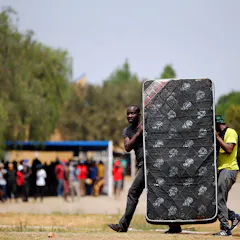
Social justice is not just a phrase for protesting students. Instead it is something that defines them.
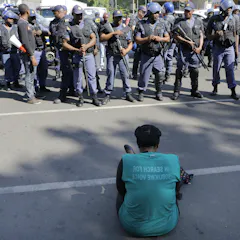
Clashes between student protesters and armed security (whether public or private) compel South Africans to consider the role of use of force in the context of protests.
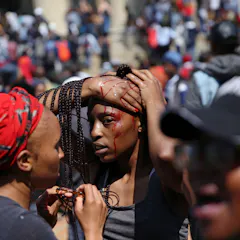
Protest movements become radicalised by two factors: escalating policing and competitive escalation between political adversaries and other protesting groups.
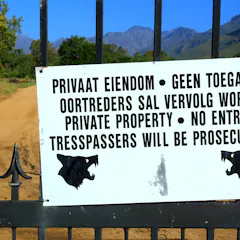
In response to high levels of crime, South Africans have turned their homes into fortresses, seeking security behind high walls. But doing so might be counter-productive.
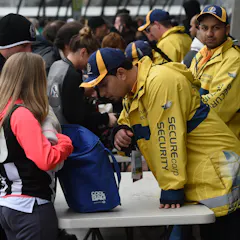
The legal status of private security staff is, for the most part, decidedly uncertain.
Top contributors
-

Professor in International Politics, University of Liverpool
-
Professor (Practice), Faculty of Business and Economics, Monash University
-
Professor of International Politics, University of Sheffield
-
Simon Research Fellow, University of Manchester
-
Lecturer in Criminal Justice, Department of Public Law, University of Cape Town
-
PhD Researcher on Green Surveillance Technologies, University of Sheffield
-
Associate Professor Julie Berg and Director, Institute for Safety Governance and Criminology, University of Cape Town
-
Lecturer in Criminology, Deakin University
-
Emeritus Professor in Law and Criminal Justice, Adelaide University
-
Senior Researcher, Vrije Universiteit Amsterdam
-
Professor of Digital Society, University of Glasgow
-
Criminologist / Senior Lecturer, Stellenbosch University
-
Assistant professor criminology, University of Nottingham
-
PhD, University of Amsterdam
-
Professor of Law, University of Technology Sydney