
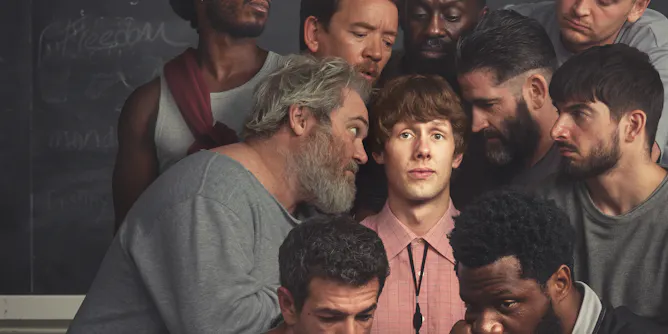
Teaching art at HMP Wakefield changed my life. This series includes the most accurate description of prison teaching I have seen.
Articles on Prison education
Displaying all articles
‘With philosophy, people care about what I think. Nobody listens when you’ve been in prison. Everything you think is wrong, rubbish, you’re nothing.’

Prison education needs serious improvement.
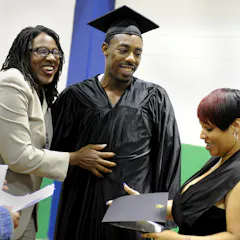
People who get an education while serving time are less likely to return to prison and more likely to enter the job market, an analysis finds.
Only 218 programs offer credit-bearing college programs in prison. That’s about to change.

A project involving prisoners coming together to write a book for their children in less than a week has had encouraging results.
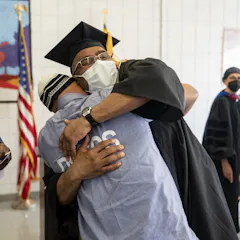
With the expansion of Second Chance Pell grants, more colleges and universities will soon offer degree programs to students in prison.
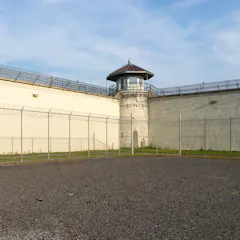
The author of a book collecting the experiences of college professors who teach in prisons explains how they are changed by the experience.
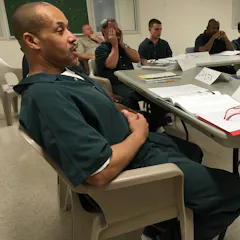
An experimental program to provide a college education in prison is about to increase its reach. Is there evidence that it will pay off?
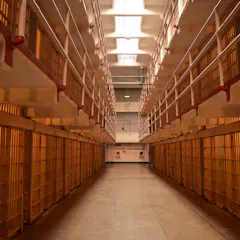
Education for those behind bars is gaining more attention. In these four articles, scholars take an up-close look at efforts to provide – and restrict – higher education in prison.

A scholar who has taught in prison weighs in on ‘College Behind Bars,’ which airs Nov. 25 and 26 on PBS. The documentary prompts viewers to consider the importance of higher education in prison.

In the project Erasing Frankenstein, students, educators and incarcerated women collaborated to created an erasure poem of Mary Shelley’s classic text, and publicly showcase their work.

Covering subjects from black holes to sleep science, a geophysicist explains his new course.
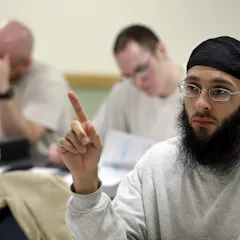
For people in prison to have a better chance at earning a living upon release, Congress should lift a longstanding ban on federal student aid for those serving time, a criminal justice scholar argues.
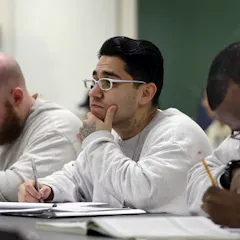
Through stories of redemption, a professor who oversees a Maryland prison education program says the time has come to restore federal financial aid for America’s incarcerated.
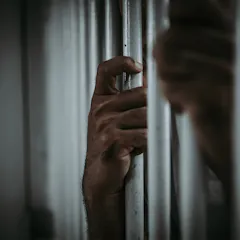
Stanley Andrisse was once branded a career criminal and served time in prison. Today, he is a professor at two medical schools and an advocate for higher education for those who’ve served time.
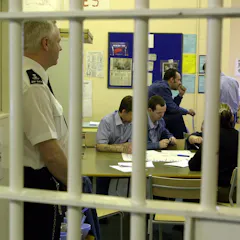
University students are learning with prisoners about crime and punishment.
Books to watch the time by.
Education has been found to reduce prisoners’ re-offending, but how can they be properly educated today without internet access?
Top contributors
-

Associate Professor of Political Science, Emerson College
-
Associate Professor of Criminal Justice, University of Baltimore
-
Professor of Sociology, Goldsmiths, University of London
-
Associate Professor (Digital Futures), University of Southern Queensland
-
Senior Lecturer in Criminology, Leeds Beckett University
-
Associate Professor of Writing, USC Dornsife College of Letters, Arts and Sciences
-
Associate professor, University of New Brunswick
-
Professor of Art History and Museum Studies, School of Fine Art, History of Art and Cultural Studies, University of Leeds
-
Professor of Criminal Justice Administration, Middle Tennessee State University; Institute for Humane Studies
-
Assistant Professor of Economics, Middle Tennessee State University
-
Senior Lecturer in Psychology (Education), University of Glasgow
-
Assistant Professor, Environmental Geophysics, University of Toronto
-
Rosalind Hollis Professor of Education for Social Justice, University of Hull
-
Assistant Professor of Medicine, Howard University
-
Lecturer in Philosophy, University of Sheffield