

Some animal species have their eyes positioned on their heads differently than how people do – and it comes with pluses and minuses for how they see.
Articles on Prey
Displaying all articles

The teeth of white sharks are not static weapons but living records of a shark’s changing lifestyle.
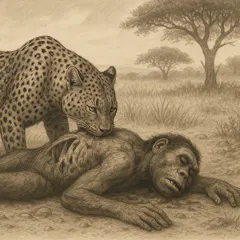
Paleoanthropologists have thought that Homo habilis was the first stone-tool maker and meat-eater in our genus. But new research suggests H. habilis might not have been so advanced.
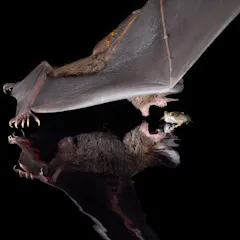
By listening to a frog call, adult bats can tell which prey are palatable and which are poisonous. Young bats must acquire this ability over time.

Understanding how animals think, learn and interact with one another can inform the science of ecology, as predator and prey shape their world.
Reintroducing wolves can restore important ecological processes, but it can have unintended effects when smaller predators like coyotes are driven closer to people, a team of ecologists found.
Food quality, not just quantity, matters when it comes to the health and survival of the southern resident killer whales.
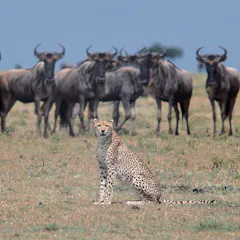
False alarms are common in prey animals, but what causes them and how can they be avoided?

We hear a lot about how humans eating meat is bad for the planet. But if every animal only ate plants, Earth would look dramatically different.

Wildfires are remaking western US forests. Decisions about managing forests that have burned should factor in how fires change animal behavior and interactions between predators and prey.
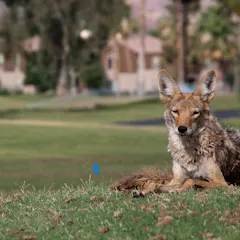
Urban coyotes prey on rodents and spread plant seeds. It’s OK to observe them from a distance, but then you should chase them off.
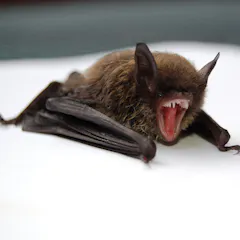
Research has revealed how earless moths manage to avoid bat attacks - by evolving sophisticated acoustic tricks.
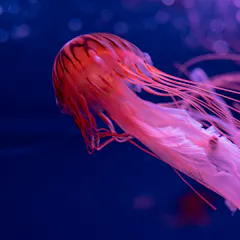
Most jellyfish are “passive” feeders. This means that they float through the water eating whatever they happen to pass in the water and can fit in their mouths.
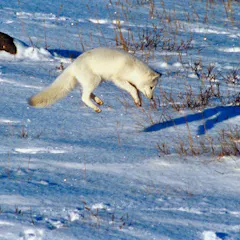
Arctic foxes have a few special talents that help them sneak up on unseen prey and pounce.
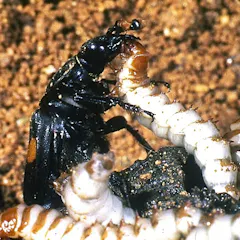
If you think only humans engage in disinformation, think again. Here is a stunning example of a beetle manipulating the odors emitted from a rotting corpse to keep it hidden from competitors.

Framing cats as responsible for declines in biodiversity is based on faulty scientific logic and fails to account for the real culprit – human activity.
Top contributors
-

Professor of Ecology and Evolutionary Biology, University of Connecticut
-
PhD candidate, University of the Western Cape
-
Postdoctoral Research Associate in Biological Sciences, University of Bristol
-
Research Associate in Department of Fish, Wildlfe, and Conservation Biology, Colorado State University
-
Postdoctoral Researcher, University of Wisconsin-Madison
-
Associate Professor of Quantitative Wildlife Sciences, University of Washington
-
Research Fellow, Edith Cowan University
-
Research Fellow in Pyrogeography, University of Tasmania
-
Postdoctoral Fellow in Ecology, University of Alberta
-
Future Fellow in Ecology, Queensland University of Technology
-
Founder of PAN Works and Research Scientist at the Marsh Institute, Clark University
-
Postdoctoral Research Fellow, Gulbali Institute, Charles Sturt University
-
Professor of Forest and Wildlife Ecology and Extension Wildlife Specialist, University of Wisconsin-Madison
-
PhD candidate, Oceanography, University of British Columbia
-
PhD in Conservation Science, University of Aberdeen