

The proposed constitutional amendment could pave the way for further changes that help the ruling party realise its dream of permanent rule.
Articles on Presidential term limits
Displaying 1 - 20 of 26 articles
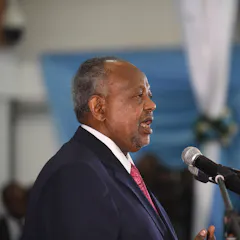
Djibouti is a presidential republic with a multiparty system, but political authority is highly centralised.

No president is supposed to serve more than two full terms. That rule became part of the US Constitution in 1951, after President Franklin D. Roosevelt died.
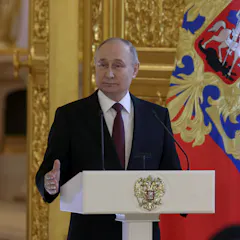
Putin successfully changed Russia’s constitution to allow himself to stay in power.
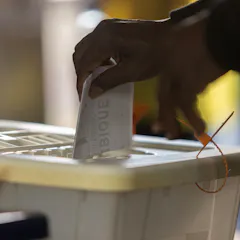
A change in presidential leadership shows voters that stability and prosperity aren’t linked to a single leader.
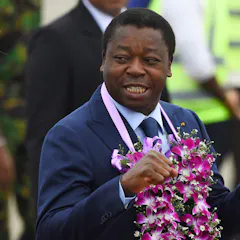
Given their impact on elections and democracy, it’s fair to consider the changes to Togo’s constitution a complete overhaul rather than a revision.
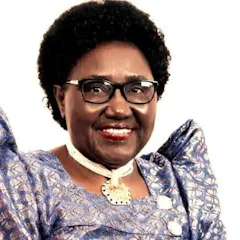
Ogwal’s experiences as an opposition politician are emblematic of the challenges faced by political opponents of the regime in Uganda.
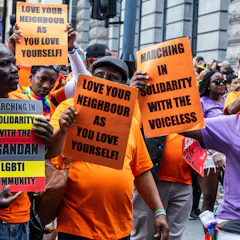
The World Bank’s funding freeze reflects a shift from policy imposition to indirect ways of controlling client nations.

Gabon is resource rich, but the Bongo family’s continuous rule has been bad news for the country of 2.3 million people.
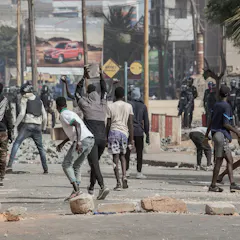
President Macky Sall’s previous ambiguity on a third-term bid, perception of a weaponised justice system and arbitrary detention of opposition are the drivers of political violence in Senegal.

Though public opinion surveys offer some hope, there are several concerns for democracy’s consolidation in West Africa.

The purpose of term limits is to minimise corruption and open the government to new ideas that could solve national problems.
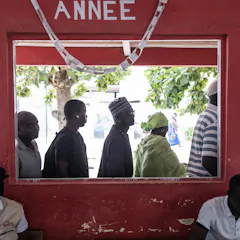
The 2024 presidential election is shaping up to give Senegalese a significant and competitive election, leaving voters in the driver’s seat.

The events of the past seven years point to a strong democratric urge among the Burkinabe.
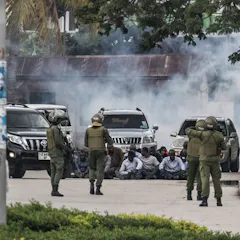
The emerging partisan politics and the polarisation it creates is a new threat for Tanzania.

Only one president has done so – Franklin Delano Roosevelt – but others considered it, and even tried.
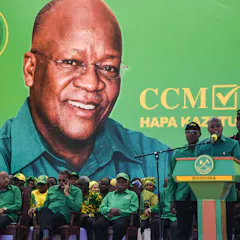
As key opposition members lose seats in their strongholds, it is clear that Tanzania’s ruling party is set to establish a super-majority that will institute a deeper authoritarian agenda.
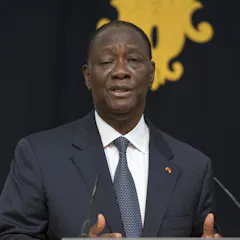
President Alassane Ouattara (78) has been blowing hot and cold on whether he’ll be seeking a third term.
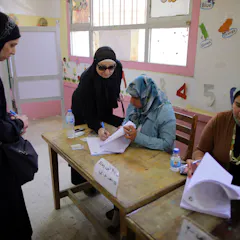
Opening up positions of political power to women will lead to effective and better implemented development policies.
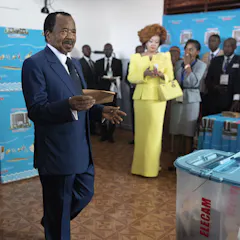
President Paul Biya’s credibility and legitimacy are increasingly being tarnished, amid growing support for opposition candidates.
Top contributors
-

Professor of International Studies, Cornell University
-
Executive director, Africa Institute of South Africa, Human Sciences Research Council
-
Assistant Professor, Emory University
-
PhD candidate in Political Studies at the Department of Politics and International Relations, University of Johannesburg
-
Associate Professor of International Relations, University of Trieste
-
Senior Research Fellow, University of Konstanz
-
Research Fellow at the International Development Department, University of Birmingham
-
Extraordinary Lecturer, University of Pretoria
-
Professor, Weber State University
-
Professor of Political Science , American Graduate School in Paris (AGS)
-
Professor of Political Science, University of Connecticut
-
Enseignant et chercheur en sociologie politique, Université de Lomé
-
Lecturer, Tumaini University Makumira
-
Assistant professor, University of Sussex
-
Professor of Comparative Politics, University of Warwick