
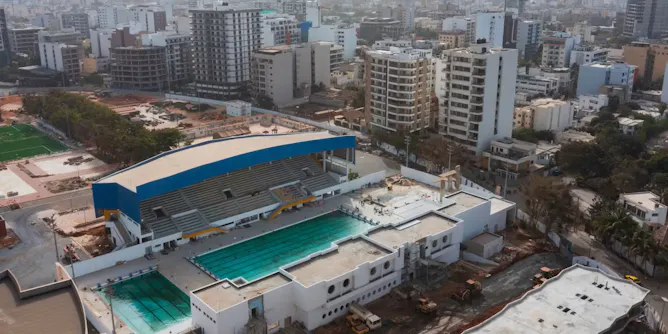
For the Youth Olympic Games, Senegal has relied heavily on substantial direct public funding with support from its partners.
Articles on Senegal
Displaying 1 - 20 of 200 articles
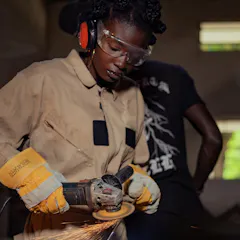
Youth employment programmes need to be built around real jobs, capable institutions and the young people they are meant to serve.
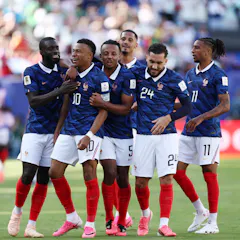
France’s ethnically diverse squad reflects the nation’s multi-faceted history: its colonial heritage, migration patterns and the French Football Federation’s training policy that dates back to the 1990s.

Well-run institutions are more resilient to financial instability and better positioned to attract long-term partnerships.
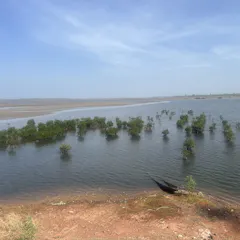
Nature-based solutions like mangrove restoration are key to climate action, but weak monitoring can overstate carbon storage, creating ‘ghost carbon’.
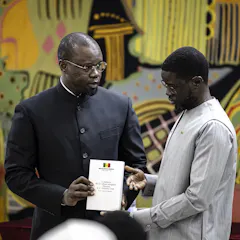
The idea of a ‘gentlemen’s agreement’ is a myth that best serves idealists.

Because iron could be used in tools, it was a technical and social revolution, especially for agriculture.
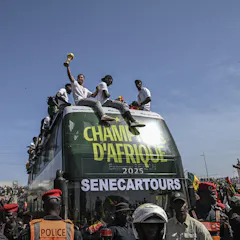
Caf’s decision to strip Senegal of the title is a textbook case for sports law.
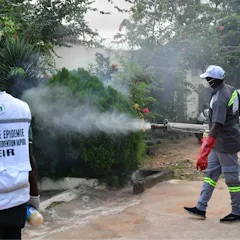
In recent decades, cases have risen sharply in Africa as urbanisation, travel and climate change have expanded mosquito habitats.

A final is not just a result. It is also a narrative, a memory, and a shared collective moment.
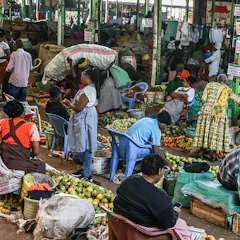
The universal fear is the effect the rise in prices is having on fuel, a staple commodity in every one of the countries for ordinary people as well as industries.
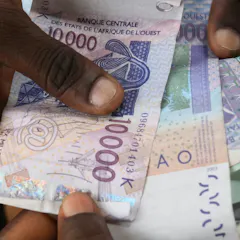
The lessons learned from this crisis must extend beyond Senegal and lead to greater debt transparency and banking supervision in the region.

What’s the secret to being the most followed person on the planet on TikTok?
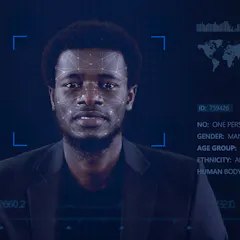
Digital identification is supposed to provide identity to all people. But sometimes it blocks access to essential services.
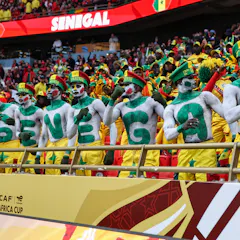
The 2026 Afcon’s on-field disturbances should not take away from its accomplishments.
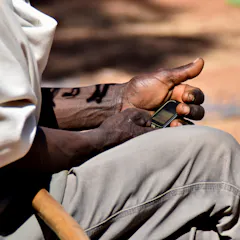
Internet shutdown affects millions of Africans more and more often and are most prominent during elections or protests.
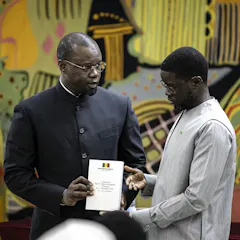
A recent report focuses on the death toll and on the burial site of the victims, stressing the importance of telling their stories.
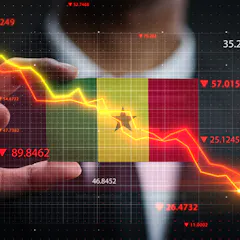
The problem with rating models applied to African countries is that they use a narrow definition of risk and don’t take into account qualitative factors.
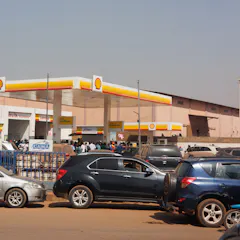
The blockade of southern Mali is designed to weaken the military government, incite the public and possibly consolidate control.
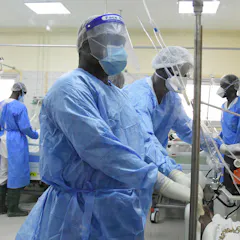
The current outbreak in Senegal is one of many that happen in cycles across Africa in the past 50 years.
Top contributors
-

Professor of French and Postcolonial Studies, University of Strathclyde
-
Lecturer in Sustainable Futures, University of St Andrews
-
Professor of Communications, Howard University
-
Assistant Professor, Emory University
-
Assistant Professor, American University of Paris (AUP)
-
Digital Research Fellow, Institute of Development Studies
-
Doctoral student in Anthropology, University of Amsterdam
-
Professor of International Studies, Cornell University
-
Professor and Chair of Allied Health Studies, Stephen F. Austin State University
-
Independent Group Leader, Max Planck Institute of Geoanthropology
-
Head of Research Programme, Council for the Development of Social Science Research in Africa
-
Steinberg Postdoctoral Fellow in International Migration Law, Centre for Human Rights and Legal Pluralism, Faculty of Law, McGill University
-
Associate Professor International Law, Roskilde University
-
Geologist, Institut de recherche pour le développement (IRD)
-
Extraordinary Professor, Department of Political Sciences, University of Pretoria