
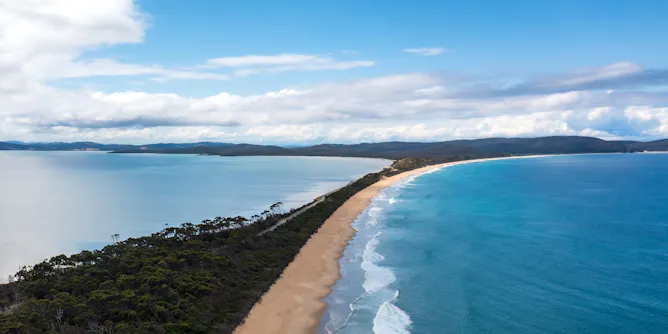
Ancient stories of the sea and the sky date back to the end of the last ice age.
Articles on Prehistory
Displaying 21 - 40 of 44 articles
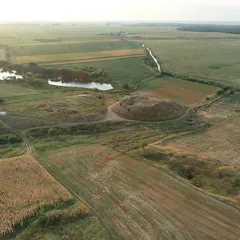
Ancient DNA from Ukraine uncovers the earliest evidence of the arrival of the ‘steppe ancestry’ – the last piece of the modern Western European genetic puzzle.
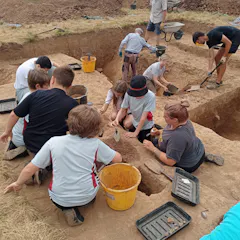
Since 2011, professional and amateur archaeologists in Cardiff have been unearthing prehistoric artefacts. But last summer, they began to discover something even more extraordinary.
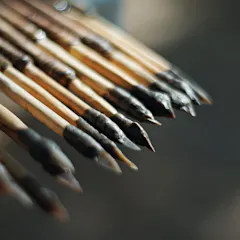
In 2022 we detailed the discovery of 1,500 stone points in France’s Madrin cave. Experiments now show that they could were used as arrowheads, pushing back evidence of archery in Eurasia by 40,000 years.
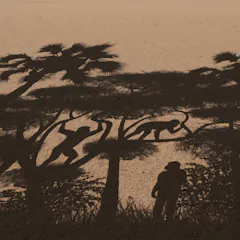
New research shows our oldest ancestors were able to walk as well as evolve in trees.
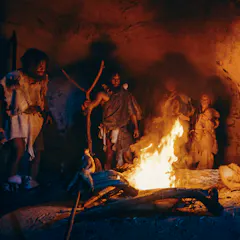
Around 200,000 years ago, people were living who were as intelligent as us.
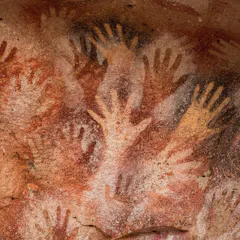
It’s possible that low oxygen levels in caves produced hallucinations – but that doesn’t explain the majority of prehistoric art.
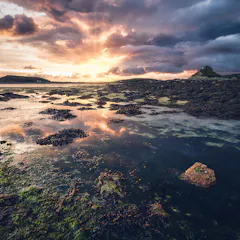
New research has mapped sea-level rise around the Isles of Scilly over the last 12,000 years.
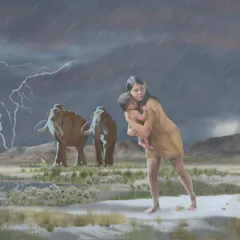
Some 13,000 years ago, an adult carrying in a child walked 1.5km in mud at great speed in the presence of hungry predators.
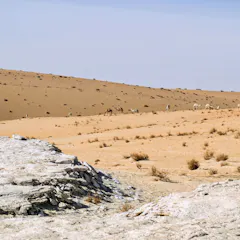
These findings represent the earliest evidence for Homo sapiens on the Arabian Peninsula, and demonstrates the importance of Arabia for understanding human prehistory.
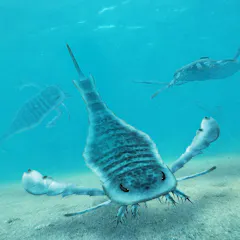
During the Paleozoic Era, giant sea scorpions would have been the equivalent of a great white shark in their food web.
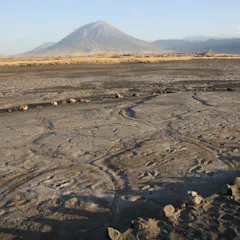
The footprints of over 20 different prehistoric people, pressed into volcanic ash thousands of years ago in Tanzania, show possible evidence for sexual division of labor in this ancient community.
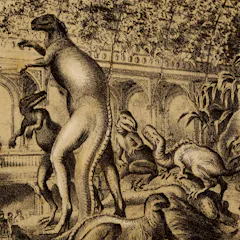
Dinosaurs are malleable beasts: so much so that their constant reshaping has often been driven by cultural and political trends.
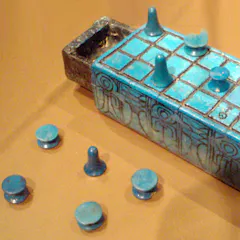
Somewhere between the early Buddhist times and today, worries about game addiction have given way to scientific understanding of the benefits of play, rather than its detriments.
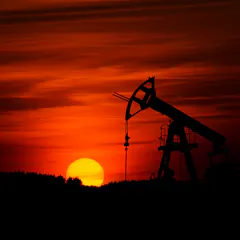
The Earth’s past shows the key role of CO₂ on climate for 4.45 billion years, and how human industrial activity has disrupted its cycle at an unprecedented rate over the past 160 years.
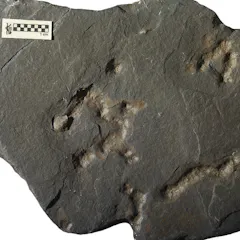
Newly found fossils point to a link between a rise in atmospheric oxygen and the first emergence of complex life on Earth.
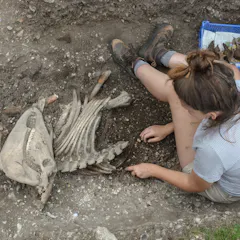
Let’s worry about the future of Brexit, not its prehistory.
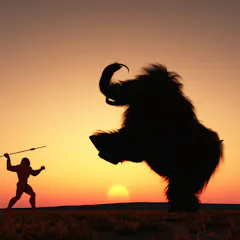
A new study suggests Neanderthals may have lived in woodlands rather than tundras, meaning they were most likely sprinters.
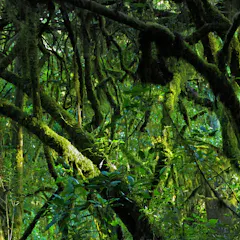
Rainforests may have played far more of a role in shaping human evolution than previously thought.
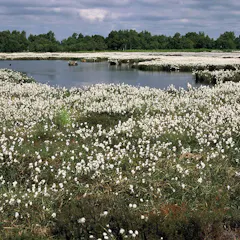
A lesser known aspect of bogs is their remarkable potential to preserve both environmental and archaeological records.
Top contributors
-
 Stephen Shennan is a Friend of The Conversation.
Professor of Theoretical Archaeology, UCL
-
Associate Professor in Hominin Palaeoecology, Bournemouth University
-
Archéologue et chercheur au CNRS, Auteurs historiques The Conversation France; Université de Toulouse
-
Professor of Geography, School of Law and Society, University of the Sunshine Coast
-
Research Associate, McDonald Institute for Archaeological Research, University of Cambridge
-
Professor of Environmental and Geographical Sciences, Bournemouth University; University of Reading
-
Sir John Monash Distinguished Professor, Monash University. Deputy Director ARC Centre of Excellence for Indigenous and Environmental Histories and Futures, Monash University
-
Post-doc fellow: Institute for modelling socio-environmental transitions, Bournemouth University
-
Research Fellow in Biological Anthropology, Monash University
-
Michael Bird is a Friend of The Conversation.
JCU Distinguished Professor, ARC Centre of Excellence for Indigenous and Environmental Histories and Futures, James Cook University
-
Associate Professor (Reader) in Physical Geography, University of Plymouth
-
Lecturer in Environmental Archaeology, University College Cork
-
Géochimiste, chargé de recherche CNRS au Centre de recherches pétrographiques et géochimiques de Nancy, Université de Lorraine
-
Professorial Fellow, Institute of Indigenous Knowledges, University of Tasmania
-
Associate Professor of Osteoarchaeology, Uppsala University