
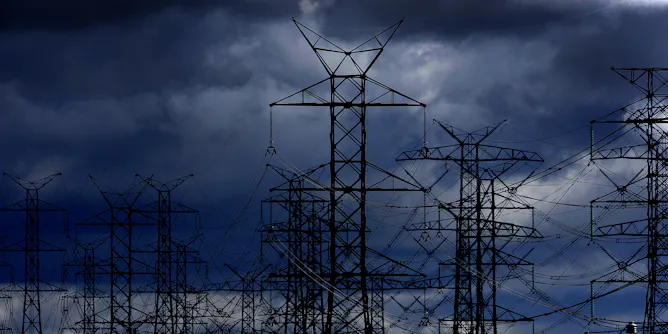
The Long Read: Most Australians’ power bills have been rising for a decade. There are many reasons why, but the common thread is a lack of government willingness to get to grips with crucial policy problems.
Articles on Power prices
Displaying 21 - 40 of 52 articles

The latest report from the Grattan Institute, finds that claims about Australia being dominated by oligopolies are overblown.
New modelling suggests that Australia could use renewable energy to hit its 2030 emissions reduction targets, without it costing any more overall than maintaining the status quo.
As federal and state energy ministers gather to discuss the Turnbull government’s proposed National Energy Guarantee, many of the finer details of the modelling are not yet available.
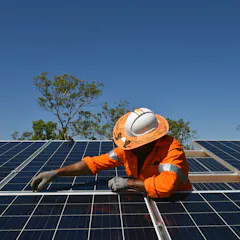
The price of renewable energy will fall significantly relative to new-build coal in coming decades, making an all-renewable electricity system more desirable, both economically and environmentally.
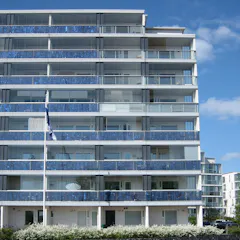
Not everyone can afford to pay for solar panels up front, but local planners can help disadvantaged households overcome energy poverty in several ways.
The Turnbull government is still tying itself in knots over the future of coal, as literally decades of policy turmoil on climate and energy continue to roll on.
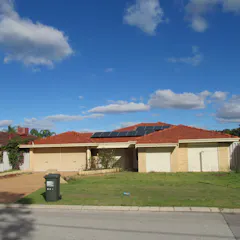
Western Australia has huge amounts of sunshine and wind, yet only 7% of its energy comes from renewables. What’s more, most households in the poorest suburbs are still locked out of the solar panel boom.
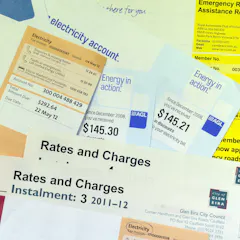
The government’s deal with electricity retailers to provide simple information to customers about their discounts and bills is a welcome step, but doesn’t cut to the heart of the power price issue.
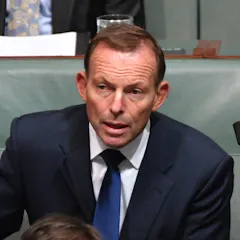
Bedding down an energy security policy based broadly on the Finkel model is now crucial for Malcolm Turnbull. But the issue will also test Tony Abbott’s judgement and influence, in what has long been a…
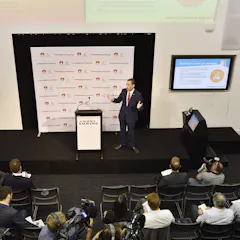
South Australia has unveiled its keenly awaited energy plan, featuring battery storage, a state-owned gas power station, and a thumb of the nose to the federal electricity rules.
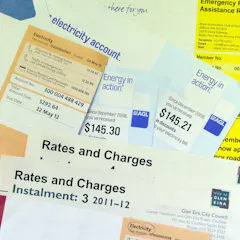
Electricity retailers need to make their prices and offers more transparent and easier for customers to understand, or risk having to submit to price regulation to drive down bills.
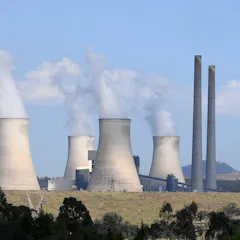
Here’s the real problem behind Australia’s electricity woes: the rules that govern decisions about what infrastructure to build, and when, are inflexible and outdated.
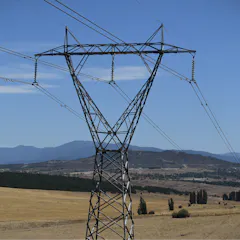
Privatisation and competition were supposed to make electricity cheaper. Instead, Australia’s quasi-federal energy system has made it easier to pass the buck when things go wrong.
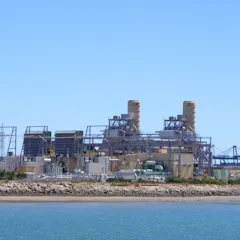
South Australia’s government was angry about the blackouts enforced by electricity regulators. But with much of the state’s gas power offline, the regulators had little choice.
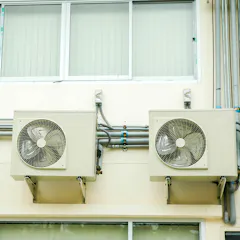
Power-hungry houses that rely on air conditioning to make up for their bad design mean that the electricity grid has to cope with summer demand peaks – and everybody pays.
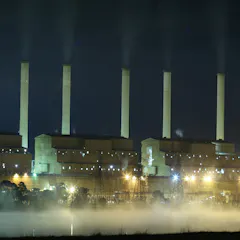
The potential shutdown of Victoria’s Hazelwood power station could leave a large gap in coal-fired baseload generation. But other coal power stations have plenty of spare capacity to fill the gap.
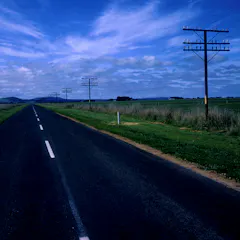
The electricity market that covers most of Australia is designed to have periods of high prices, to attract new generators. But there may be better ways to encourage electricity investment.
Labor’s plan to deliver 50% renewable energy by 2050 could add between $160 and $264 to annual household power bills. But this could be completely offset by better policies to encourage energy efficiency.
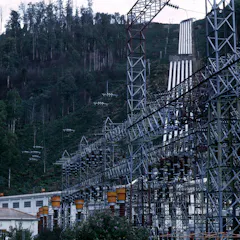
A year after the demise of the carbon tax, we might expect both coal and greenhouse emissions to have bounced back, at the expense of renewables like hydroelectricity. Sure enough, that’s what happened.
Top contributors
-

Honorary Associate Professor, Centre for Climate Economics and Policy, Australian National University
-
Senior Fellow in Energy and Climate Change, Grattan Institute
-
Professorial Fellow, University of Canberra
-
Energy Fellow, Grattan Institute
-
Professor and Director, Victoria Energy Policy Centre, Victoria University
-
Senior Associate, Grattan Institute
-
Senior Research Associate, Renewable Energy & Energy Systems Analyst, UNSW
-
Senior Associate, Productivity Growth, Grattan Institute
-
Former Visiting Fellow, SPRU, University of Sussex Business School, University of Sussex
-
Adjunct Professor, University of Southern Queensland
-
Senior Research Consultant, Institute for Sustainable Futures, University of Technology Sydney
-
Assoc Prof. Renewable Energy, Monash University
-
Research Manager, Crawford School of Public Policy, Australian National University
-
Lecturer, School of Economics, Finance and Property, Curtin University
-
Senior Lecturer in Urban and Environmental Planning, Griffith University