
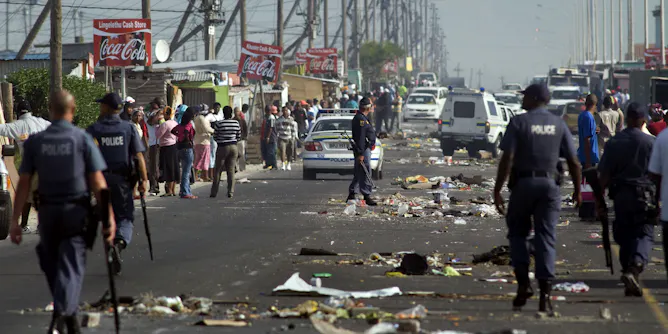
A more responsive government would avoid a turn to militant protests to air grievances.
Articles on Poverty in South Africa
Displaying 1 - 20 of 27 articles

The link between household food insecurity and child malnutrition is stark: 28.8% of South African children under five suffer from stunting.
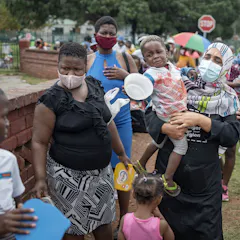
Food shortages are not the cause of hunger in South Africa. The country produces and imports all the food it needs.
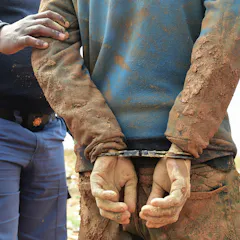
The narrative of criminality is dangerous. It dehumanises destitute people, who are forced into informal mining to escape poverty.
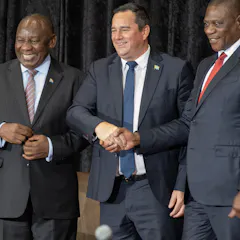
A sea change in the system of governance is needed to fix South Africa and rebuild an economy plagued by serious crises.

The president’s speech couldn’t cover up for the fact that the last five years have been among the most difficult for ordinary South Africans.

In general, an ageing population puts added pressure on the working-age population to be more productive – just to maintain total output – amid growing fiscal constraints.
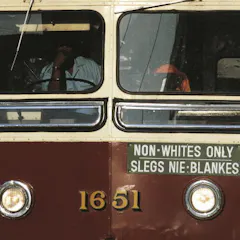
Critics of the 1994 political settlement largely hail from the black middle class, even though it has been one the principal beneficiaries of South Africa’s social democracy.
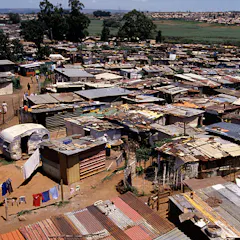
On the positive side, good progress has been made on gender equality and fewer people are dying of unnatural causes.
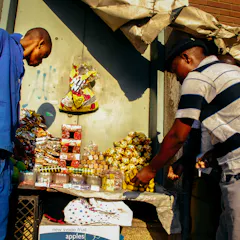
As much as 31% of grant beneficiaries engage in informal work to ‘grow’ their income.
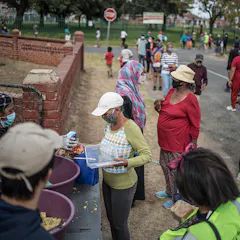
Social grants are the largest source of support for many vulnerable groups. They are the government’s primary response to poverty, food insecurity and inequality.
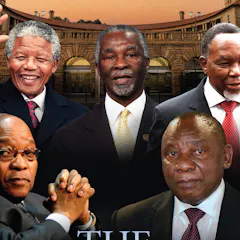
Mandela, the first president of a democratic South Africa, made big strategic choices – not necessarily the right ones, but certainly ones that were befitting of the times.
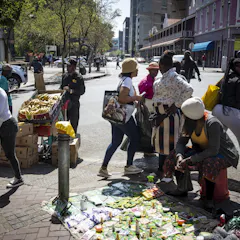
The city’s street trading management approach is mainly restrictive. Relocations, harassment and confiscation of of traders’ stock are common.
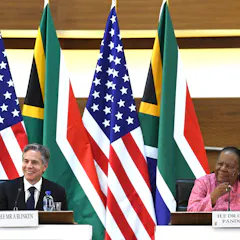
It’s unclear what practical purpose the drafters of South Africa’s foreign policy document envisaged it serving, and who its intended audience is.

The network collectively applied ingenuity to provide essential care and support to vulnerable people.
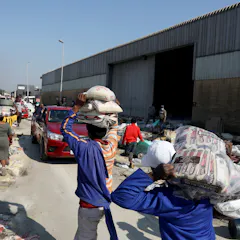
The democratic transition in 1994 was the result of an ‘elite pact’ that changed the country’s politics, but did little to undermine the foundations of white economic power.

Parents and caregivers are central to promoting child safety. Improving their ability to prevent injury to children is key.
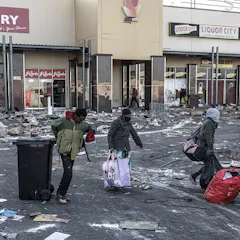
South Africa can’t possibly remain the same country in the aftermath of this mayhem. There are just too many storms ahead to simply continue unchanged.
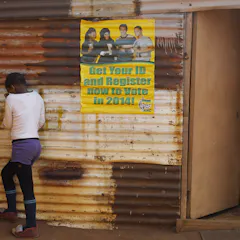
Some caregivers reported seeing improvements in their children’s schoolwork and behaviour at school.
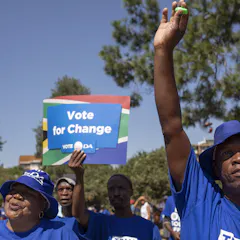
Each black person and woman may be an individual but, because they are black and women, they face obstacles which whites and men don’t.
Top contributors
-

Professor of Social Development Studies, University of Johannesburg
-
Professor of Political Studies, University of Johannesburg
-
Professor of Sociology, University of the Witwatersrand
-
Senior Researcher at the Institute for Social and Health Sciences , University of South Africa
-
Senior Researcher, Gauteng City-Region Observatory
-
Senior Researcher, University of South Africa
-
Programme Officer - Building Bridges, University of Cape Town
-
Postdoctoral researcher, University of the Witwatersrand
-
Associate Professor of Strategy, Faculty of Military Science, Stellenbosch University
-
Associate Professor, China Studies Centre, University of Sydney
-
Professor, UNISA Institute for Social and Health Sciences, South African Medical Research Council
-
Associate Professor of Political Science, University of Johannesburg
-
Lecturer, University of the Western Cape
-
Senior research fellow at the Centre for Social Development in Africa, University of Johannesburg
-
Emeritus Associate Professor in Public Law, UCT. Visiting Adjunct Professor, WITS School of Governance; Director, Africa Programme, University of Cambridge Institute for Sustainability Leadership, University of Cambridge