
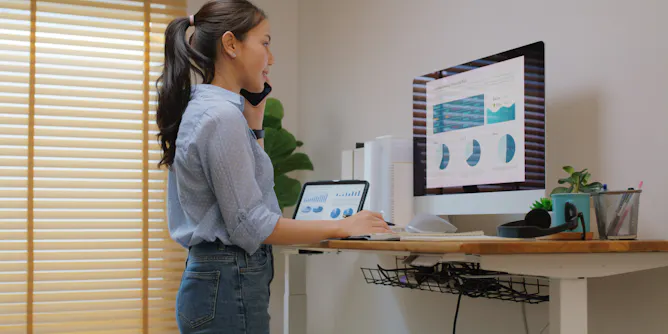
It’s bad to stay in any posture for a long time – whether in a chair or on your feet.
Articles on Posture
Displaying 1 - 20 of 23 articles

Many of us grew up hearing that crossing our legs was bad for our bodies. The research tells a less dramatic story.

Protecting your posture isn’t just about appearance. It’s about staying strong, mobile and independent as you age.

The most important thing when it comes to spine health is movement.

Studies have found problems occur when students carry bags that weigh more than 20% of their body weight.
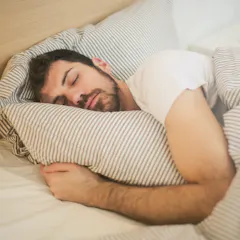
Most people sleep on their side, which is good because those who sleep on their backs are more likely to be poor sleepers or have breathing difficulties at night.

Sometimes, it’s best to take your medicine sitting up. Other times, lying down is safer. Here’s what we know so far.
We’ve all been told our whole lives we need ‘good’ posture: sit up straight, stand straight with shoulders back, and lift by bending the knees. It turns out there’s really no evidence for that advice.
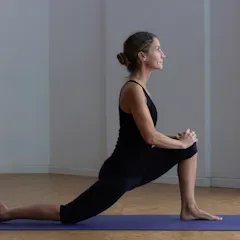
Failure to look after your hip flexors can lead to injury, walking problems, posture issues and back pain.

For a while it was all the rage to adopt Wonder Woman’s famous stance and other body positions that allegedly pumped up your confidence – until more studies of the phenomenon failed to find the connection.
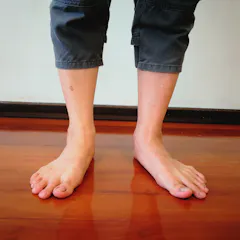
There’s no evidence problem flat feet correct themselves with time. They should be treated early.

It’s almost impossible to be without a smartphone these days – but the way we hold and sit while using them can cause an array of physical health problems.

In the age of masks, improve your interactions by using all aspects of human communication.

It may be as simple as standing neutrally.
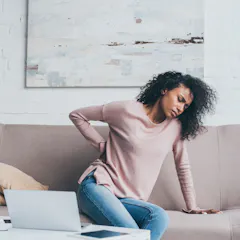
Movement is crucial even when you are sitting down.
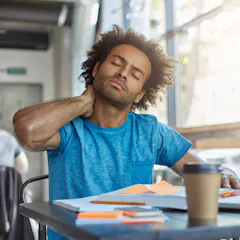
It’s often said that “bad posture” can cause neck pain but science seems to indicate that other factors might be at play.

Contrary to what you might think, there’s not one right way to sit. According to the principles of ergonomics, there are three good options.

Good posture is important for everyone – but for people with disabilities it can be a life saver.

These birds spend long periods, often asleep, standing on one leg. Is it passive biomechanics or active nervous system control of their muscles that allows them to do easily what’s impossible for us?

If you don’t alternate your posture at work, the stiffness can build, making it harder to straighten your spine. This can contribute to developing a hunched back.
Top contributors
-

Professor of Physiotherapy, Curtin University
-
The University of Western Australia
-
Professor of Children's Nursing, Edge Hill University
-
Programme Leader - Physiotherapy, University of Huddersfield
-
Senior Research Fellow, The University of Western Australia, The Kids Research Institute Australia
-
Professor, Physiotherapy, University of Newcastle
-
Professor of Biological Sciences, Georgia Institute of Technology
-
Research Fellow in Physical activity and workplace health, University of Sydney
-
Professor of Psychology, University of Bamberg
-
Professor of Communication, The Ohio State University
-
Podiatric Surgeon, La Trobe University
-
Doctoral Researcher in Psychiatry, University of Oxford
-
Visiting Lecturer in Physiotherapy, University of Hertfordshire
-
Assistant Professor of Medicine, Bond University
-
Professor of Biomedical Engineering and Rehabilitation Medicine, Emory University