
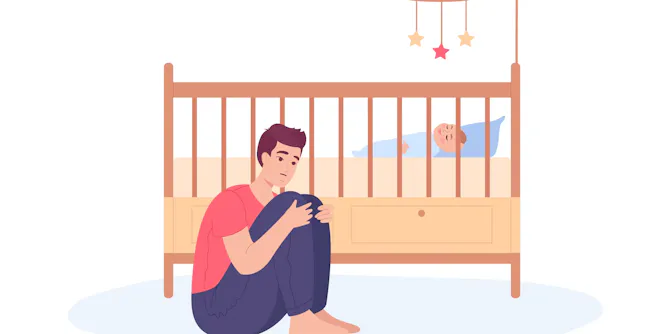
There is often a lack of support and information to help fathers during this transition.
Articles on Postnatal depression
Displaying 1 - 20 of 26 articles
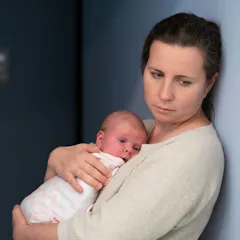
New mothers can experience anxiety and depression. But rushed appointments and impersonal checklists leave many fearful of being judged inadequate or unfit if they admit to struggling.

Alison Watt’s grandmother was diagnosed with ‘puerperal insanity’ and institutionalised not long after giving birth to her father. He didn’t meet her – or know she was alive – until his early 20s.

New motherhood is often portrayed as a time of joy but it can also be filled with fears and complicated feelings. Here’s how you can get help and support.

Postnatal depression is thought to affect up to 10% of fathers.

Most research on the impact of unplanned pregnancies focuses on mothers. So we turned to Reddit to find out what dads really thought.

Women can be reluctant to report worrying symptoms and when they do, these symptoms can be dismissed, our research shows.

Women who are physically active in the postnatal period report better mental well-being than those who are less active, but the pandemic has made exercise less accessible.

A study examined the psychological and social experiences of over 600 women with babies between birth and 12 weeks during the first UK lockdown.
It can be extremely distressing and stigmatising for a woman to experience a mental disorder around the time of childbirth.
The percentage of women receiving the recommended perinatal mental health screening has tripled since 2000 – but one in five women are still missing out.
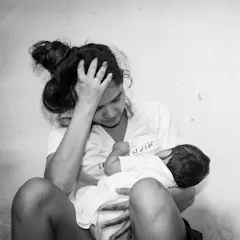
About 10% of pregnant women and 13% of women who have just given birth experience a mental illness.
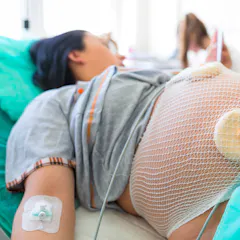
New study finds that giving birth through an emergency caesarean increases the risk of developing postnatal depression in the first nine months after childbirth by about 15%.
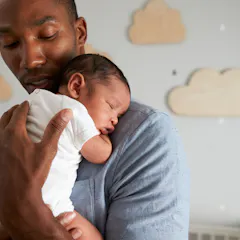
Having a stressed and depressed father can have serious implications for infants and relationships. And supporting a father who may be experiencing mental ill health means supporting the mother too.
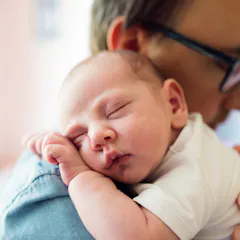
NHS plans to screen at risk fathers for postnatal depression.
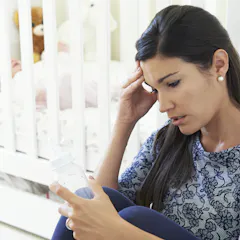
Mothers who cannot breastfeed are absolutely not failing, rather, they are being failed.

Cliched comments like “it wasn’t meant to be” or “don’t worry, you’ll get pregnant” are hurtful and dismissive. Instead, acknowledge their loss, listen and let them grieve.
Here’s how common it is to develop mental health problems in pregnancy or in the first year after birth.
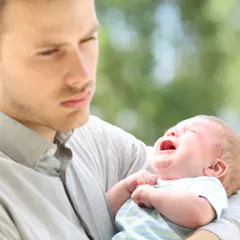
Postnatal depression in men is starting to be recognised, but mental health services aren’t geared up to help this group.
Many women are not getting the right kind of attention.
Top contributors
-

Principal Academic in Psychology, Bournemouth University
-
Professor of Psychiatry, Monash University
-
Associate Professor in Psychology, Deakin University
-
Professor of Child Public Health, Swansea University
-
Senior Principal Research Fellow, Murdoch Children's Research Institute
-
Associate professor, University of Newcastle
-
Lecturer in the School of Nursing and Midwifery, Queen's University Belfast
-
Professor of Psychiatry, Director of National Centre for Mental Health, Cardiff University
-
Clinical Psychologist and Research Fellow, Murdoch Children's Research Institute
-
Professor of General Practice Research, Director of Clinical Academic Training, Keele University
-
Professor, Department of General Practice, University of Melbourne, The University of Melbourne
-
Senior Research Officer, Healthy Mothers Healthy Families, Population Health, Murdoch Children's Research Institute
-
Professor of Adolescent Health Research, The University of Melbourne
-
PhD Researcher, Liverpool John Moores University
-
Research Associate in the Department of Economics, University of York