
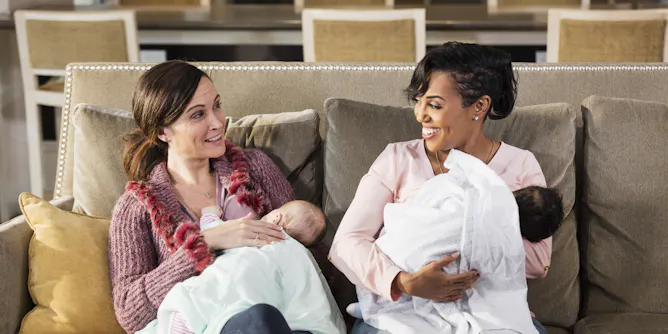
Peer support is one way to help new mothers access the care they need.
Articles on New mothers
Displaying 1 - 20 of 33 articles

Most babies shed it in the womb at around 33-36 weeks of pregnancy, where it mixes with amniotic fluid and is swallowed by the baby. Babies born early, however, tend to have a lot more body hair.
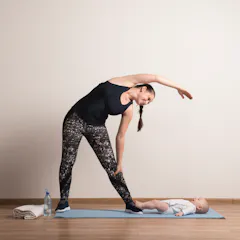
For stressed-out mothers, exercise can boost mental well-being. But if a fitness routine isn’t flexible, it can be just another task on an endless to-do list.
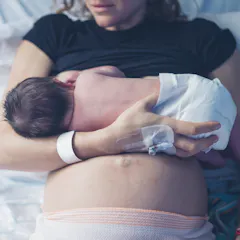
New research sheds light on how autism affects how we feed our babies, and vice versa.

All the evidence points to paid partner’s leave having many benefits for children and families – but Labour’s promise falls short on time and money.

Low-income mothers with infants are struggling with food insecurity, which can lead to long-term health impacts for both mothers and children.

How you tell the story of a momentous event can help you make sense of what happened. Research finds new moms’ and dads’ narratives around childbirth held clues about their transition to parenthood.
Neuroscientists know that pregnant mothers’ brains change in ways that appear to help with caring for a baby. Now researchers have identified changes in new fathers’ brains, too.

Mothers with young children are consistently identified as having lower levels of physical activity and leisure opportunities, which place their physical and mental health at risk.

Supporting mothers’ and infants’ sleep can decrease the stressors of motherhood, improve maternal mood and mental health and promote better infant development.

When asked about postpartum exercise, women were curious about strategies and recommendations for physical activity after the birth of a child, including finding the time, energy and motivation.
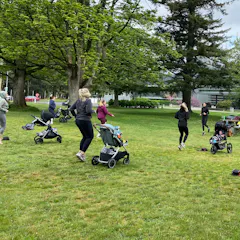
Women who are physically active in the postnatal period report better mental well-being than those who are less active, but the pandemic has made exercise less accessible.

Pregnant women’s experiences can affect their babies’ health, even into adulthood. Researchers know societywide stresses can lead to these long-term consequences – and the pandemic likely fits the bill.

A study examined the psychological and social experiences of over 600 women with babies between birth and 12 weeks during the first UK lockdown.

New research finds that while some women thrived during lockdown, others found breastfeeding to be difficult and overwhelming.
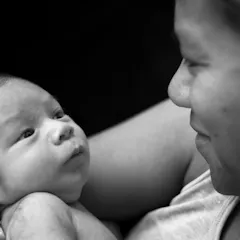
The WHO recommends women should be encouraged to breastfeed straight after birth, for both the mothers’s and baby’s health, including increasing baby’s immunity.

There is no evidence that the coronavirus is transmitted through breast milk, and breastfeeding is encouraged during COVID-19. However, the support available to new mothers has changed dramatically.
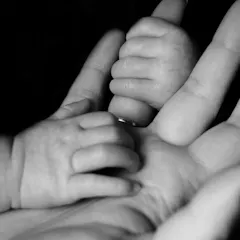
For new mothers with postpartum depression, social distancing limits some of the best ways to improve their mental health.
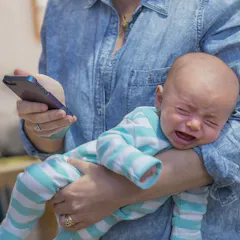
Mobile health apps, teleconferencing with experts and thoughtfully designed educational platforms can all help families during the chaotic and confusing early years.

Most UK workplaces aren’t set up for women to breastfeed, so is it any wonder rates are so low.
Top contributors
-

Professor of Child Public Health, Swansea University
-
Professor of Psychology, USC Dornsife College of Letters, Arts and Sciences
-
Assistant Professor in Kinesiology, University of The Fraser Valley
-
Clinical Senior Lecturer, Imperial College London
-
Canada Research Chair in Perinatal Mental Health, McMaster University
-
Health Psychologist and Research Officer in Infant Feeding, Swansea University
-
Research Associate in the Department of Economics, University of York
-
Professor of Midwifery, Associate Dean Research and HDR, Midwifery Discipline Leader, Western Sydney University
-
African Population and Health Research Center
-
Associate Professor, School of Psychology, Scientist, Children's Hospital of Eastern Ontario Research Institute, L’Université d’Ottawa/University of Ottawa
-
Registered Nurse, Registered Midwife, MPH, PhD
-
Honorary Associate Professor, Australian National University
-
Associate Professor of Applied Human Sciences, Concordia University
-
PhD Candidate, School of Human Kinetics, L’Université d’Ottawa/University of Ottawa
-
Nottingham Trent University