
Canada’s future depends on its ability to attract and retain the thinkers, creators and innovators who will define the next generation of progress.
Articles on Post-secondary education
Displaying 21 - 40 of 96 articles
Only by considering conditions specific to post-secondary education today can educators reimagine more engaged and critical learning.

Reforms to ensure student unions preserve their autonomy, while maintaining high standards of democracy, can happen by amending legislation governing non-profits.

New research reveals that being bullied in high school can have effects that last well into adulthood.

It’s important that universities publicly acknowledge the importance of Black-affirming community spaces and the role they play in Black student well-being and academic success.

Resources from the United Nations Educational, Scientific and Cultural Organization can help marketing programs embed sustainability concerns into marketing education.

How university campuses respond to concerns about student safety can set the stage for learning or encourage its opposite: divisiveness and censorship.

Journalism educators need to have new conversations with students that address their experiences, their worries and their understanding of what journalism is and what they want it to be.
Universities must not only invest in dedicated senior equity leader roles with specialized knowledge and expertise. They must also ensure these roles are resourced and empowered with authority.
Students should know that a key part of the value of their undergraduate degree lies in taking advantage of all the opportunities for learning that universities offer.

All students who apply to university need ‘U’ courses, but Toronto-area research reveals few students with zero Grade 12 ‘U’ courses apply for any post-secondary education at all.

Who’s responsible for the factors that led to the federal government’s recently announced cap on international students, and what are the implications for those directly affected?

Learning about Generative AI should include supporting collaborative interdisciplinary research and writing ethical prompts to help discover what it can do.

Faculty and university staff are embedding training to prevent gender-based and sexual violence into curricular goals of both arts and STEM classes.
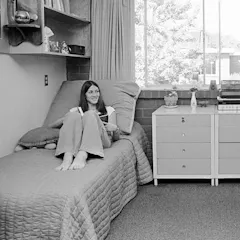
Student residences built in recent decades prioritize privacy, yet research shows a lack of student socialization spaces negatively affects students’ academic performance and well-being.

Ontario’s changed university funding formula, which forces institutions to rely on high student tuition for niche programs, is putting some northern institutions in precarious financial situations.

Forcing universities to only serve the needs of the labour market undermines their abilities to educate students and conduct research.

Labour unrest at universities is a matter of public interest. That’s why support for local, independent media outlets to provide in-depth coverage of university strikes is so important.
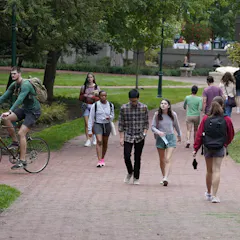
To address declining humanities enrolments, these programs should ensure they offer more than critical theory for identifying and analyzing problems.

Pairing disability counsellors with post-secondary instructors to help them design classes is one way colleges and universities can improve their efforts to support students with disabilities.
Top contributors
-

Full Professor and Associate Vice-President, Research, Mount Saint Vincent University
-
Innovation Lab Director and Professor, Educational Technology and Innovation Mindset, Concordia University
-
PhD candidate (health), Dalhousie University
-
Professor, Faculty of Education, Memorial University of Newfoundland
-
Professor, Urban and Regional Planning, Toronto Metropolitan University
-
Architecture and Urbanism Researcher, Toronto Metropolitan University
-
Professor, Department of Communication Arts, University of Waterloo
-
Associate Professor of Psychology and Clinical Director, Regional Assessment & Resource Centre, Queen's University, Ontario
-
Professor, School of Public Policy and Administration, York University, Canada
-
Associate Professor, Educational Technology, Université Laval
-
BCL/JD Candidate, McGill University
-
Post-Doctoral Fellow, Johnson Shoyama Graduate School of Public Policy, University of Saskatchewan
-
Associate Professor, Department of Psychology; Director, Trent Centre for Aging & Society, Trent University
-
Associate Professor, Psychology, Acadia University
-
Canada Research Chair in Occupational Health Psychology and Professor of Psychology, Saint Mary’s University