
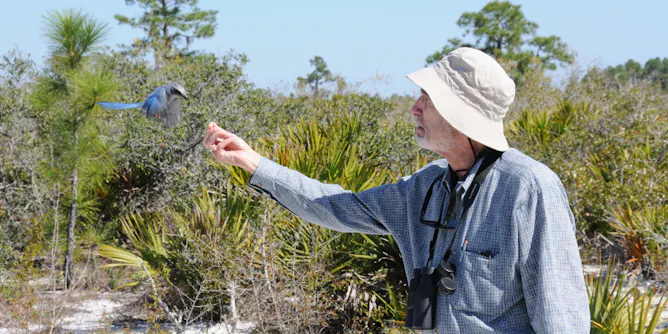
Paul R. Ehrlich will be remembered as a scientist whose books about population and threats to the environment shaped the idea of limited growth in the modern era.
Articles on Population control
Displaying all articles

Genetic diversity is being lost across many species – especially birds and mammals. But you can help stop the decline.

Faced with a darkly satirical vision that hardly seems sensationalist, the audience might wish for compassionate thinking to combat ecological disaster and precarious resources.

Indigenous people have long spoken about coercive practices of officials and experts around birth control, as late as the 1960s. Now historians are finding evidence in the government’s own records.

For many environmentalists, overpopulation is a real concern. But the planet will benefit more from tackling overconsumption by rich countries.

Arguments about population growth are unhelpful, distracting and often racist.

China limited families to one child from 1980 to 2015 to curb population growth. The policy paid off economically for the country, but it left couples whose only child died grieving and impoverished.

Multiple borders have always existed in Aotearoa New Zealand. We just weren’t as aware of them before the pandemic started locking down communities.

The US has a long history of forced sterilization campaigns that were driven by the bogus ‘science’ of eugenics, racism and sexism.

Release of GM mosquitoes in Florida is imminent. But a multidisciplinary team of scientists believe that more studies are needed first. They encourage a publicly accessible registry for GM organisms.

Cities often embark upon drastic and expensive eradication campaigns designed to rapidly rid the city of pests like rats. But are the surviving rats stronger or weaker than before?

There are plenty other good reasons to stabilise the global population.

Marvel villain Thanos wiped out half the universe’s population to create paradise. But as the Avengers find out in Endgame, solving resource scarcity is not that simple.
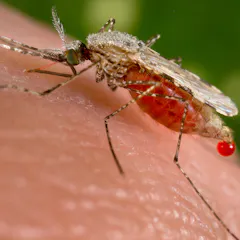
Researchers are exploring genetic forms of population control called gene drives that spread traits faster that happens naturally. The goal is to curb mosquito-borne diseases like malaria.

Fifty years ago biologist Paul Ehrlich published ‘The Population Bomb,’ an apocalyptic warning that overcrowding would lead to wars and famine. Here’s what the book got right and wrong.

Australia’s GPI, a broad measure of national wellbeing, has stalled since 1974. So what has been the point of huge population and GDP growth since then if we and our environment are no better off?

In the 1990s, thousands of people in Peru were sterilised without their consent – but finally they now have a way to tell the world.

Public outcry, demonstrations and riots have followed the death of 13 women at a government female sterilisation camp in the Indian state of Chhattisgarh. Investigators have blamed tainted medicines and…

China’s rapid economic growth, and the development of Shanghai, Chongqing, and Shenzen into modern metropolises, might easily give observers the sense of a successful country, full of confidence. Clearly…
Giving women equal rights is a critical step in avoiding societal collapse. The main drivers of societal collapse are overpopulation…
Top contributors
-

Professor, Department of Geography and the Environment, University of Denver
-
Research student, School of Natural & Built Environments, Adelaide University
-
Associate Professor in Environmental Engineering, Adelaide University
-
Associate Professor, Public Health Physician, The University of Melbourne
-
Lecturer in Politics, University of Bristol
-
Professor in Latin American History, University of Bristol
-
Associate Professor, Lecturer in Business and Humanities, University of Utah
-
Medical Entomologist, University of Illinois Urbana-Champaign
-
Associate Professor of Biology, University of Richmond
-
Scientific Citizenship Initiative Advisor and Center for Bioethics Lecturer, Harvard University
-
Postdoctoral research associate, Bangor University
-
Senior Research Fellow, RMIT University
-
Vector Ecologist, University of Illinois Urbana-Champaign
-
Goodnight-NCGSK Distinguished Professor, North Carolina State University
-
Virginia E. and John T. Hazel, Jr., Professor of Public Policy, George Mason University