
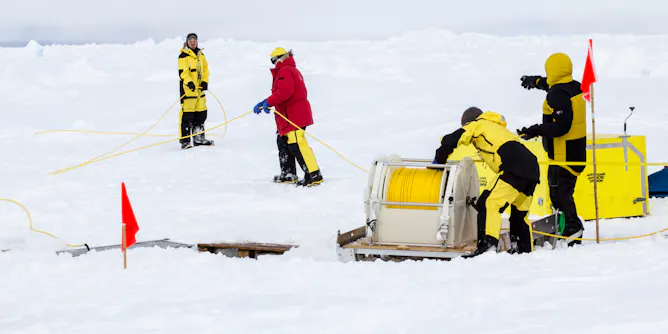
New research shows climate scientists are less trusted than other types of scientists. But there are big differences between countries and specific groups of people.
Articles on Political polarization
Displaying 21 - 40 of 98 articles
Instead of promoting diversity, many social networks and other popular digital platforms function as machines for the production and circulation of hate.
Americans often expect former presidents to not talk about current ones. But it’s not really a surprise that several are criticizing Donald Trump.

The more Americans isolate themselves from people in the other political party, the more stereotypes take over. In turn, that pushes people to isolate even more.

Politics in America have become more upsetting than ever for big chunks of the population, but there are ways to cope.

A new video intervention shows correcting Americans’ exaggerated views of political opponents can defuse tensions, reduce support for antidemocratic practices and promote a healthier democracy.
Relying on social media users to police information accuracy could further polarise platforms and amplify extreme voices.
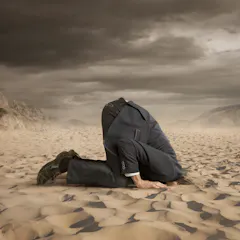
Political polarization and people not being exposed to other perspectives online are two major factors that contribute to Americans feeling exhausted with politics.
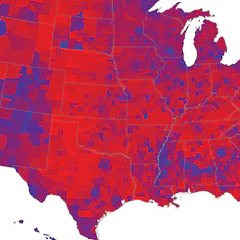
Showing just red and blue states doesn’t paint an accurate picture of national politics.

A psychologist and human connection researcher explains how individual acts of kindness and connection can have a real impact on global change when these acts are collective.
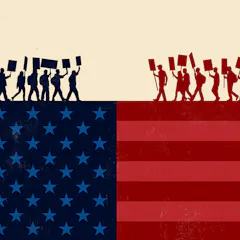
People acknowledging and inspecting their own political biases is one way that they can begin to reduce polarization.
In a series of surveys, researchers studied when and why voters put up with inaccurate statements from their leaders.
US news outlets perceived as politically centrist could inch rightward or leftward to attract a larger, more partisan readership − but only at the cost of journalistic credibility.

Some global issues have prompted partnerships between seemingly strange bedfellows at opposite ends of the political spectrum. The ‘horseshoe theory’ tries to make sense of this, but what’s it about?
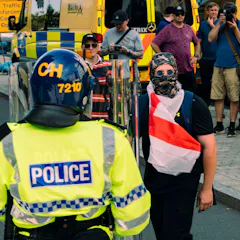
The more confident our participants were about the political beliefs of someone they disagreed with, the more likely it was that they were wrong.

In surveying people both before and after the poll, we found the most decisive factors in determining the way people voted weren’t gender, politics, age or income.
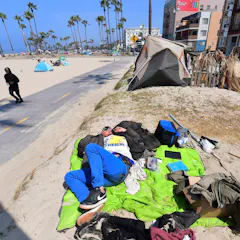
4 in 10 voters would back a candidate from the opposing party for local office if that politician shared their views on homelessness and housing, according to survey data from California.

Reactions like disgust are part of the behavioral immune system that helps you avoid disease. Usually conservatives are more fearful of contamination – but something unusual happened during COVID-19.

The rise in anti-immigration sentiments, especially amid challenging conditions, could have far-reaching consequences for Canada’s social harmony and economic prosperity.

Younger generations today agree more on key national issues than older generations do. A time of intense polarization may be ending.
Top contributors
-

W. Alton Jones Professor of Philosophy, Vanderbilt University
-
Associate Professor of Political Science, Boise State University
-
Professor of Political Science, Georgia State University; Institute for Humane Studies
-
Associate Professor, Communication, L’Université d’Ottawa/University of Ottawa
-
Professor of Information Systems, Universidade de São Paulo (USP)
-
Professor of Communication Arts and Sciences, Penn State
-
John Rennie Short is a Friend of The Conversation.
Professor Emeritus of Public Policy, University of Maryland, Baltimore County
-
Professor of Law and Director, Health Law Program, University of Nevada, Las Vegas
-
Executive Director, Arizona State University
-
Professor of Business and Leadership, University of Delaware
-
Visiting Scholar in Public Policy, University of Delaware
-
Professor of Political Science and Founding Director, International Studies Program, Burman University
-
Professor of Communication, University at Buffalo
-
Professor of Communication Studies, Northwestern University
-
Reader in Cultural Geography and Communication, University of Westminster