
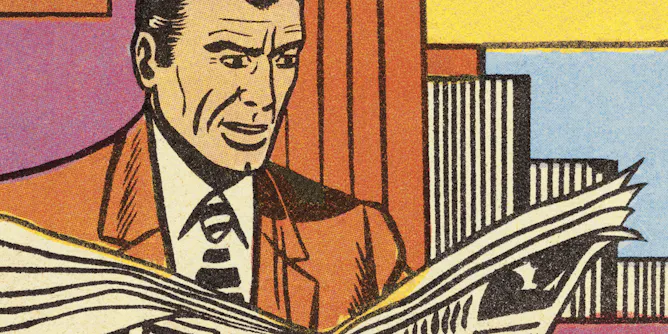
The cartooning industry is still struggling to adapt to the 21st century media business model.
Articles on Political cartoons
Displaying 1 - 20 of 27 articles
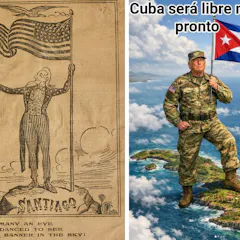
Cubans are using AI image generators to imagine US intervention in their country. The results look straight out of the 1890s.

The award-winning cartoonist Jon Kudelka died in Hobart on Sunday, aged 53. Over 30 years, his work resisted the polarisation of the contemporary Australian media.
Is it really OK that the Americans, Canadians, French and New Zealanders manage to do better by their cartoon and comic heritage than Australia?
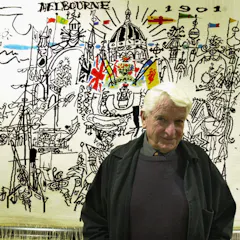
Bruce Petty woke editorial cartooning from a sleepy period telling fairly anodyne jokes and turned it into a mode of serious – if also often hilarious – satirical commentary on politics and society.
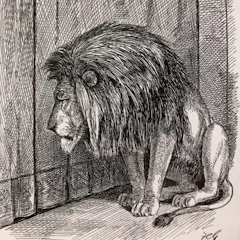
A cartoon commemorating the death of King William IV in 1837 would have been unthinkable; by the time Queen Victoria died in 1901, newspapers had changed.
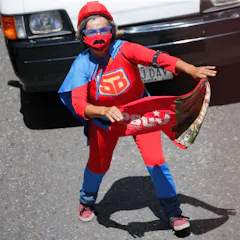
A Venezuelan cartoon character has been adopted by the government to help their popularity.

Fat people need to be empowered to critique the very groups so willing to instrumentalize their bodies for political gain.
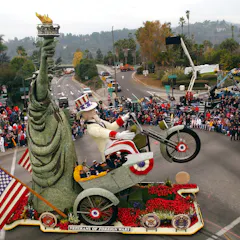
The iconic image may have originated with a meat supplier named Samuel Wilson. Or not.
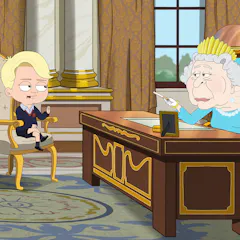
Royal satire has softened over the last 300 years, but audiences are more sensitive to barbs against the institution.
Humour is a way for Congolese internet users to prod at cultural traits and political developments – despite censorship being rife.
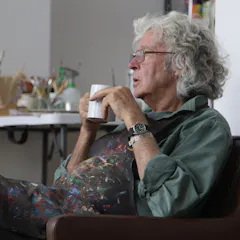
A new film uses pastiche to explore the whimsical world of cartoonist Michael Leunig - but the man himself gives little away and the film skates over his curlier controversies.
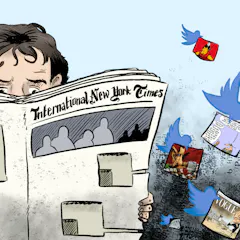
A New York Times decision has led to predictions of the death of cartooning. But rather than perishing, is the global art form just feeling the full force of technological and workplace change?
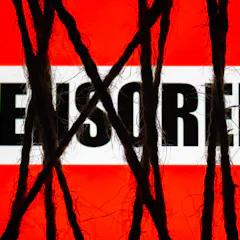
Political and editorial cartoons are a key indicator of the democratic health of a country - but they can also be regressive.
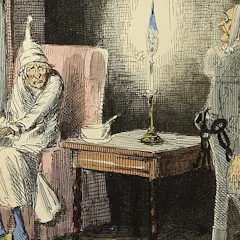
The artist who illustrated A Christmas Carol was one of the best-known satirists of his time.
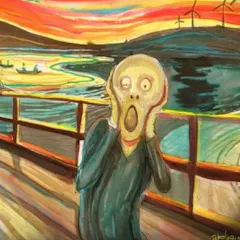
One of the great satirical achievements of the mass media era, the editorial cartoon, is losing its centrality in the digital age. Yet the ‘visual terrorism’ of cartoons can cut through the verbiage of political commentary.
Bill Leak divided his audience, image by image. Causing offence was a KPI for him, not a risk.
A young Iranian detained on Manus Island has won a prestigious international award for his cartoons reflecting life there. Our government should allow this young man to fly to the US to accept his award.
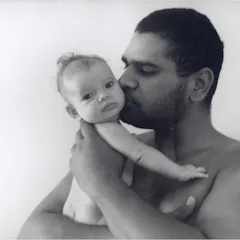
Bill Leak’s cartoon of a drunk Aboriginal father who doesn’t know his son’s name exemplifies a long tradition of white men’s fantasies about the inferiority of Aboriginal people.
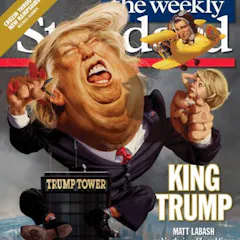
Two recent controversial cartoons depicting people as apes have raised an important question: what are the legal and philosophical distinctions between harm and offence?
Top contributors
-

Professor of English, Flinders University
-
Professor in Modern History, University of New England
-
Senior Lecturer, School of Media, Film and Journalism, Monash University
-
Associate Professor of English, University of Oxford
-
Senior Lecturer in Political and Development Geography, University of Sheffield
-
Visiting Professor of Practice (Journalism), City St George's, University of London
-
Adjunct Associate Professor, Politics, Policy and Global Affairs, Flinders University
-
Professor of Indigenous Health, Executive Director, Carumba Institute, Queensland University of Technology
-
Lecturer in Comic Studies, University of Dundee
-
Assistant Professor of Religious and Theological Studies, St. Edward's University
-
Associate Professor of Graphic Design, Iowa State University
-
Senior lecturer, University of Basel
-
Associate Professor in 18th-century Literature, York St John University
-
Assistant Professor, University of Kinshasa
-
Professor in Politics and Journalism, University of Notre Dame Australia