
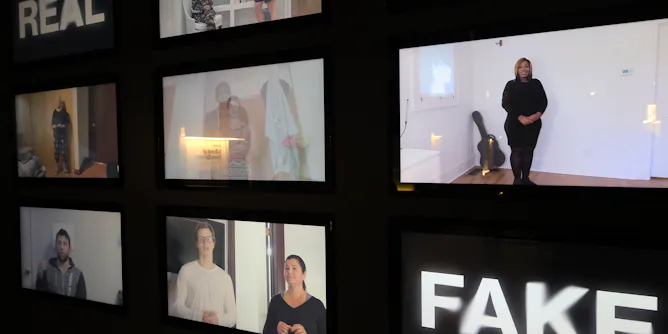
Almost 170 ads and $80 million in spending and only 31% with a disclaimer: Here’s what researchers found when they tracked AI in this year’s campaign ads.
Articles on Political advertising
Displaying 1 - 20 of 62 articles
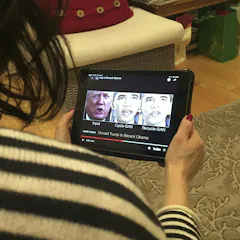
Most states require warnings on AI-generated political ads, but studies show these disclosures do little to alter people’s willingness to share the content.
Most states have legislated election deepfakes by requiring a warning
28 states require disclosures on the media
Political parties might choose their election ads but increasingly it’s tech companies’ algorithms that decide who sees them.
Months out from the next general election, political “AI slop” is spilling over social media feeds. Lessons from overseas could help electoral laws catch up.
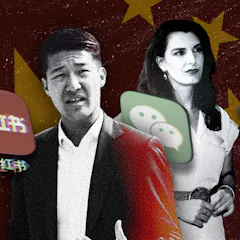
Popular Chinese apps WeChat and RedNote are a tool for political campaigning – but such content is banned. Here’s how parties work around it, including by avoiding proper disclosures.
Political parties are exempt from many of the regulations about spam and unsolicited marketing – and it’s unlikely to change.

Political posters and signs proliferate at election time. Why do candidates risk the wrath of voters with what many regard as visual pollution?

New data shows how groups with benign-sounding names like ‘Mums for Nuclear’ are running political ad campaigns online. But they don’t even have to be truthful.
Americans are being targeted with an unprecedented number of political attack ads this election season, and research shows that these ads can leave voters feeling exhausted, angry and stressed.
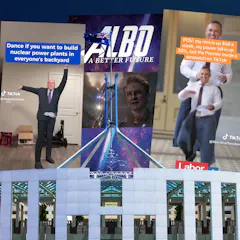
As AI becomes ever more prevalent, it’s being used more frequently in political advertising. But there needs to be tighter regulations and safeguards around it so people know what they’re looking at.
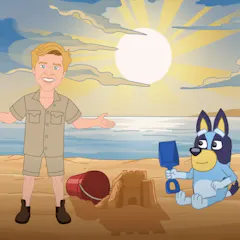
Irwin’s legal team threatened to sue Pauline Hanson’s party for defamation, but no legal proceedings have been initiated. Australia’s patchy laws in this area likely put a stop to it.

As political parties desperately battle for voters’ attention, cybersquatting is one of many online tools in the toolkit. It’s only effective at further diminishing trust in government.
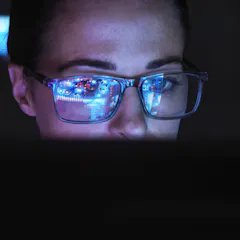
Politicians and their campaigns use a lot of methods, including manipulation and deception, to persuade you to vote for them and give them money. AI promises to make those attempts more effective.
New laws aim to give the public access to a repository containing every political ad sent out through social media.
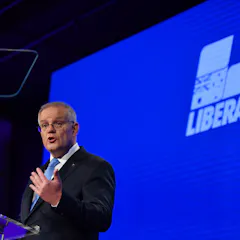
Politicisation of taxpayer-funded advertising is wasteful and creates an uneven playing field in elections.
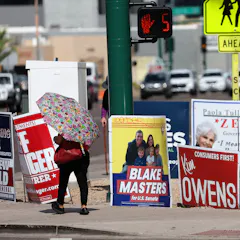
Supporters and volunteers love them. But it’s difficult for political scientists to determine whether they even influence the outcome of elections, since no two campaigns or election cycles are alike.
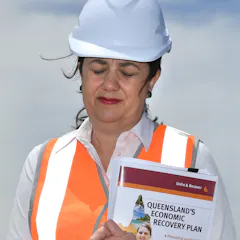
Using taxpayer-funded advertising for political advantage is rife, but there are ways it can be curbed.
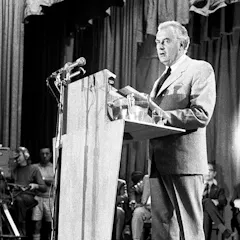
Cultural policy has scarcely featured in the 2022 campaign – when Whitlam campaigned in 1972, the arts were centre stage.
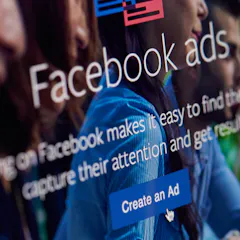
The social media strategies of many parties and candidates aim to bypass mainstream media to speak directly to voters, but they are often not as sophisticated as is assumed.

The government used to set interest rates but it doesn’t anymore. If UAP really did try to deliver on an election promise to cap interest rates at 3% for five years, what would the consequences be?
Top contributors
-

Lecturer in Marketing, Research School of Management, Australian National University
-
Senior Associate, Grattan Institute
-
Democracy Deputy Program Director, Grattan Institute
-
Professorial Fellow, University of Canberra
-
Professor of Information Studies, Syracuse University
-
Lecturer in Politics, The University of Melbourne
-
Professor American Politics, Political Science, Georgia State University
-
Professor, Australian National University
-
Lecturer in PR & Communciations, Victoria University
-
Reader in Political Science, The University of Queensland
-
Professor of Psychology, The Ohio State University
-
Director of Undergraduate Studies, School of Journalism, Media and Cultural Studies, Cardiff University
-
Professor, Faculty of Law, UNSW
-
Doctoral Candidate, Australian National University
-
Associate Professor, Faculty of Law, UNSW