
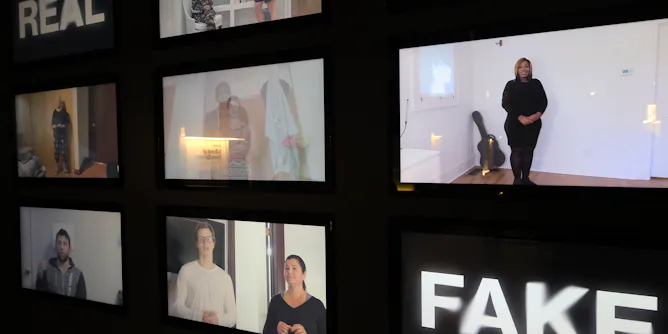
Almost 170 ads and $80 million in spending and only 31% with a disclaimer: Here’s what researchers found when they tracked AI in this year’s campaign ads.
Articles on Political ads
Displaying 1 - 20 of 30 articles
Most states require warnings on AI-generated political ads, but studies show these disclosures do little to alter people’s willingness to share the content.
Most states have legislated election deepfakes by requiring a warning
28 states require disclosures on the media

To manipulate voter perception, political action committees are adopting names that signal the opposite political goals from what those groups intend. And research shows the strategy is working.
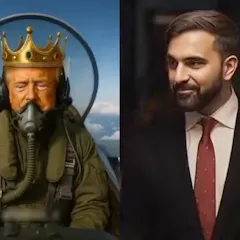
Don’t discount the threat of AI political videos fooling people, but for now, they’re mostly about bolstering group identity and cashing in on viral content.

A loophole in the Electoral Act means it’s perfectly legal to lie to voters – as long as it doesn’t happen during official election campaigns.

Political ad transparency – who’s paying for ads and whether candidates stand behind them – is well-regulated for TV and radio. Online, not so much.
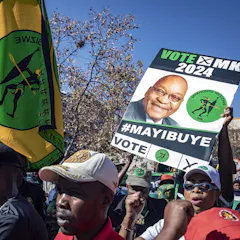
Former president Jacob Zuma’s MK Party borrows the slogan “mayibuye” from the liberation party to make a point about the ruling African National Congress.

As political parties desperately battle for voters’ attention, cybersquatting is one of many online tools in the toolkit. It’s only effective at further diminishing trust in government.
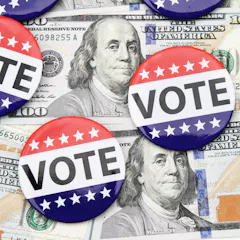
There are different kinds of PACs, but it is not clear if Trump’s use of them to pay his large legal fees violates election or campaign finance laws.
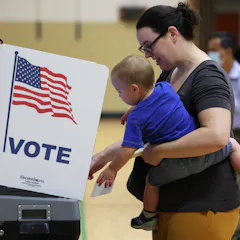
A record amount is being spent on political advertising in the midterm elections. But evidence shows that negative ads might work counteractively, discouraging voters from casting ballots altogether.
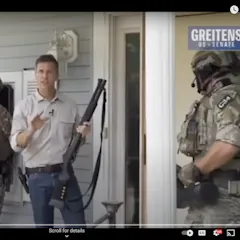
GOP political ads are becoming more extreme in their use of weapons to demonstrate armed resistance against those opposed to their militant views – including other Republicans.
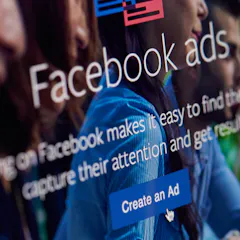
The social media strategies of many parties and candidates aim to bypass mainstream media to speak directly to voters, but they are often not as sophisticated as is assumed.

The government used to set interest rates but it doesn’t anymore. If UAP really did try to deliver on an election promise to cap interest rates at 3% for five years, what would the consequences be?
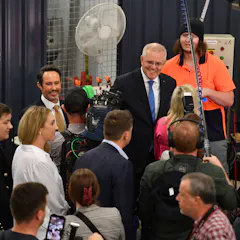
The federal election campaign is underway and political advertising has really started to ramp up. But who is each party targeting and what’s their key message?
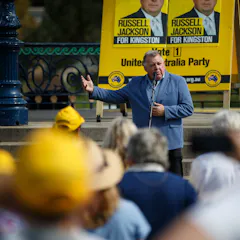
We can expect political ads to continue to ramp up over the coming weeks. The onus will be on each voter to sift through the spin for the facts and for the policies that matter to them.
The major social media firms have taken a largely piecemeal and fractured approach to managing the problem.
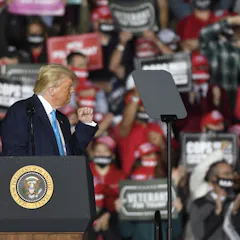
So far, Trump and Biden are spending money on Facebook and Instagram at roughly the same rate as Trump and Hillary Clinton did during 2016.
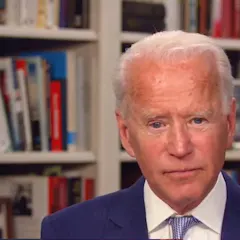
For many years, political operatives have been perfecting their use of the internet’s vast array of social media platforms, websites and digital tools.
Until the two giants change, Twitter’s political ad ban will have little effect on elections around the globe.
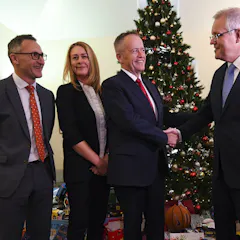
Any good political spin doctor employs a range of overt and covert tactics to get their message across. Here are some of the most common ones.
Top contributors
-

Lecturer in Marketing, Research School of Management, Australian National University
-
Lecturer in Politics, The University of Melbourne
-
Professor of Government, Bowdoin College
-
Professor of Information Studies, Syracuse University
-
Professor of Government and Public Policy, Washington State University
-
Professor of Government, Wesleyan University
-
Joseph P. Chamberlain Professor of Legislation, Columbia University
-
Professor American Politics, Political Science, Georgia State University
-
Associate Professor of Computer Science, Carnegie Mellon University
-
Associate Professor, School of Media, Film and Journalism, Monash University
-
Associate Professor of Marketing Kelley School of Business, Indiana University
-
Adjunct Associate Professor of Communication, University of Canberra
-
Lecturer in Economics, Monash University
-
Former data protection and surveillance stream lead, Allens Hub for Technology, Law and Innovation, UNSW Law Faculty, UNSW
-
Democracy Deputy Program Director, Grattan Institute