
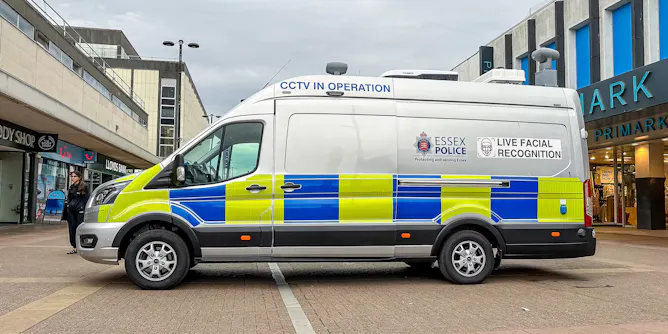
It’s a common misconception that facial recognition technology captures and stores an image of your face.
Articles on Police bias
Displaying 1 - 20 of 26 articles

The type of life and professional experience a police chief has can influence how their departments react to protests, new research finds.
The Charter of Rights and Freedoms prohibits Canadian police from using excessive force and conducting unreasonable searches. But research has found many cases of police violating the Charter.
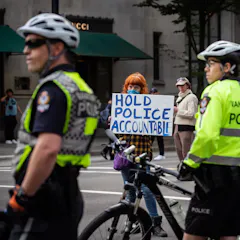
There have been longstanding calls for police and governments to collect and share data about incidents where the use of force caused injury and death to civilians.

The case of Tyre Nichols highlights how traffic stops can turn deadly. Traffic stops are also prone to racial bias, can break down community trust in police and yield few results, research shows.

The officers charged in the murder of a Black man in Memphis, Tenn., were part of the elite SCORPION squad. Such units have an ugly history.
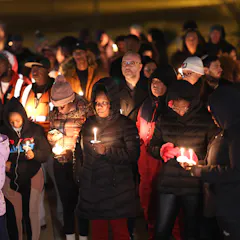
The death of a Black motorist after a beating by five Black Memphis police officers has triggered national outrage over police brutality and systemic racism with the U.S. criminal justice system.
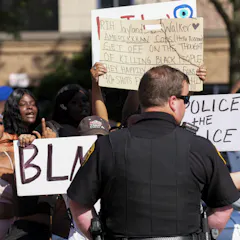
New research on police departments across the country reveals a significant link between the use of fatal force and college education – the more educated are less likely to use it.

Months of bipartisan talks in Congress aimed at reaching consensus over policing reforms have ended with no agreement. Two policing scholars argue that federal efforts are better placed focusing on supporting local measures.
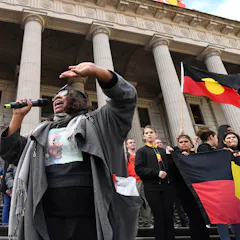
A documentary series aimed to spark national conversation about criminalising coercive control. However, it highlighted power imbalances in conversations between Indigenous and non-Indigenous women.
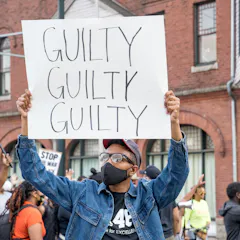
How does pretrial publicity affect jury verdicts? What kind of verdicts are made when the jury is racially diverse? An expert on juries answers questions raised in the wake of the Chauvin verdicts.
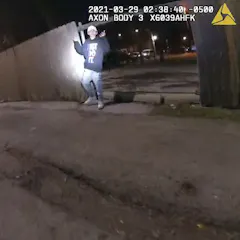
In the aftermath of Adam Toledo’s death, police and a prosecutor framed the incident as a confrontation with an armed male holding a gun. Should reporters have been so quick to accept that version?
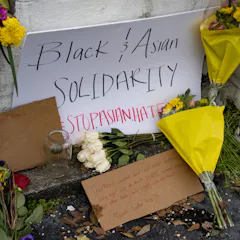
Bias-motivated attacks became a distinct crime in the 1980s. But police investigate only a fraction of the roughly 200,000 hate crimes reported each year – and even fewer ever make it to court.
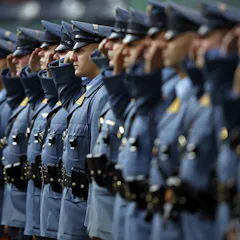
Racism was an early hallmark of the New Jersey State Police, and remains challenging for police agencies in the 21st century.
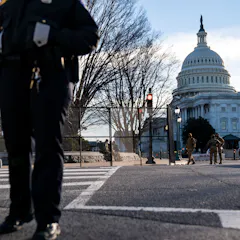
The FBI has long warned that white supremacist groups are seeking to infiltrate police, which makes the events of Jan. 6 all the more concerning.
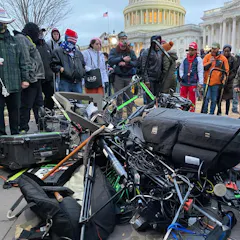
The insurrection at the Capitol was unprecedented. So too was the coverage, according to a scholar who monitors how media reports on protests
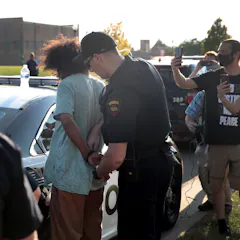
New research on Wisconsin’s changing demographics suggests that racial integration and political polarization were a combustible combination in Kenosha, where violence erupted in August.

Waterloo Region District School Board’s suspension of the Student Resource Officer program is one step toward ending racism in schools but much more still needs to be done.
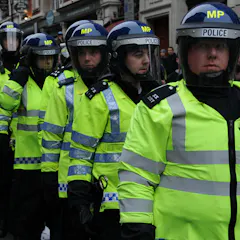
Representation alone cannot fix racism. But when deployed appropriately, it can provide reassurance and support to communities of colour.
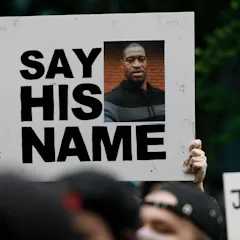
Half a century after the federal government voided Jim Crow laws, the criminal justice system still discriminates against African Americans.
Top contributors
-

Professor of Journalism, Michigan State University
-
Assistant Professor of Criminal Justice and Criminology, Georgia State University
-
Assistant Professor, Augusta University
-
Assistant Professor of Justice Studies and Sociology, Norwich University
-
Visiting Lecturer, Faculty of Law, Western University
-
Assistant Professor in Media Studies, University of Colorado Boulder
-
Indigenist Health Humanities Academic Director, Queensland University of Technology
-
PhD Candidate in Sociology, University of Wisconsin-Madison
-
PhD Candidate, University of Wisconsin-Madison
-
Postdoctoral fellow, School of Planning, University of Waterloo
-
Assistant Professor, Criminal Justice and Criminology, Texas State University
-
Associate Professor of Management and Human Resources, University of Wisconsin-Madison
-
Professor of Indigenous Health, Executive Director, Carumba Institute, Queensland University of Technology
-
Assistant professor in the Department of Government, The University of Texas at Austin
-
Senior Project Advisor, Carumba Institute, Queensland University of Technology