

A new AI-powered simulation model allows researchers and architects to design well-ventilated indoor spaces that keep harmful smoke away.
Articles on PM 2.5
Displaying all articles

Factors like your health status and how hard you exercise can help gauge the risk of wildfire smoke exposure.
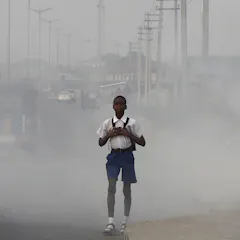
Air pollution accounts for many deaths in Africa yearly. However, this may change if people learn to protect themselves and hold their leaders accountable.
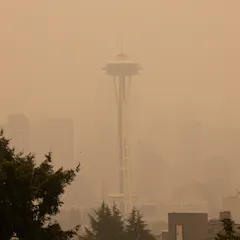
Wildfire smoke is both inevitable and largely unpredictable. We need to change our activities and behaviours to limit exposure to wildfire smoke and protect health.

Replacing wood stoves is essential but won’t solve the indoor air pollution epidemic on its own.

Exaggerating how much lockdown improved air quality could allow us to underestimate the scale of the air pollution problem.

The tiny air pollutants known as PM2.5, emitted by vehicles, factories and power plants, aren’t just a hazard for lungs. A study finds more brain shrinkage in older women exposed to pollution.

Thousands of chemical compounds in wildfire smoke are interacting with each other and sunlight as the smoke travels. For people downwind, it can become more toxic over time.
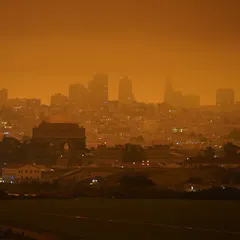
Coping with intense and prolonged wildfire smoke is difficult, both physically and mentally. Smoke is an environment hazard to be respected, not a personal challenge to be overcome.

After a 5-year review, the EPA is leaving US standards for fine particle air pollution unchanged, even though recent studies suggest that tightening them could save thousands of lives yearly.
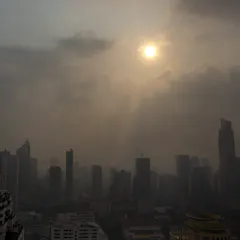
The link between air pollution and elevated death rates for COVID-19 may be overestimated.

A new study takes an innovative approach to reducing fine particle air pollution and spotlights key sources: factories that burn coal and oil, petrochemical plants and burning wood for home heating.
Top contributors
-

Associate Professor (Partner), School of Population and Public Health, University of British Columbia
-
Professor of Wildland Fire, University of Alberta
-
Professor of Environmental Engineering, North Carolina State University
-
Postdoctoral Research Associate in Environmental Public Health, Harvard University; University of Liverpool
-
Professor of Atmospheric Biogeochemistry, University of Birmingham
-
Professor, Department of Medicine, McGill University
-
Professor of Atmospheric Science, University of Birmingham
-
Professor of Environmental Sciences and Engineering, University of North Carolina at Chapel Hill
-
Professor of Environmental and Occupational Epidemiology, CHAIM Research Centre and School of Mathematics and Statistics, Carleton University
-
Research Associate, MRC Epidemiology Unit, University of Cambridge
-
Senior Research Associate, University of Cambridge
-
Postdoctoral Researcher in Atmospheric Chemistry, University of Washington
-
Postdoctoral Associate, Pacific Northwest National Laboratory
-
Professor of Integrative Physiology and Athletic Training, University of Montana
-
Adjunct Research Professor and Lecturer, Systems and Computer Engineering, Carleton University