
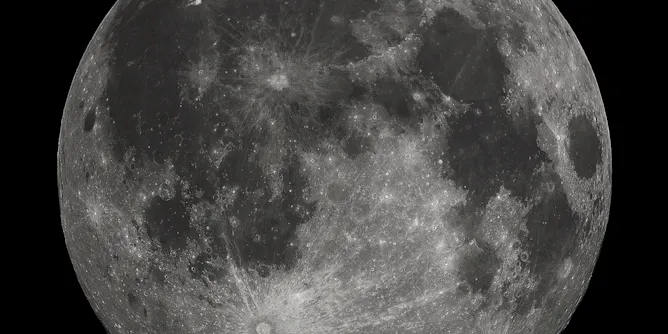
Scientists first started disagreeing about whether the moon should be a planet in Galileo’s day.
Articles on Pluto
Displaying 21 - 40 of 60 articles

Astronomers are excited about sub-surface oceans in the solar system, as they may support life. Now Pluto joins the club.
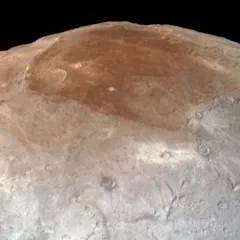
Trapped gas could be tainting the north pole of Pluto’s moon Charon dark red.
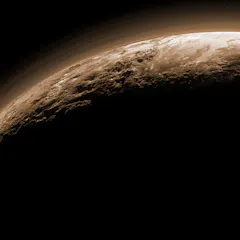
After last summer’s Pluto flyby, the New Horizons spacecraft started sending data back to Earth – at 2 kilobits per second. Here’s some of what scientists have learned so far from that rich, slow cache.

From a flyby of Pluto to the search for extrasolar planets and gravitational waves, 2015 was a monumental year for space news.
Prepare to be amazed …
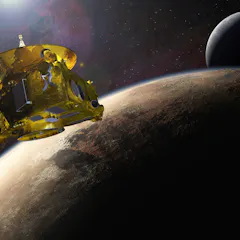
2015 was a year where we expanded our view of the universe, embraced new technologies and got a hint of the profound changes to come.

This week, NASA has discovered great similarities between the Earth and Mars and Pluto. But when it comes to the potential for life, Mars is an increasingly hot favourite.

Pluto’s moon Charon seems to have had a violent past, with icy volcanoes leaving huge fractures.
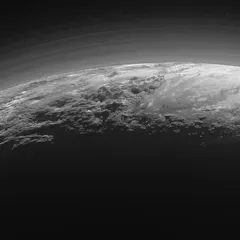
From a mysterious haze to strange nitrogen snowfall, the latest pictures of Pluto pose many new questions.

New Year’s resolutions are one thing. But what does it take to devote your life to a work goal with such a long time horizon you might never reach it in your lifetime?
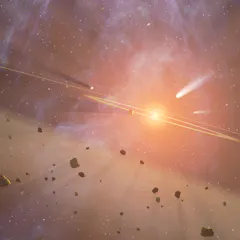
Space scientists have a busy decade ahead with plans to visit Jupiter, Mars, Mercury and other interplanetary bodies all on the cards.
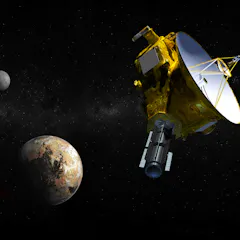
In the long lead-up to our ultimate flyby of Pluto, space science has reconfigured our notions of what it means to be a solar system, a planet, a world.
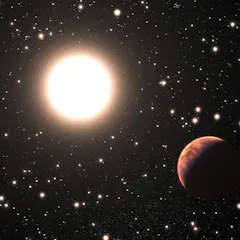
The existence of a “Planet X” in the outer solar system was the subject of great speculation, and was finally settled with the discovery of Pluto in 1930.
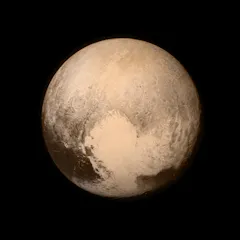
From Twinkle Twinkle to Space Odyssey and beyond, humans have always turned to music to help deal with the profoundly confronting enormity of the cosmos. Is that a match made in the heavens?
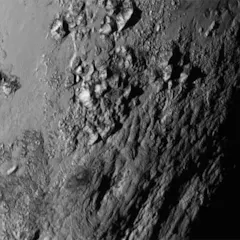
Photos from the spacecraft’s close approach are dazzling. They and other data from the mission will fill in some of the blanks about Pluto and provide a snapshot of the infant solar system.
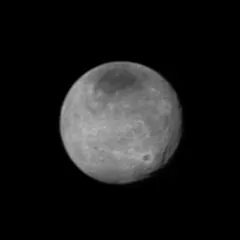
What can the data from New Horizons tell us about the dwarf planet’s five moons?
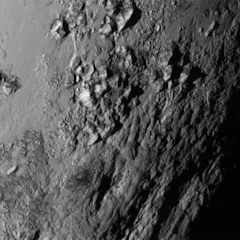
Lack of impact craters intrigues space experts who say it suggests the dwarf planet may be geologically active.
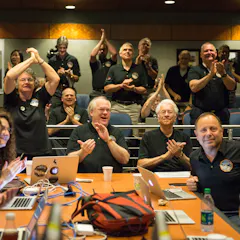
New Horizons mission members have worked on the project for even longer than it’s taken the spacecraft to get to Pluto. They’ve planned, built and researched – and now their efforts are paying off.
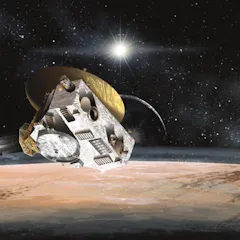
Everything in space is so far away, but probes bring us closer.
Top contributors
-

Professor of Planetary Geosciences, The Open University
-
Professor of Planetary and Space Sciences, The Open University
-
Professor (Astrophysics), University of Southern Queensland
-
Associate Professor, Astronomy, University of Regina
-
Research Fellow/Reader in Planetary Physics, Lancaster University
-
Associate Professor in Archaeology and Space Studies, Flinders University
-
Senior Curator (Astronomy), Museums Victoria Research Institute; The University of Melbourne
-
Research Scholar, Academia Sinica
-
Teaching Professor of Astronomy & Astrophysics, Penn State
-
Pro Vice-Chancellor Flagship Initiatives, Swinburne University of Technology
-
Senior Instrument Scientist, Australian Nuclear Science and Technology Organisation
-
Professor of Planetary Science and Astronomy, George Mason University
-
Professor of Physics & Astronomy, University of California, Irvine
-
Associate Professor in Astronomy, Monash University
-
Professor Emeritus of Organizational Behavior, University of Virginia