
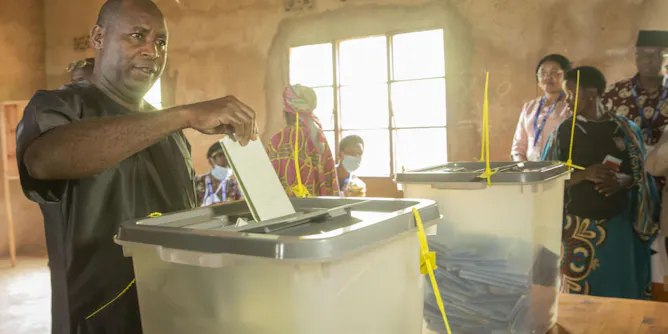
Any state policy looking to increase women’s representation must take into account formal and informal political practices.
Articles on Pierre Nkurunziza
Displaying all articles
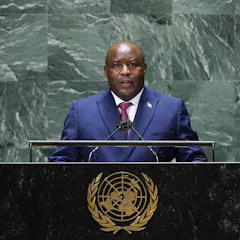
The president has used coup rumour to get rid of anti-reform elements in government, and consolidate his power ahead of 2025 elections

The peasantry still provides almost all the resources of the party-state, yet most of the agrarian policy decisions are taken without consultation.

The attack on the U.S. Capitol follows some familiar patterns of violence inspired by politicians around the world who won’t accept electoral defeats.
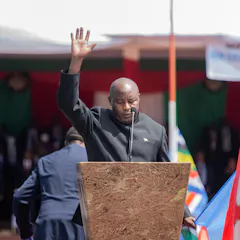
With the demise of Pierre Nkurunziza, all eyes are on Burundi’s new president as he inherits a political framework that has repressed press freedom and silenced independent media voices.
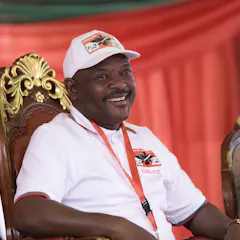
The former president’s complex legacy has often been marred by violence.
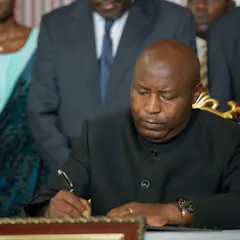
The sudden death of Burundi’s former president, Pierre Nkurunziza, marks the end of a long reign, characterised by violent political crises.
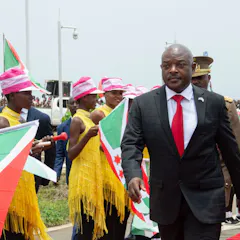
History will judge Nkurunziza as a man who brought unnecessary pain to a nation that had long suffered from political misrule.
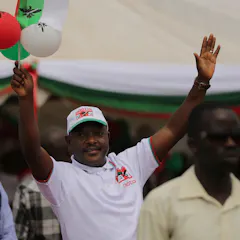
Will President Pierre Nkurunziza peacefully relinquish office after the May poll?
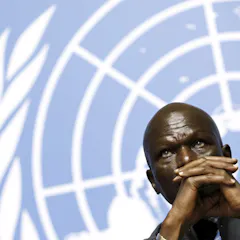
The UN doesn’t have the magic formula to end tensions in Burundi. It’s up to the country’s leadership.
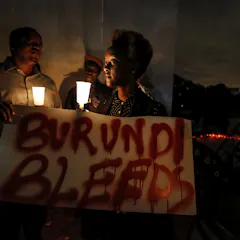
If the referendum goes President Pierre Nkrunziza’s way, it will also be a further blow to ordinary Burundians, who live in a state of hardship and adversity.
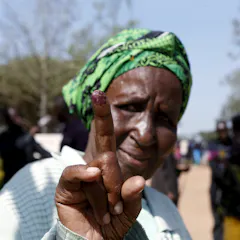
The outcome of the race between increasingly artful electoral manipulation and limitless possible manifestations of democratic expression is never entirely certain.
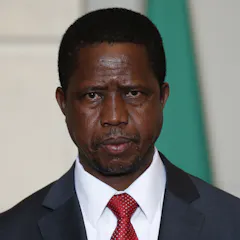
Zambia has gone from a country where people engaged freely in open political debate to one where most people now look over their shoulders to see who’s listening.
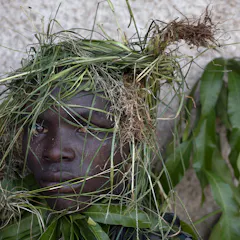
The prospects for reconciliation are bleak. Formal gestures by the government to nudge the opposition parties to join an intra-Burundi dialogue have consistently failed.
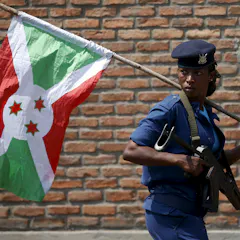
The competition between the two authoritarian regimes has become a fact that, given the regional context, is here to last. It justifies repression and indefinitely postpones democratic expression.
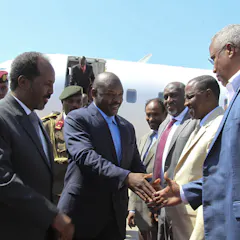
Fears over violence in the African nation bring its leader to a crossroads.
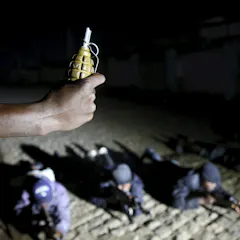
The “quick fix” nature of the Arusha Peace Agreement seems to have come back to haunt Burundi. Ethnic protests threaten to tear the country apart, leading it to the path of a failed state.
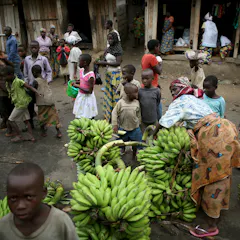
Whenever the crisis in Burundi is discussed, the economy is often overlooked, even though it is central to understanding the backdrop to the most severe crisis since the end of the civil war.
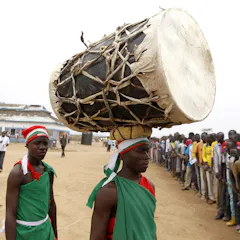
Rwanda and Burundi, once the conjoined twins of East Africa, marked over five decades of going separate ways since independence. Today, the difference in their fortunes couldn’t be more stark.
Top contributors
-

Professeur des universités, Université Paris 1 Panthéon-Sorbonne
-
Associate Professor of International Studies, University of Nottingham
-
Senior lecturer in the Department of Political and Administrative Studies at the University of Malawi and Research Associate, Centre for Social Science Research, University of Cape Town
-
Senior Lecturer, Institute of Diplomacy and International Studies, University of Nairobi
-
Associate Professor in International Relations, University of Nottingham
-
Senior researcher, The Nordic Africa Institute
-
University Distinguished Professor of Political Science and African Studies, Michigan State University
-
Associated senior researcher, Department of Peace and Conflict Research at Uppsala University and the Nordic Africa Institute (NAI); and Head of Research, Senior Researcher Peace and Conflict Research (Folke Bernadotte Academy), Uppsala University
-
Associate Professor in International Development Studies, Dalhousie University
-
Professeure adjointe et candidate à la Chaire de recherche du Canada sur les femmes, la démocratie et le pouvoir dans la Francophonie, Université Sainte-Anne
-
Senior Researcher, The Nordic Africa Institute (NAI), The Nordic Africa Institute
-
Professeur au Département des sciences sociales, Université du Québec en Outaouais (UQO)
-
Research Affiliate, University of Pretoria
-
Lecturer in Development, The Open University
-
Professor of human rights law, University of Pretoria