
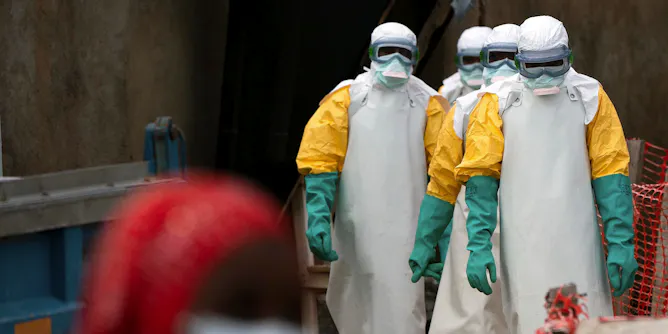
While other forms of Ebola can be prevented with a vaccine, none are currently available to prevent this rare strain.
Articles on PHEIC
Displaying all articles

After previous public health emergencies likes SARS and H1N1, there was renewed investment in pandemic preparedness, but it was not sustained. We cannot make the same mistake after COVID-19.
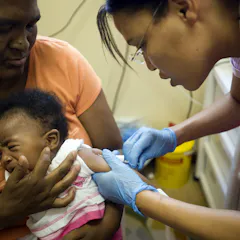
Progress in many areas of TB control stalled or reversed mainly because of the COVID-19 pandemic and the recent geo-political situations.
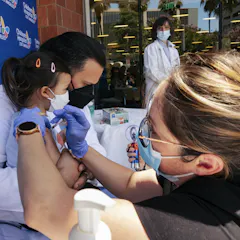
President Joe Biden’s intention to end the national COVID-19 emergency will have long-lasting ripple effects on federal programs such as Medicare, Medicaid and the Children’s Health Insurance Program.
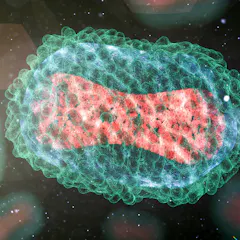
By late July 2022, monkeypox was present in more than 70 countries with significant spread in certain communities. As a result, the World Health Organization began taking steps to fight the virus.
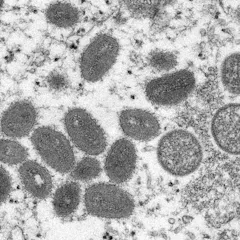
The monkeypox virus, which is commonly found in West and Central Africa, is now causing many infections in the U.S., Europe and Latin America.
The seriousness of an epidemic is a function of several factors, including the degree of contagiousness and potential for rapid spread.
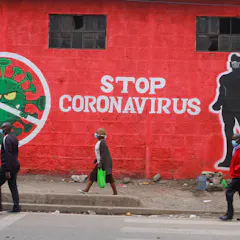
It’s a huge cause for concern that, two years into the pandemic, the disparities and unequal power structures in global health are still intact.
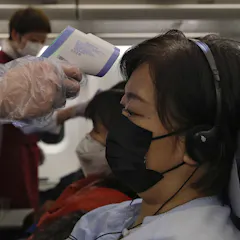
The World Health Organization has said the coronavirus is not yet a pandemic. That raises a question: just what is a pandemic? An expert explains.
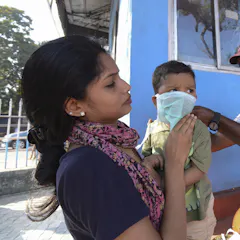
The World Health Organization declared the new coronavirus to be a public health emergency on Jan. 30, 2020. Does the action really change anything? An expert answers four questions.
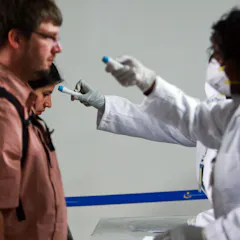
Airport public health officials have got better at screening at ports of entry especially for international arrivals.
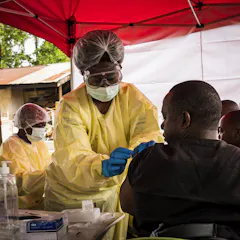
The Ebola outbreak in the DRC has been declared a Public Health Emergency of International Concern. What does this mean for the outbreak response?
Top contributors
-

Professor of Health Studies, University of Richmond
-
Professor of Global Biosecurity, NHMRC L3 Research Fellow, Head, Biosecurity Program, Kirby Institute, UNSW
-
Principal Researcher - Epidemiology, Wits-VIDA, University of the Witwatersrand
-
Principal Visiting Fellow & Former Deputy Director, International Institute for Global Health (UNU-IIGH), United Nations University
-
Assistant Professor of Epidemiology and Biostatistics, University of Nevada, Las Vegas
-
Senior Research Fellow, West African Institute for Cell Biology of Infectious Pathogens, University of Ghana
-
Research Fellow, Pandemics & Borders Project, Simon Fraser University
-
Executive Director, African Population and Health Research Center
-
Professor and Tier 1 Canada Research Chair in Global Health Governance; Scientific Co-Director, Bridge Research Consortium, Simon Fraser University
-
Research Group Leader, Institute for Tropical Medicine , University of Tübingen
-
Associate Professor of Health Services Management, Policy and History, The Ohio State University
-
Professor of Infectious Diseases and International Health, UCL
-
University Professor of Sociology, Syracuse University
-
Research Scientist, African Population and Health Research Center
-
Extraordinary Senior Lecture in the Department of Global Health, Stellenbosch University