

Many developed countries have approved the use of the Pfizer vaccine in children as young as 12, even though they are a low-risk group.
Articles on Pfizer-BioNTech vaccine
Displaying 61 - 80 of 148 articles

Hundreds of thousands of Canadians got a shot of AstraZeneca’s COVID-19 vaccine for their first dose. They now have a choice for their second dose: AstraZeneca again, or Pfizer or Moderna mRNA vaccine?

The infection of a Victorian aged-worker who had received their first COVID vaccine dose isn’t completely surprising. We need two doses for optimal protection.

One study found antibody levels were significantly higher in people who received one dose of AstraZeneca then a Pfizer booster dose.

We want to get everybody vaccinated. Opening up to younger age groups could be one way to speed things up — but it will come with logistical challenges too.
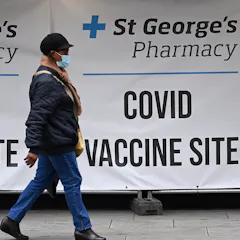
The increased infectiousness of B16172 could magnify the impact of vaccines being less effective against it.
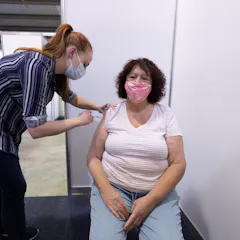
Many over 50s seem to be asking this question. But there are a number of reasons it’s important to go ahead and get the AstraZeneca vaccine now.

What does the Seychelles experience tell us about variants, vaccine efficacy and herd immunity?
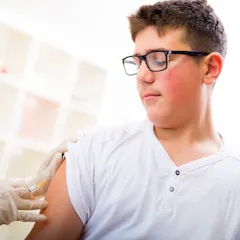
The United States and Canada have approved the Pfizer vaccine for adolescents aged 12–15. The evidence so far tells us it works well and is safe for this age group.
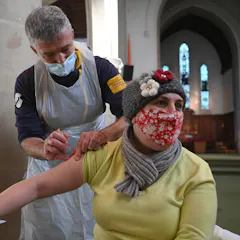
Research has shown that vaccines have reduced infections, disease and hospitalisations – but will they continue to do so in the face of new variants?

The Pfizer COVID-19 vaccine was recently approved for adolescents ages 12-15. Vaccination is essential to protect children from serious illness and quicken return to normal life.
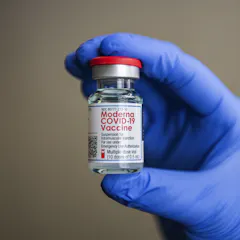
A vaccine expert breaks down everything you need to know about Australia’s newest COVID-19 vaccine candidate.

You only have to prevent one case, which could have otherwise led to community spread and lockdown, for such a scheme to pay for itself many times over.

Canadian public health organizations have run into a serious communication problem about the AstraZeneca vaccine. Crisis management and communication theories explain what’s gone wrong.
Vaccination is likely to substantially reduce virus transmission by reducing the pool of people who become infected, and reducing virus levels in people who do get infected.
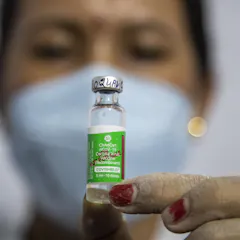
Pfizer and Moderna are expected to make billions in revenue this year. It’s time all vaccine producers share their IP, data and know-how with the rest of the world.

Skyrocketing demand coupled with shortages of vital components is leading to bottlenecks in the supply chain of Pfizer’s and other mRNA vaccines.

The CDC and FDA said the benefits of the Johnson & Johnson vaccine far outweigh the low risk of developing rare blood clots and lifted a pause on the vaccine’s use. A doctor explains.

Licensing agreements between pharmaceutical companies and the Medicines Patent Pool, in cooperation with the WHO, could accelerate access to doses for the poorest countries.
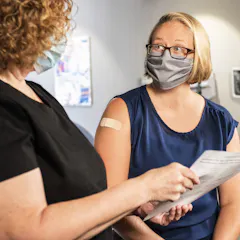
Side effects generally indicate a natural immune response and will resolve in a few days.
Top contributors
-

Professor of Medicine, University of Virginia
-
Associate Professor of Pediatrics, University of Virginia
-
Associate Professor and ARC Future Fellow, The University of Western Australia
-
Professor, The Children's Hospital at Westmead Clinical School and Sydney Infectious Diseases Institute, University of Sydney
-
Professor of Pathology, Microbiology and Immunology, University of South Carolina
-
Professor of Pathology, Microbiology and Immunology, University of South Carolina
-
Vice-Chancellor's Research Fellow, School of Health and Biomedical Sciences, RMIT University
-
Pediatric Infectious Diseases Fellow, University of Pittsburgh
-
Research associate, Warren Alpert Medical School, Brown University, Brown University
-
Professor, School of Biomedical Sciences and Pharmacy, University of Newcastle
-
Instructor of Human Immunology, Emory University
-
Chair in Epidemiology, Deakin University
-
Associate Professor in Viral Immunology, University of Birmingham
-
Deputy Director of the HUMLOG (Humanitarian Logistics and Supply Chain Management Research) Institute, Hanken School of Economics
-
Professor of Health Service Operations, School of Pharmacy & Medical Sciences, University of Bradford