

To paraphrase a legendary golfing saying, the harder you work, the luckier you get.
Articles on Pfizer-BioNTech vaccine
Displaying 41 - 60 of 148 articles

Exclusion from clinical trials, lack of data and inconsistent information made it difficult for pregnant and breastfeeding people to make decisions about COVID-19 vaccines early in the rollout.
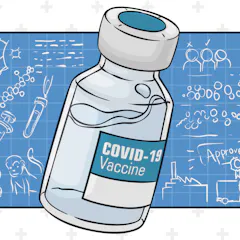
Ongoing tracking is meant to spot very rare risks – like the connection between the Johnson & Johnson shot and Guillain-Barré syndrome. And it relies on public reporting.
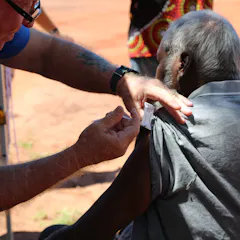
As the delta strain spreads in Australia, there is increasing urgency to ensure Aboriginal and Torres Strait Islander people are vaccinated.

People in Canterbury have been told to be patient as their vaccination is delayed by weeks, but regional disparities in the vaccine rollout are unacceptable as we face new COVID-19 variants.

A study at the University of Oxford has looked at what happens when people receive one dose of AstraZeneca one dose of Pfizer.

New Zealand will have to vaccinate 80-85% to reach population immunity. Until then, a blanket border re-opening, even if only for vaccinated people, would pose a high risk of new outbreaks.

Just like your memory, which improves by repeated viewing or listening with a break in between, our immune memory improves with repeated exposure.
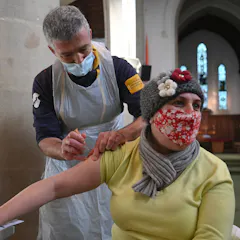
Two doses have always been more protective than one, but the delta variant has made the benefit of a second vaccine much greater.
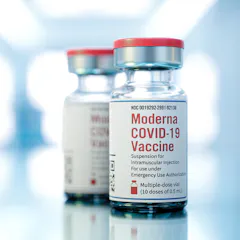
This myth is still circulating online. Here’s why the chance of this happening is next to zero.
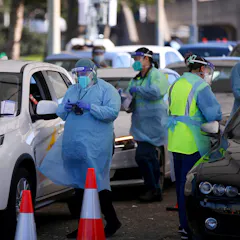
New Zealand’s capital is on high alert after an Australian visitor tested positive on their return home. With less than 10% vaccinated, New Zealanders remain vulnerable to new outbreaks.
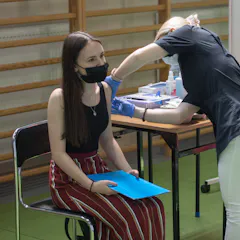
New Zealand’s approval of Pfizer’s COVID-19 vaccine for 12-15 year olds will bring the number of people eligible for the jab to 85% of the population, raising the chance of reaching collective immunity.

Our attitudes and behaviours are shaped by what others in society do. So there’s a real danger that vaccine hesitancy, when reported widely in the media, could catch on to more people.

It’s OK to wait longer than three weeks between Pfizer doses, and this may even provide stronger protection. But this must be weighed against the risk of contracting COVID in the meantime.

Various companies use different ingredients and different delivery systems in their COVID-19 vaccines. Researchers are investigating whether it’s better for individuals to mix what’s available.

Even if we came up with a definition of what makes the “best” vaccine, we don’t have the luxury of choice, when vaccines are in short supply.
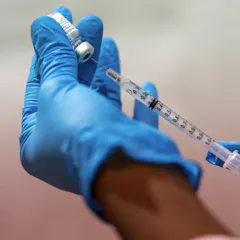
Community pharmacies and pharmacists are important resources in Australia’s vaccine rollout, and right now they’re being under-utilised.

Corporations need to weigh up significant risks against wider benefits.
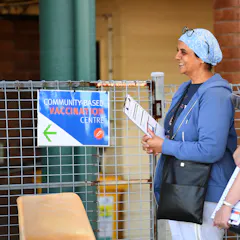
Australia is now rolling out the Pfizer vaccine to people aged under 50, with the 40-49 age group newly eligible. Here’s what you can expect.
Both the AstraZeneca and Pfizer vaccines still work relatively well against it — though only after the second dose.
Top contributors
-

Professor of Medicine, University of Virginia
-
Associate Professor of Pediatrics, University of Virginia
-
Associate Professor and ARC Future Fellow, The University of Western Australia
-
Professor, The Children's Hospital at Westmead Clinical School and Sydney Infectious Diseases Institute, University of Sydney
-
Professor of Pathology, Microbiology and Immunology, University of South Carolina
-
Professor of Pathology, Microbiology and Immunology, University of South Carolina
-
Vice-Chancellor's Research Fellow, School of Health and Biomedical Sciences, RMIT University
-
Pediatric Infectious Diseases Fellow, University of Pittsburgh
-
Research associate, Warren Alpert Medical School, Brown University, Brown University
-
Professor, School of Biomedical Sciences and Pharmacy, University of Newcastle
-
Instructor of Human Immunology, Emory University
-
Chair in Epidemiology, Deakin University
-
Associate Professor in Viral Immunology, University of Birmingham
-
Deputy Director of the HUMLOG (Humanitarian Logistics and Supply Chain Management Research) Institute, Hanken School of Economics
-
Professor of Health Service Operations, School of Pharmacy & Medical Sciences, University of Bradford