

As boosters are authorized for all three COVID-19 shots available in the US, the ability to swap out vaccine types looks to be a boon to the immune system.
Articles on Pfizer-BioNTech vaccine
Displaying 21 - 40 of 148 articles

With the government decision on alert levels due today, it’s clear a more radical approach to vaccination is needed — including restrictions for eligible but unvaccinated people.
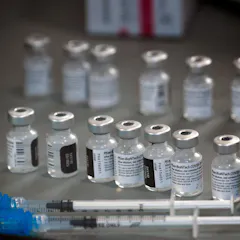
Fault lines between the FDA and CDC regulatory processes have been on full display in the decisions over which groups of Americans should receive the Pfizer booster shot.

Before the pandemic, the public perceived science as infallible and inaccessible. But the opening up of research to the general public has changed that perception.

Subtly shifting the crafting and delivery of public health messaging on COVID-19 vaccines could go a long way toward persuading many of the unvaccinated to get the shot.

A lot has happened since the WHO declared the coronavirus outbreak a pandemic. A portrait in data highlights trends in everything from case counts, to research publications, to variant spread.
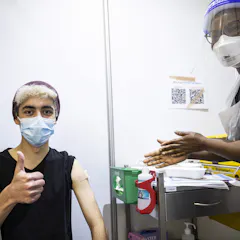
You’ll read lots of different figures on this — six months, eight months, more — and that’s because the research is ongoing. We don’t yet have a concrete answer.
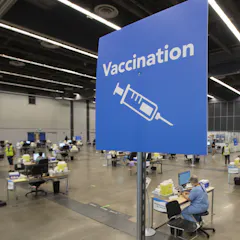
A medical student answers questions he gets asked at a COVID-19 vaccine clinic: Efficacy versus real-world effectiveness, immune response and how the mRNA vaccines compare to vaccines already in wide use.

As we continue to roll out COVID-19 vaccines around the world, we’re learning people who are immunocompromised aren’t necessarily protected as well from the first two doses.
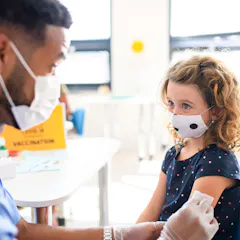
An infectious disease doctor explains the science behind COVID-19 vaccines at a level that children – and adults – of all ages can understand.
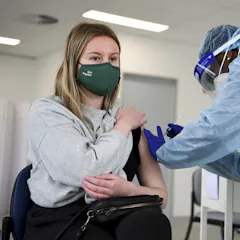
Some countries have started administering third doses of COVID vaccines, or booster shots. But we’re still learning about how long immunity lasts from the first two shots.
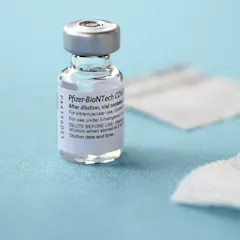
The U.S. FDA has approved the first COVID-19 vaccine. How is approval different from emergency use authorization, and what difference will it make to a vaccine that’s already in global use?
Trials are under way to ascertain whether COVID vaccines are safe and effective for children under 12. In the meantime, it’s reassuring to note that generally, young kids cope OK with the virus.
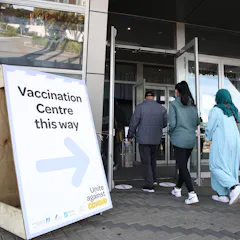
Children can give and refuse consent to be vaccinated, so parents and health workers need to be clear about the law.
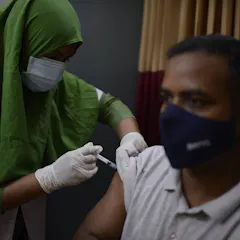
Each dose of Pfizer has a long and complex path involving mixing, storage at temperatures colder than the South Pole and specific protocols that must be followed before it becomes a jab.
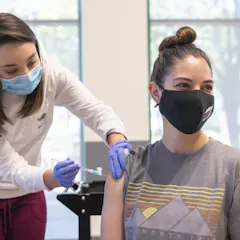
The federal government has announced the Pfizer vaccine will be available to all Australians from August 30. Though there may well be long waits.
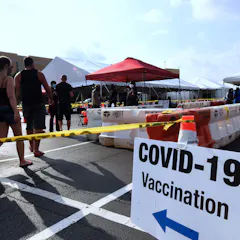
While emergency use authorization gets vaccines out to the public more quickly, it doesn’t skip any steps that full approval requires.
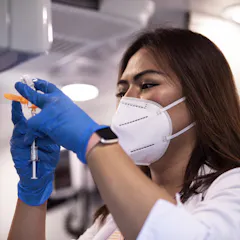
Doses of the Moderna vaccine will be available in Australia from mid-September. So if you’re in an eligible group you could be offered either Pfizer or Moderna. Here’s how they compare.
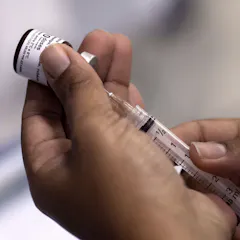
The effects of Ontario’s compulsory school immunization show there are advantages and disadvantages of requiring vaccination.
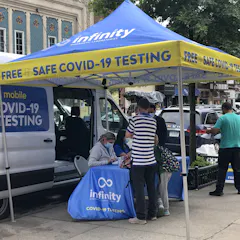
Vaccines can’t provide 100% protection, so it’s not a failure or surprise when some vaccinated people get sick with COVID-19. The good news is their cases are much less likely to be severe or fatal.
Top contributors
-

Professor of Medicine, University of Virginia
-
Associate Professor of Pediatrics, University of Virginia
-
Associate Professor and ARC Future Fellow, The University of Western Australia
-
Professor, The Children's Hospital at Westmead Clinical School and Sydney Infectious Diseases Institute, University of Sydney
-
Professor of Pathology, Microbiology and Immunology, University of South Carolina
-
Professor of Pathology, Microbiology and Immunology, University of South Carolina
-
Vice-Chancellor's Research Fellow, School of Health and Biomedical Sciences, RMIT University
-
Pediatric Infectious Diseases Fellow, University of Pittsburgh
-
Research associate, Warren Alpert Medical School, Brown University, Brown University
-
Professor, School of Biomedical Sciences and Pharmacy, University of Newcastle
-
Instructor of Human Immunology, Emory University
-
Chair in Epidemiology, Deakin University
-
Associate Professor in Viral Immunology, University of Birmingham
-
Deputy Director of the HUMLOG (Humanitarian Logistics and Supply Chain Management Research) Institute, Hanken School of Economics
-
Professor of Health Service Operations, School of Pharmacy & Medical Sciences, University of Bradford