
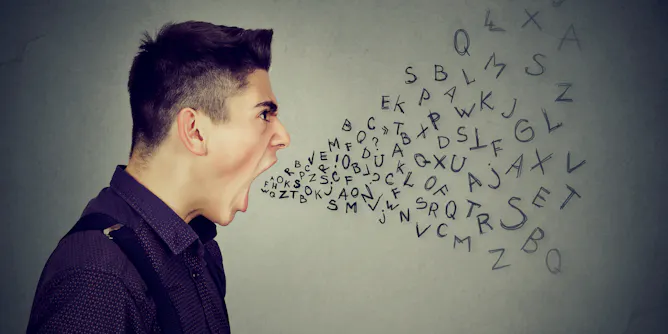
Bad language can be inspiring.
Articles on Personality types
Displaying 1 - 20 of 30 articles

Recent research has looked at the effect of bullying on the ‘big five’ personality traits.
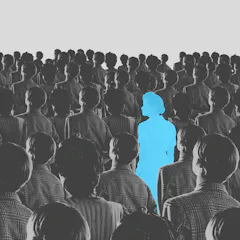
Tests such as Myers-Briggs promise self-discovery – but here’s why you shouldn’t take them too seriously.

New research shows that certain personality traits can pay dividends – while others can be detrimental.

What if you’re neither an introvert or extrovert – or you’re a bit of both? Another category might fit better: ambiverts. They’re the middle of the spectrum and are also called ‘social introverts’.

Is Donald Trump the poster boy for the Dark Triad personality type? Or will his social bonds — if he has any — save him, and the world, from his worst instincts.

Secure, anxious, avoidant, fearful: research shows people’s feelings about being single may depend on their attachment style

‘Overcontrol’ is a personality style that can make it difficult for some people to adapt to change or enjoy social situations.

Start-up success isn’t just about finding the right product or underserved market, personalities matter too.
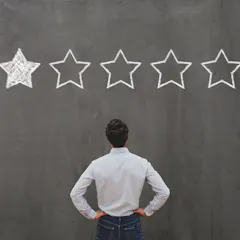
Online reviews have a big impact on buying decisions – but how can shoppers sort the real ones from the fakes?

Narcissism and belief in conspiracy theories may be among the factors that motivate people to buy cryptocurrencies.

There are many ways to decide what’s ‘fair’ in a given situation. Which one you prefer may depend on what kind of person you are.
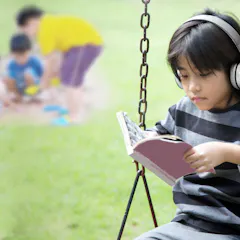
Popular opinion has it that introverts are thriving in lockdown – but studies paint a different picture.

If you know your own personality traits, you might then be better placed to resist your worst unthinking impulses in a time of high anxiety.

After analysing posts from 100,000 Twitter users, our research used big data, machine learning and artificial intelligence to reveal the hidden personality traits underpinning thousands of jobs.

New research finds that people tend to prefer a specific personality type across partners - and its usually one that resembles their own.

Your virtual self reflects your real-life skills and values. Understanding them could help you find a more suitable job.

Past studies have found acting extraverted can even make introverts happy. But a new study had the opposite findings.
Few can resist an assessment that promises to reveal your hidden, true self. But new research suggests that people mistakenly believe difficult to answer questions offer deep insights.

Our study showed that the majority of employees chose to continue attending work despite suffering repeated abuse at work.
Top contributors
-

Professor of Personality Psychology, The University of Melbourne
-
Adjunct professor, UNSW ; University of Technology Sydney
-
Associate Professor, Centre for Positive Psychology, The University of Melbourne
-
Business psychologist, Lancaster University
-
Associate Professor of Marketing, California State Polytechnic University, Pomona
-
Assistant Professor of Psychology, Eureka College
-
Professor of Linguistics, English Language and Literatures and Germanic Languages and Literatures, University of Michigan
-
Lecturer, Clinical Psychology, James Cook University
-
Relationships Expert & Psychology Educator at the Queensland Centre for Domestic and Family Violence Research, CQUniversity Australia
-
Senior Lecturer in Psychology, University of the Sunshine Coast
-
PhD Student, University of California, Davis
-
Clinical Research Associate, University of Cambridge
-
Scientia Professor of Neuropsychiatry, Centre for Healthy Brain Ageing (CHeBA), School of Psychiatry, UNSW
-
Professor of Marketing, Baylor University
-
Zuckerman Postdoctoral Scholar at Bar-Ilan University and Honorary Research Associate at the Autism Research Centre, University of Cambridge