
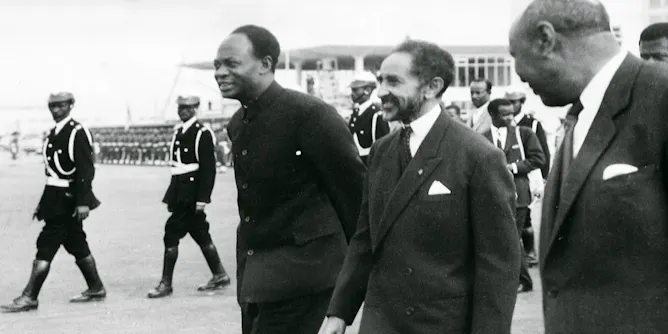
The African Union compares well to other continental unions. It accomplishes more than the Commonwealth or the Francophonie.
Articles on Peacebuilding
Displaying 221 - 240 of 3117 articles
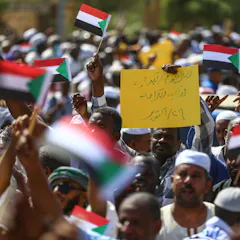
An African-led process would take into account complex regional dynamics – which would lead to a better and more stable peace agreement.

The current cholera outbreak is not necessarily an issue with potable water. It’s the result of a combination of factors including dysfunctional and non-compliant wastewater treatment works.
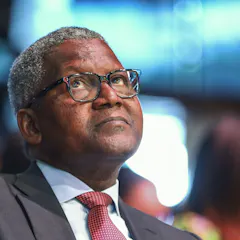
Dangote refinery will reduce Nigeria’s dependence on imported petroleum products and create jobs. But it may not be the best for the environment.
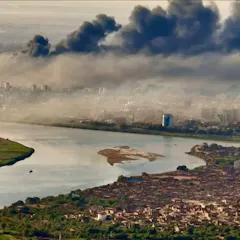
Both residents and Sudanese in the diaspora invested in homes to secure the future. Now the conflict is destroying hope.

Whichever way the ongoing armed conflict ends, the loser will be Somaliland president Muse Bihi Abdi.

In addition to motherhood these girls experience social inequality, chronic stress, violence, and food insecurity. When teenagers become mothers, their adversities are compounded.
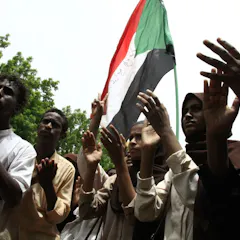
Sudan’s university students have played a key role in liberation struggles.

The number of elderly people in need of support in Africa is projected to grow at annual rates above 3% up to 2050.

The crux of the arms-to-Russia allegations relates to the content of the US intelligence reports.
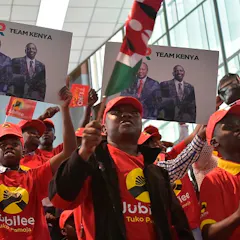
The fluidity of the country’s short-lived coalitions is a major cause of instability in Kenya.
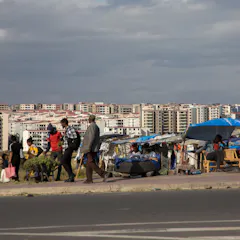
Ethiopia’s mass housing project has built and transferred half-a-million houses in two decades – but it’s damaging the social fabric of communities.

The Sudan army’s superiority is in its air force and arsenal of ground forces while the rival paramilitary force relies on nimble mobile units.

A mismatch between the skills employers want and what young people have is the major cause of youth unemployment in South Africa. Soft skills are key.

Fear has important consequences for how people vote, what they spend their money on, who they consider to be part of their communities, and who they treat as outsiders.

Tanzania’s refugee policy in the 1990s is a good example of how geopolitics affects ordinary refugees.
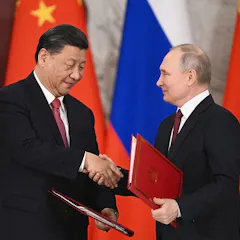
The US’s negative attitude towards BRICS reflects its own weakening global power, especially its inability to isolate Russia in Europe and to contain China’s growing influence.
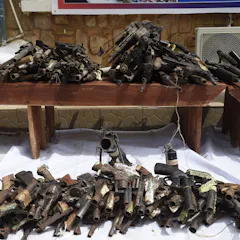
A lack of political legitimacy can lead governments to illegal purchases of small arms and light weapons.
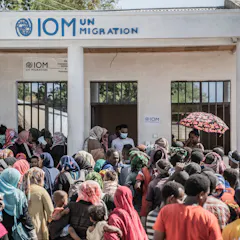
The number of refugees leaving Sudan is particularly high because Sudan was itself host to a million refugees.
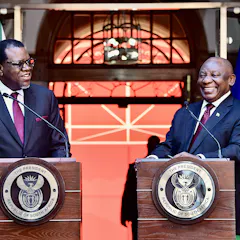
How Swapo and the ANC respond to any further decline in electoral support will define the future of democracy in both countries.
Top contributors
-

Professor/Senior Research Fellow, Centre for Advancement of Scholarship, University of Pretoria
-
Professor of Sociology, University of the Witwatersrand
-
Professor of Political Studies, University of Johannesburg
-
Senior Fellow, Department of Agricultural Economics, Stellenbosch University
-
Professor of Sociology (Criminology, Victimology and Security Studies), University of Ibadan
-
Professor of Democracy, University of Birmingham
-
Extraordinary Professor, Department of Political Sciences, University of Pretoria
-
Honorary Professor of International Relations, University of the Witwatersrand
-
Senior Lecturer of Political Science, Georgia Gwinnett College
-
Professor of Social Development Studies, University of Johannesburg
-
Associate Professor of International Studies, University of Nottingham
-
Professor of Economics & Business, Allegheny College
-
Associate professor in Politics and International Relations, Leeds Beckett University
-
Research associate at African Centre for Cities, University of Cape Town
-
Professor of Media Industries, University of Nottingham