
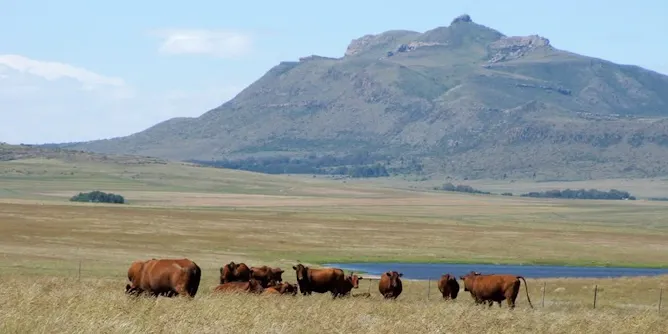
The Grassland Society of Southern Africa has been conducting scientific research for 60 years, adapting to new challenges.
Articles on Peace and Security
Displaying 241 - 260 of 1619 articles
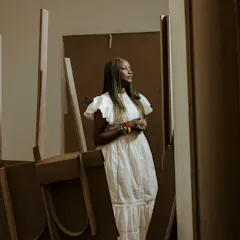
Chosen to direct the world’s most important art show next year, she leaves a legacy of building institutions, uplifting artists and educating through art.
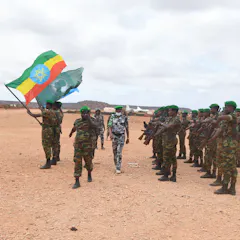
Addis Ababa’s willingness to work with regional rivals in the Middle East shows its practical approach to foreign relations.

The US cuts in research funding are devastating to the fight against HIV/Aids. It’s going to be very hard to recover.

Children are considered lucrative consumers of food. They need protection against misleading health labels.

The richest 1% of Africans received 27% of the total revenue from growth on the continent. This is one of the inequalities that needs to change.
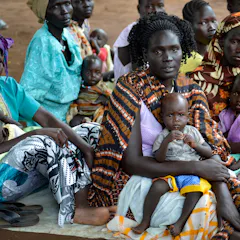
Reduction in humanitarian aid globally offers opportunities to address the power imbalances on which data-driven humanitarianism is built.

Cutting carbon dioxide emissions to zero by 2050 will reduce global warming, but climate modelling shows that some regions may still experience extreme heat.

Wildlife trafficking extends to areas like ant smuggling and illegal trade

It’s a delicate balance providing presidential security while maintaining public safety and order during official engagements.
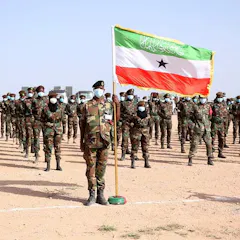
The US has been interested in Somaliland due to its strategic location on the Gulf of Aden.

A pilot programme in 15 schools demonstrates how targeted, structured interventions can rapidly close foundational literacy gaps.

TikTok reveals both the liberating and the repressive effects of social media use in Egypt.
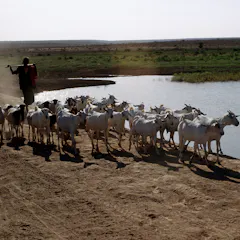
Somalia’s competitiveness in global markets has weakened owing to climate change and conflict.
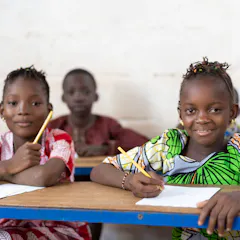
Education policies can be highly effective, but not necessarily for everyone in the same way.
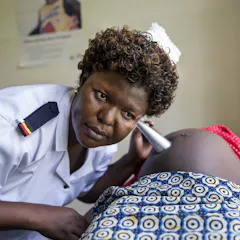
Research indicates that pre-eclampsia has a genetic basis. African women are at greater risk than other population groups.
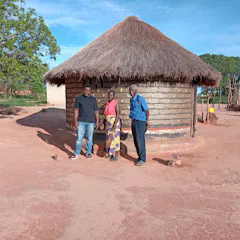
New research has found that rural Zambians are much more likely to adopt solar power if they see it working for their neighbours.
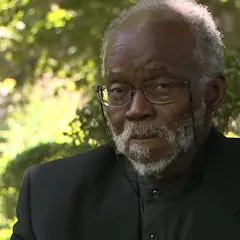
Few have challenged colonial knowledge systems as profoundly as Mudimbe.
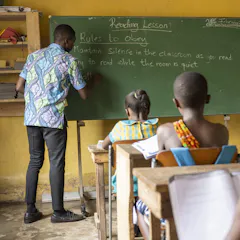
Literacy and numeracy have declined at the basic education level in Ghana.
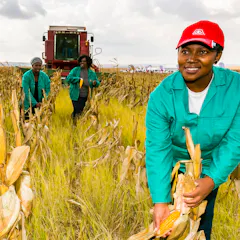
Investing more in agriculture, especially with external financing, offers the biggest gains in raising incomes and reducing poverty.
Top contributors
-

Assistant Professor, School of Politics and International Relations, University College Dublin, University College Dublin
-
Senior Lecturer in Human Rights, Constitutional Law and Legal Theory, University of Wollongong
-
Extraordinary Professor, Department of Political Sciences, University of Pretoria
-
Honorary Professor of International Relations, University of the Witwatersrand
-
Associate professor in Politics and International Relations, Leeds Beckett University
-
Professor of Political Science, Department of Political Studies and Governance, University of the Free State
-
Professor of Sociology, University of the Witwatersrand
-
Professor of Democracy, University of Birmingham
-
Associate Professor of International Studies, University of Nottingham
-
Associate Professor International Law, Roskilde University
-
Professor, Weber State University
-
Professor of Sociology in the Department of Sociology and Social Anthropology., Stellenbosch University
-
Associate Professor, Khalifa University
-
Criminologist / Senior Lecturer, Stellenbosch University
-
Professor of Political Studies, University of Johannesburg