
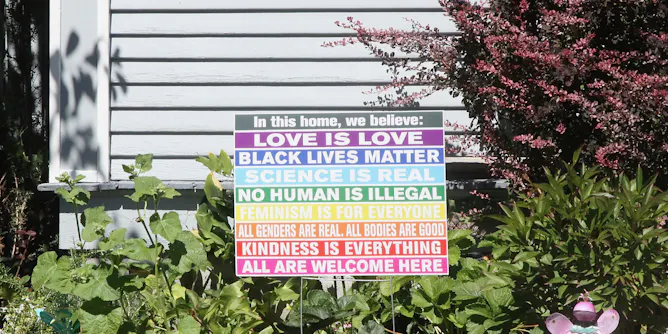
Virtue signaling is designed to communicate specifically to one partisan tribe and to affirm its moral superiority. A scholar of ethics and politics explains why that is unwelcome in a divided US.
Articles on Partisan bias
Displaying all articles
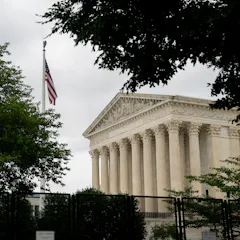
Unlike in most countries, US Supreme Court justices enjoy life tenure. Some legal scholars believe that centuries-old custom, meant to protect judicial independence, no longer serves the public.
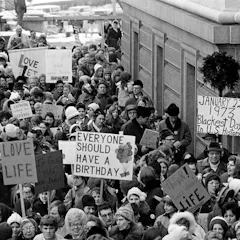
A historian explains why the pre-Roe anti-abortion movement was filled with liberal Democrats who opposed the Vietnam War and supported the expansion of the welfare state.
State supreme courts have a relatively low profile in the US. That’s going to change now that they will be under political pressure to decide whether abortion is protected in state constitutions.

Talking with people who hold different political views doesn’t have to be an exercise in futile rage. Here are some tips to help you peacefully and fruitfully discuss spicy topics.
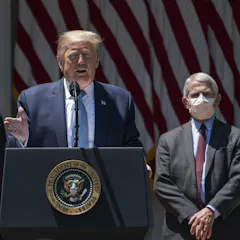
Whether in situations relating to scientific consensus, economic history or current political events, denialism has its roots in what psychologists call ‘motivated reasoning.’

“It is worse, much worse, than you think.”

When news stories include a catchy hashtag, readers perceived the news topic to be less socially important and more partisan.
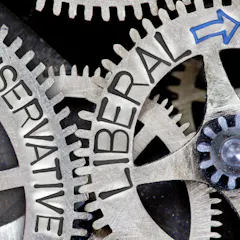
Vehicle emissions and industrial facilities are contributing to climate change, but many conservatives don’t believe it.

Conservative skeptics of climate change may support projects focused on ‘resilience’ – for example, preparing a community for future major weather events.

Nearly half of Americans say they see a great deal of bias in the news media. But the research on this subject is unresolved.
Many observers had hoped that the court’s decision on Gill v. Whitford would provide some clarity on whether gerrymandering is constitutional.

On Monday, the US Supreme Court announced that it would hear a case on gerrymandering in Wisconsin. We dive into the research on this controversial practice.

Ethical dilemmas arise not because someone did not know the ethical rules. Instead, they arise when individuals are unable to identify the relevant ethical principle at the time of crisis.
Top contributors
-

Assistant Professor of Communication and Political Science, The Ohio State University
-
Professor of Law and Director of the Center for Professional Ethics, Case Western Reserve University
-
Assistant Research Scientist and Faculty Fellow, Indiana University
-
Implementation Manager, Indiana University
-
Lecturer in Executive Education; Distinguished Professor Emeritus of Communication Studies from Louisiana State University, University of Texas at Dallas
-
Associate Professor, Psychology, University of British Columbia
-
Professor of Political Science, Northern Illinois University
-
PhD student, Psychology, University of British Columbia
-
Managing Director of the McCourtney Institute of Democracy, Associate Research Professor, Political Science, Co-host of Democracy Works Podcast, Penn State
-
Professor of History, University of West Georgia
-
Foundation Professor of Law and Political Science, Arizona State University
-
Ph.D. Candidate in Information and Computer Sciences, University of California, Irvine
-
Professor of Public Policy and Director of the Policy Institute, King's College London
-
Professor, University of British Columbia
-
Professor of Legal Studies and Political Science, UMass Amherst